
Are We a Society Without Memory?
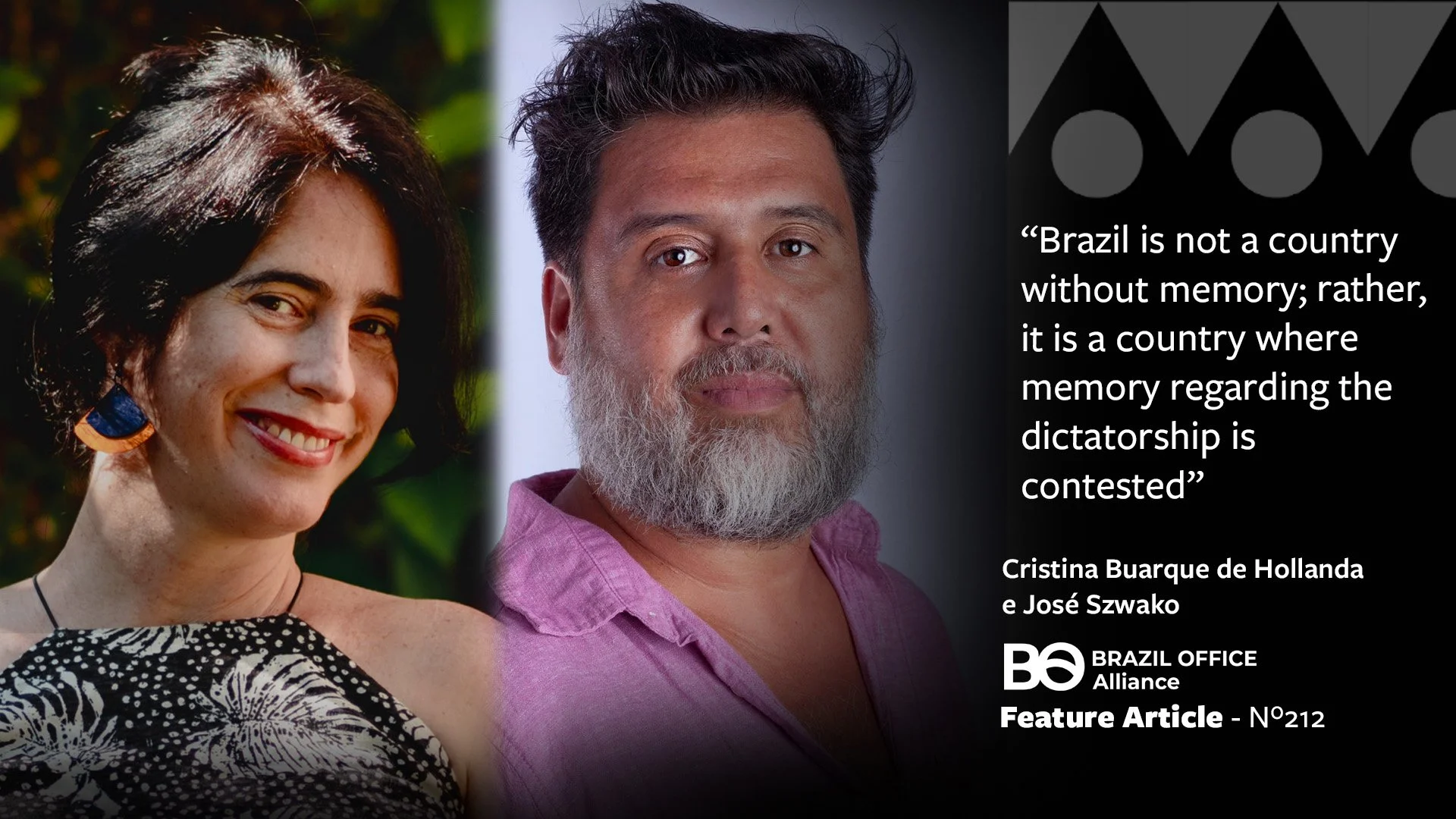
By Cristina Buarque de Hollanda and José Szwako*
One often hears it said that Brazil is a country without memory. This narrative circulates among progressive groups and voices of various stripes. It serves to explain everything from the difficulty of punishing crimes committed during the dictatorship to the 2016 coup against Dilma Rousseff and the political rise of Jair Bolsonaro in 2018. We argue that this premise is false. Brazil is not a country without memory; rather, it is a country where memory regarding the dictatorship is contested, internally contradictory, and politically consequential.
Since the 1990s, the Brazilian state—prodded by civil society movements—has built, step by step, an institutional framework aimed at acknowledging the crimes of the dictatorship. The Special Commission on Political Deaths and Disappearances, established in 1995, was the first step. By the mid-2000s, the Amnesty Commission had assumed immense political significance. Under the leadership of Paulo Abrão, it redefined the meaning of reparation: shifting away from the image of a magnanimous state forgiving subversives, it came to embody a state that asked forgiveness of the persecuted and hinted at the need to hold their persecutors accountable. Each step in this direction was met with growing unease by the Armed Forces, which since the 1980s had struggled to coexist with the denunciations made by "Torture Never Again" groups and the work carried out by the families of those killed or disappeared for political reasons.
Military commanders reached the limit of their institutional tolerance in December 2009, when the 3rd National Human Rights Program recommended the creation of a truth commission to investigate crimes committed during the dictatorship. Together with Defense Minister Nelson Jobim, they threatened a collective resignation, precipitating one of the major crises of the Lula administration. Pragmatic and nearing the end of his term, the president moved quickly to smooth things over: he bypassed the impasse with a new decree and adjustments to the text.
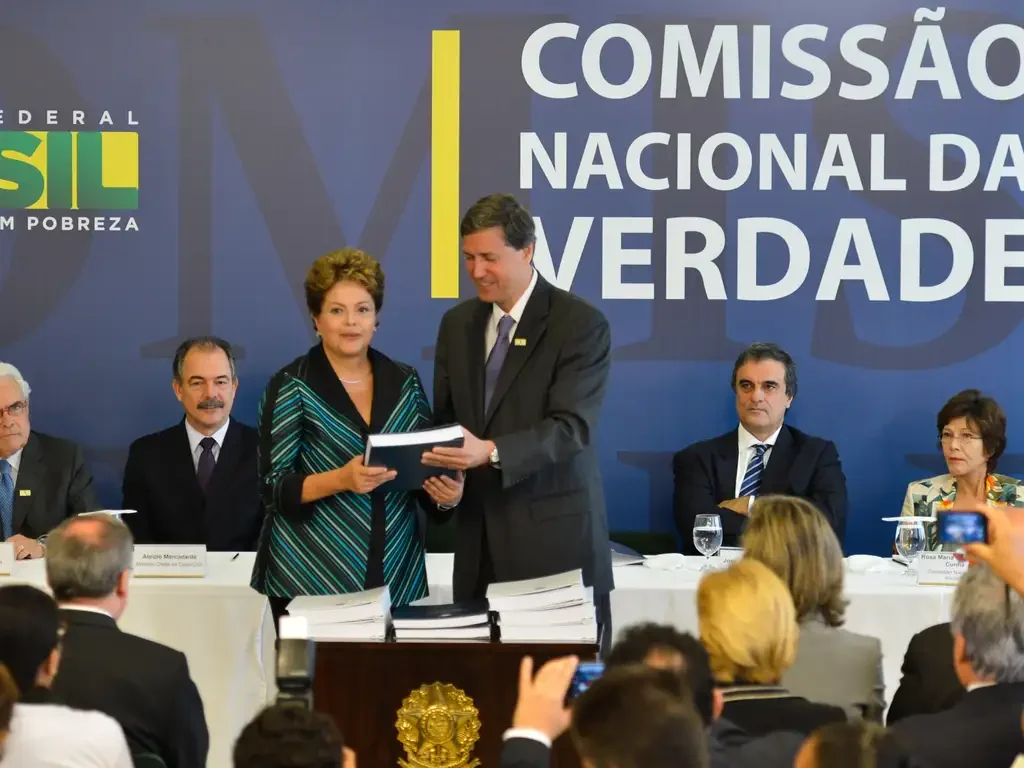
It fell to President Dilma Rousseff in December 2012 to create the National Truth Commission and, with it, “a monumental chasm between the Armed Forces and the Presidency of the Republic,” as General Sérgio Etchegoyen described it. For the first time, the State investigated crimes committed during the dictatorship and named torturers. For the military, this was the last straw in an already fragile relationship with a government that, in the general’s words, “flouted values and customs held dear by us in the military.”
Starting in 2013 the military’s counter-narrative regarding memory ceased to be merely a matter for the barracks. The green-and-yellow protests that emerged that year—and intensified in 2014 and 2015—demanded the restoration of an imagined, lost order: moral, sexual, and familial. Celebrating the dictatorship ceased to be the exclusive domain of radical circles and became a central element of the conservative Brazilian self-image, both within political parties and in civil society. When Jair Bolsonaro dedicated his vote for the impeachment of President Rousseff to “the memory of Colonel Carlos Alberto Brilhante Ustra”—the president’s own personal “terror”—he symbolically inaugurated a public morality anchored in the celebration of the dictatorship. He was no lone wolf, and his outburst was not improvised. It was the crystallization of an anti-memory that had long been gestating, both inside and outside military circles.
However, the institutionalization of memory policies did more than wound military pride and push generals onto the anti-democratic stage. These policies—and the military outcry surrounding them—also left their mark on how Brazilians imagine the past.
A Datafolha poll from December 2014 shows that 32% of the population “did not know” whether the country’s authoritarian legacy was positive or negative. In 2019, the share of those with no opinion dropped to just 12%. Among those with a formed opinion, about 60% viewed the military’s time in power as having more negative than positive achievements, while 30% recalled or imagined the dictatorship in a positive light. These data do not describe a country without memory; they describe a country with a fractured and contested memory.
Another intriguing finding concerns the (lack of) knowledge regarding Institutional Act No. 5, which implemented a serious of authoritarian and anti-democratic measures in December 1968. Four decades later, In 2008, only 18% of Brazilians had heard of it. Not coincidentally, following the National Truth Commission and the various truth commissions that swept across the country, 35% of respondents in 2019 stated they were familiar with the act that radicalized the dictatorship. This represented a significant doubling of awareness during a period when the electorate was gradually shifting toward the right and center-right—a time when these two labels combined accounted for an unprecedented 40% of respondents.
However, these figures and markers do not form coherent patterns. Within the same social fabric, the majority condemnation of torture coexists with nostalgia for the “order” and “development” attributed to the military governments. We argue that the military’s reaction to the memory policies implemented since the return to democracy was one of the root causes of the 2016 parliamentary coup against President Rousseff. Yet, it was not the only one. By contesting the past institutionally, these policies also reshaped the actors and forces vying for it, thereby summoning counter-memories.
By engaging in an institutional contest over the past, these policies also reshaped the actors and forces vying for it, eliciting counter-memories that extended beyond the barracks and became far-reaching political fuel. Thus, celebratory memory of the dictatorship is far from a form of ignorance; rather, it is a political product translated into representations and imaginings of a lost order.
*Cristina Buarque de Hollanda and José Szwako are the authors of Disputing Pasts: Forgetting and Remembering the Dictatorship in Brazil (University of Texas Press, 2026). Cristina is a professor at New York University Abu Dhabi, and José is a researcher at the Institute of Social and Political Studies (IESP-UERJ) and INCT-Participa. José is also a co-coordinator of the Center for Democracy and Collective Action (NDAC-Cebrap) and holds research fellowships from CNPq, FAPERJ, and Prociência (UERJ).
