
Daughters of the Mother Palm: The Struggle of Babassu Nut Breakers for Land, Climate, and Life
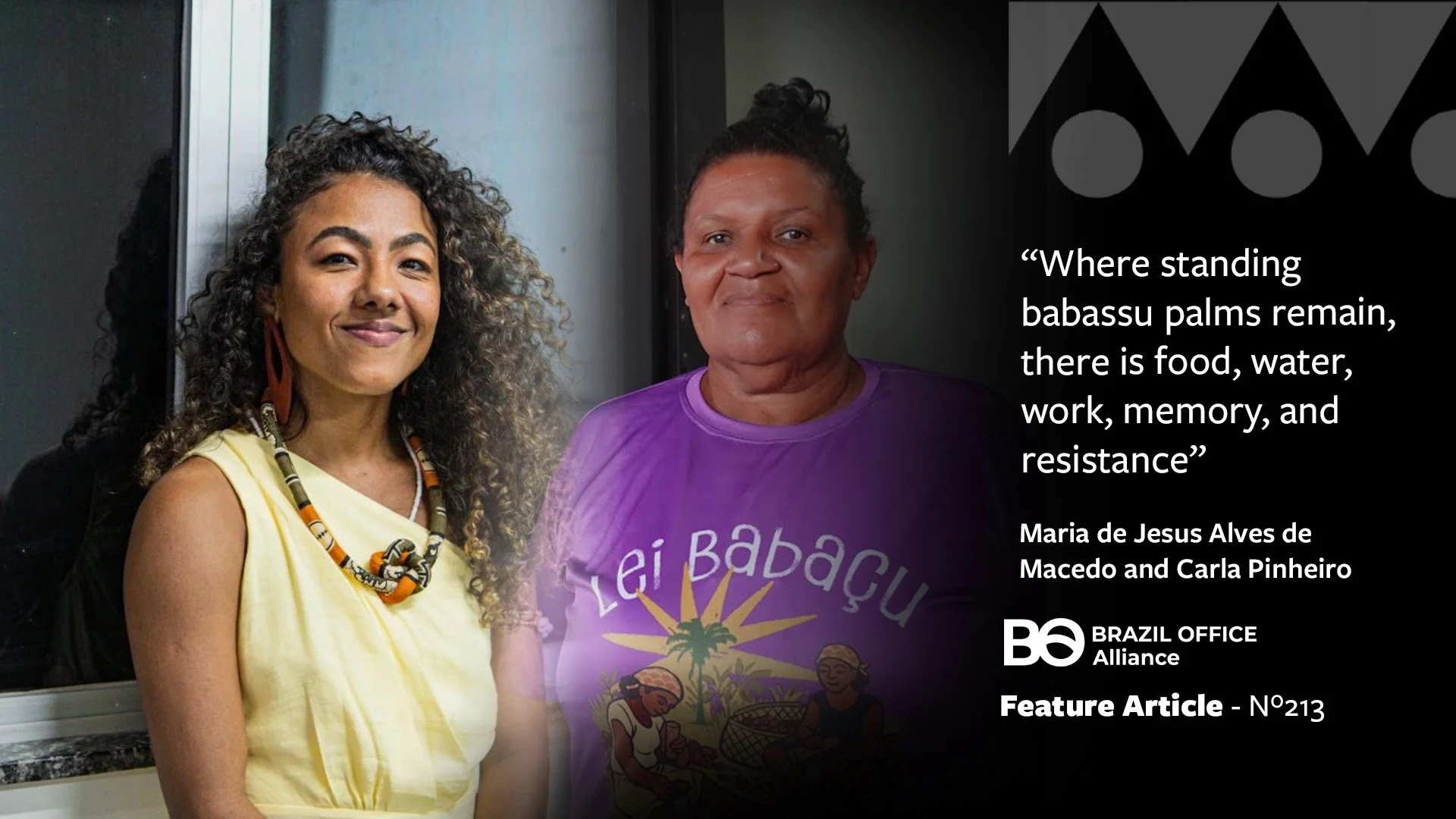
By Maria de Jesus Alves de Macedo and Carla Pinheiro*
Where standing babassu palms remain, there is food, water, work, memory, and resistance. For thousands of women who harvest babassu nuts, defending the palm tree means defending their territory, traditional ways of life, and the continued presence of their communities within the forests, fields, and waterways.
Since the 1980s, babassu nut breakers have organized to secure the right to access babassu groves, gather nuts, and protect the palms, while confronting land enclosures, deforestation, threats, and rural violence. This organizing effort took shape in regions such as Baixada Maranhense, Mearim, Cocais, and southern Maranhão (near Imperatriz), and gained further strength in Tocantins, Piauí, and Pará. Established in 1991, the Interstate Movement of Babassu Nut Breakers (MIQCB) unites more than 300,000 women across these four states.
Through this process, the women began demanding space within predominantly male-dominated unions and recognizing themselves as a collective with its own place, voice, and decision-making power. The struggle for access to babassu groves evolved into a broader fight for a standing forest, for women's political organization, and for the protection of traditional territories.
Over more than three decades, the movement has established itself as a key force in defending babassu groves and championing “Free Babassu” laws, asserting that nature conservation cannot be separated from guaranteeing the rights of traditional peoples and communities. A standing forest is essential for food security, women's economic autonomy, water preservation, and confronting the climate crisis: from resisting enclosures to defending territories.
The struggle of the quebradeiras (women who break babassu nuts) gained strength against a backdrop of expanding roads and railways, land grabbing, and other ventures touted as signs of “development.” These projects frequently disregarded the lives, as well as the cultural, spiritual, and productive practices, of the communities already inhabiting the forests, fields, and waterways.
The obstacles these women faced included the felling of palm trees, the fencing off of babassu groves, and the seizure of nuts they had already gathered.
In practice, this process was accompanied by rural violence: communities were persecuted by land grabbers, families were threatened, and homes were burned down—events documented in the book Viver na Terra dos Babaçuais (Living in the Land of the Babassu Groves) by Friar Adolfo Temme. Faced with this reality, defending access to the babassu groves meant defending the right to remain on their land and keep the babassu forests standing.
Their relationship with the babassu is one of care and sustenance. The palm is called “Mother” because every part of it is utilized: the fronds, stalks, nuts, oil, food products, cosmetics, handicrafts, and fertilizer. The “Mother Palm” thus embodies a relationship with nature rooted in sustainable use, reciprocity, and the continuity of community life.
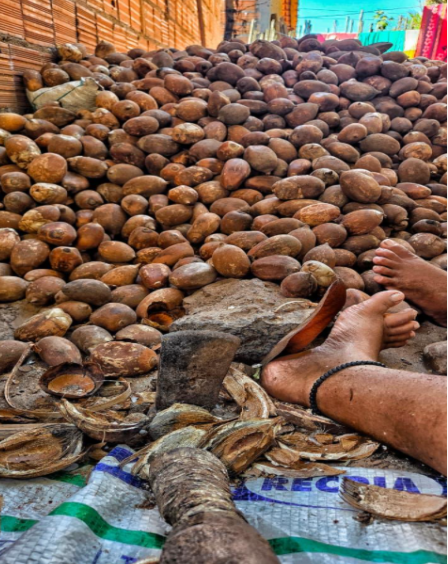
Cerrado, Amazon, Caatinga, and the pressure of the agricultural frontier
Today, these women continue to face new threats in the territories where they live and work: the expansion of the agricultural frontier; soy and eucalyptus monocultures; aerial spraying of pesticides; fires; the felling of palm trees; and the contamination of crops, rivers, streams, springs, and forest areas. These pressures cut across biome transition zones, particularly areas within MATOPIBA (an agricultural expansion region spanning parts of Maranhão, Tocantins, Piauí, and Bahia). Since the MIQCB operates across the Caatinga, Cerrado, and Amazon biomes, the defense of babassu palm groves also reveals a “body-land” dimension: when the land is harmed, the body is affected as well. The body is nature; the body is the standing forest.
It is at this point that the struggle of the babassu nut breakers connects to the debate on climate justice, territorial and land rights, and the protection of Brazilian biomes. Dona Maria de Jesus—a grassroots coordinator for the Mearim and Cocais regional branch, better known as Dijé—sums up this reality:
“We are affected in various ways, because the poisoning, the burning, the clearing of land, and the aerial spraying of pesticides on our crops and in our babassu forests—all of this affects us, affects our territories, our quilombos, and our villages [...] because in the past, we had everything in abundance for planting [...] fishing was more plentiful [...] Today, we are affected by poisoning and land clearing—even when it is labeled as ‘development,’ such as when a highway is built through our territories without prior consultation. Here in my community, we have already suffered losses. It is a very small area, yet within it, there are three gravel pits [...] And today, in the name of development, there are three gravel pits; that represents a huge loss”
Dona Dijé’s words highlight a central contradiction: the territories that have historically preserved water, biodiversity, and native vegetation are the very same ones suffering from predatory activities framed as development.
Prior consent and the right to decide on the territory
Another central point of the struggle is the right to prior, free, informed, and good-faith consent, as stipulated in the International Labour Organization’s Convention 169. For these communities, this right is a prerequisite for ensuring that any policy, infrastructure work, or project respects the people living in the territory.
Furthermore, for Dona Dijé, prior consent is directly linked to autonomy, self-management, and the maintenance of Bem Viver (Good Living) practices within the territories. “For us living in these territories, when decisions are made without consulting us, it only causes harm to our lands. After all, we are the ones who know our own needs—we, the nut breakers, the workers, the fisherfolk; we’re the ones who truly understand, right? [...] So, we end up participating in implementation without even knowing where things are headed. Often, government departments and local administrations want to look good, but they don’t consult us; they aren’t present in our territory to truly grasp our needs. They dream up a project in their own way and then drop a disaster in our laps—expecting us to execute it—only for it to fail. It causes immense harm.”
The absence of prior consent turns public policies and development projects into new forms of rights violations. When communities are called upon merely to implement decisions that have already been made, their knowledge is disregarded, and their collective rights are undermined.
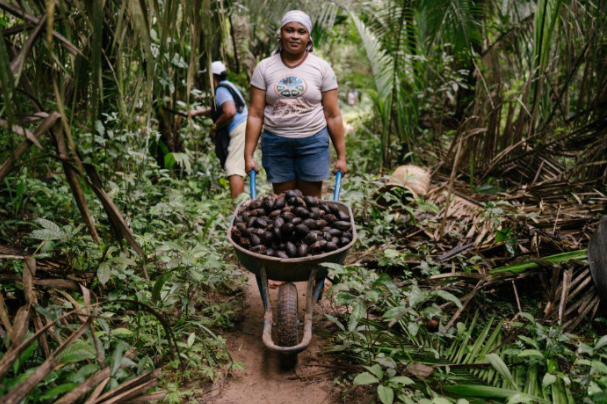
Free Babassu: an agenda for rights, climate, and the right to remain
The “Free Babassu” laws—one of the movement's major political achievements—emerged from the organizing efforts of the nut breakers. These laws aim to guarantee agro-extractive communities free access to babassu groves, prohibit the felling of palm trees, prevent slash-and-burn practices, restrict the use of pesticides, and protect the palms' reproduction—including by banning the cutting of entire fruit bunches. They also advocate for biome protection, land tenure regularization, and the monitoring and enforcement of laws already passed at the municipal and state levels.
More than just an environmental regulation, the Free Babassu initiative was born from the struggle of women babassu nut breakers and protects a traditional, sustainable relationship with the palm tree. By securing access to the groves and ensuring communities can remain on their lands, this struggle also strengthens food security, the community-based bioeconomy, the preservation of socio-biodiversity, and the survival of the standing babassu forest. Body-Territory and Bem Viver (Good Living).
Despite the violations, the organized struggle of women sustains traditional territories, standing babassu forests, and community-based bioeconomy practices. In these communities, knowledge is passed down through daily life: in the cracking of nuts, in educational activities with children and youth, and in the relationship with the pindovas, capotas, and coringas — the different growth stages of the babassu palm.
Where standing palms remain, there are also springs, birds, animals, plants, fruits, and women cracking nuts, singing, and building Bem Viver. That is why these nut-breakers often place their own bodies on the front lines to prevent the felling of the palms.
Dona Dijé explains that this work is also educational:
“In the territories, the quilombos, and the communities, what we do is pass on our knowledge to the children and the youth—sharing what our knowledge and customs are like... We have been working to preserve the waters, the springs, the native plants, the standing babassu palms, and people’s customs... When we receive visitors, they say there is a different atmosphere here; if there is a different atmosphere, it is because we put so much effort into preserving our customs and our way of life so that we can have Bem Viver here. We nut-breakers work... it is about preserving the palm and so much more, right? Preserving the other forms of life that exist in our territory”
This daily work strengthens the continuity of the struggle. Today, the movement’s youth—known as pindovas — attend training sessions, participate in collective nut-cracking gatherings, strengthen organizational processes, and are active in the Interstate Cooperative of Babassu Coconut Crackers (CIMQCB). Defending the babassu palm means defending community life.
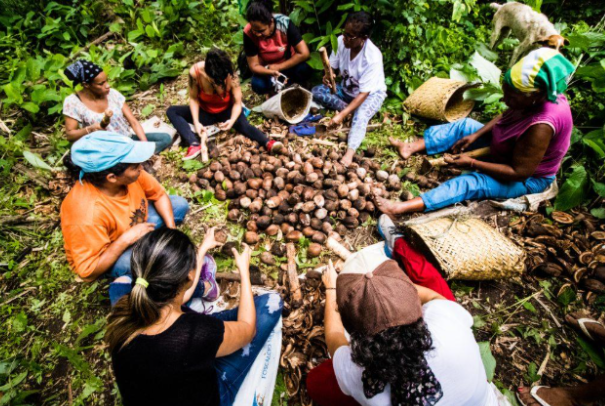
A local struggle of global importance
The nut crackers' struggle, spanning over 30 years, has resulted in “Free Babassu” laws, thousands of hectares of standing forest, women producing food and ensuring food security, networks of babassu grove defenders, agroecology, education for youth and children, income generation, and the valuing of socio-biodiversity.
At a time when the Cerrado and its transitional biomes face mounting pressure from agribusiness, land grabbing, pesticides, and large-scale development projects, the nut crackers' experience offers a concrete response to the climate crisis—one emerging from the territories, from women, and from traditional peoples and communities.
Where a babassu palm stands, there is more than just a tree. There is memory, food, autonomy, climate, land, and a future. Defending the babassu coconut crackers means defending a climate justice agenda rooted in the heart of Brazil, yet urgent for the world.
“Chote das Encantadeiras (an artistic group of babassu coconut crackers)
I am a nut cracker, I am a nut cracker, and I have come to fight!
For my rights, for my rights, I have come to make my demands.
More education and healthcare for the whole nation.
I am a nut cracker, I am a warrior woman, I come from the sertão.
In Tocantins, there are nut crackers!
In Piauí, there are nut crackers!
Over in Pará, there are nut crackers!
In Maranhão, the nut crackers are here!”
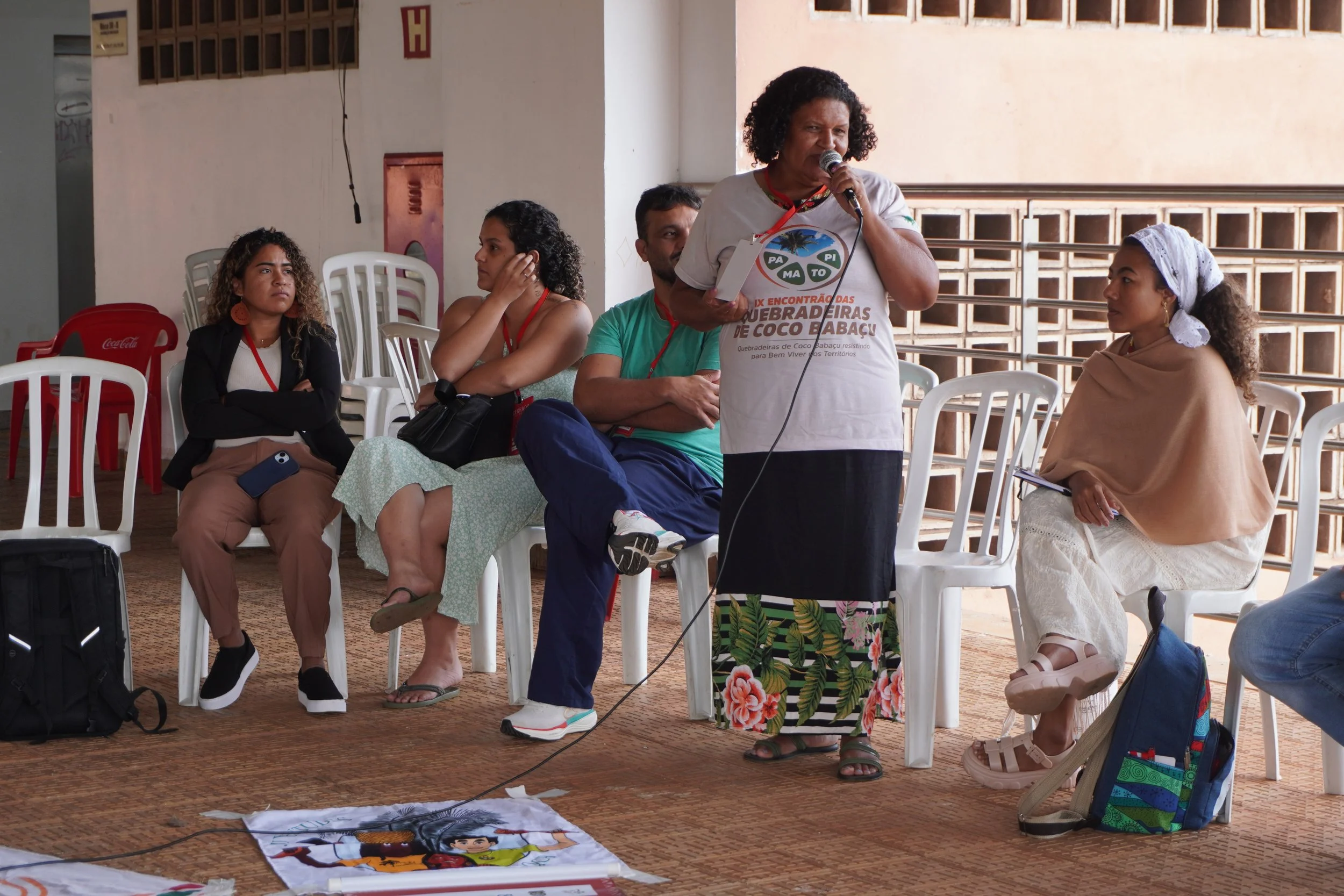
*Maria de Jesus Alves de Macedo, known as Dijé, is a babassu coconut cracker and a resident of a quilombola community in the municipality of São Luís Gonzaga do Maranhão. Her journey is rooted in community life and grassroots organizing. She served as a catechist and an association coordinator for a settlement in Maranhão. Today, she works in grassroots coordination for the MIQCB in the Mearim and Cocais region. As a leader among the quebradeiras (babassu nut breakers), Dijé embodies a history of struggle in defense of babassu groves, traditional territories, women, and the ways of life that keep the forest standing.
*Carla Pinheiro is a Black woman, a practitioner of terreiro traditions, and a native of the Baixada Maranhense region. She holds a degree in History from the Federal University of Maranhão (UFMA) and a master’s degree in Anthropology from the Graduate Program in Social and Political Cartography of the Amazon at the State University of Maranhão (PPGCSPA/UEMA). She is a popular educator and a technical advisor for the MIQCB.
*Maria de Jesus Alves de Macedo, known as Dijé, is a babassu coconut cracker and a resident of a quilombola community in the municipality of São Luís Gonzaga do Maranhão. Her journey is rooted in community life and grassroots organizing. She served as a catechist and an association coordinator for a settlement in Maranhão. Today, she works in grassroots coordination for the MIQCB in the Mearim and Cocais region. As a leader among the quebradeiras (babassu nut breakers), Dijé embodies a history of struggle in defense of babassu groves, traditional territories, women, and the ways of life that keep the forest standing.
*Carla Pinheiro is a Black woman, a practitioner of terreiro traditions, and a native of the Baixada Maranhense region. She holds a degree in History from the Federal University of Maranhão (UFMA) and a master’s degree in Anthropology from the Graduate Program in Social and Political Cartography of the Amazon at the State University of Maranhão (PPGCSPA/UEMA). She is a popular educator and a technical advisor for the MIQCB.
