
Brazil as Host of an Important LGBTQIA+ Conference
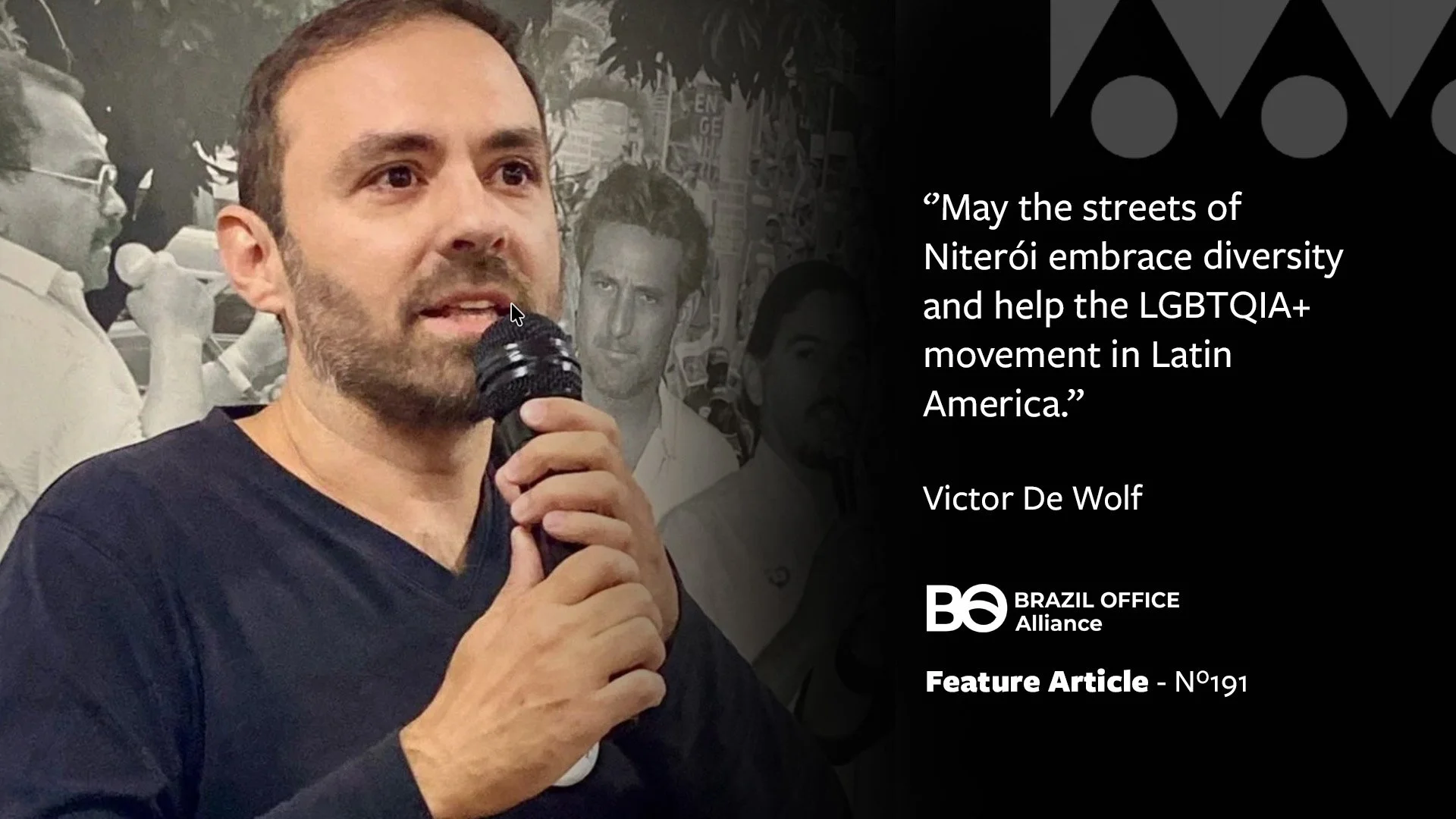
By Victor De Wolf*
Latin America has suffered for decades from political oscillations that occasionally bring our continent into contact with dictatorships and oppressive governments. The LGBTQIA+ community, as part of a group of political minorities, is still one of the most persecuted. In this context, the United States of America maintains a strong influence in the region, and after the election of Donald Trump and the strengthening of his hate speech, the political persecution of our community has worsened.
As examples of these oscillations, we can cite Argentina, where a president who is openly anti-LGBTQIA+ rights is trying to eliminate all governmental actions and legislation that made this neighboring country a reference in our region. In El Salvador, after a decade of progressive governments, Nayib Bukele promotes one of the most anti-human rights governments in the region and positions the LGBTQIA+ population as an adversary of society. In 2025, the Salvadoran government approved new legislation that expanded its power and increased oppression against those who think differently. A similar process had already been observed in Brazil during the government of former President Jair Bolsonaro, who attempted to eliminate all forms of diversity from the country's daily life and sought to perpetuate himself in power through a failed coup d'état. The three cases cited demonstrate the same form of political operation by the neo-fascist right in the region and an ideological alignment of these rulers.
Strengthening social movements is one way to overcome these tormenting times, because organized civil society plays a fundamental role in building democracy, being able to dialogue with a significant portion of the population. It is also organized civil society that can devise collective and effective strategies through shared solutions. In the case of the LGBTQIA+ movement, ILGA World (the international LGBTQIA+ association) has existed since 1978. It is the most representative entity in this area, which is subdivided into six regional entities: Latin America and the Caribbean, North America, Asia, Europe, Oceania, and Pan-Africa.
In December 2025, ILGALAC (Latin America and the Caribbean) was to hold its 10th Regional Conference in San Salvador, the capital of El Salvador. Due to the worsening situation in the country, caused by the Bukele government, the organization's Council decided to suspend the event and relocate it. A major debate was held to find the best solution, and it was decided to hold it in Brazil in 2026. Therefore, the next Regional Conference will be in the city of Niterói, Rio de Janeiro, in May 2026, with the organizing committee being ABGLT (Brazilian LGBTQIA+ Association) and the LGBTQIA+ Collective of the MST (Landless Workers' Movement).

ABGLT, the largest and oldest LGBTQIA+ network in the country, builds dialogue and integration with Brazilian social movements and in the Latin American and Caribbean region. ILGA and ABGLT have been working together for a long time. In 1995, the year ABGLT was founded, the ILGA World Conference took place in Rio de Janeiro, which also marked the first Pride Parade in the country in Copacabana. In 2010, ABGLT held the 5th Regional Conference of ILGALAC in the city of Curitiba.
Although there were no plans to hold another conference in Brazil at this time, it is important to understand the relevance of this decision. On the one hand, there is the issue of solidarity with the activists, especially the ILGALAC leadership and the local organization in El Salvador, who were unable to hold the event for reasons beyond their control. On the other hand, there is the local political issue, since Brazil will have elections this year and once again the LGBTQIA+ agenda will be at the center of the country's political polarization. Although Lula's third government is not yet the government of our dreams, especially in sectors where we have experienced significant setbacks for our population (such as Education, Culture, and Public Security), it is important to understand that a defeat of the project that aims for the return of a fascist, anti-human rights, and anti-multilateralist government directly influences the future of our region.
ILGALAC plays a fundamental role in this political scenario. It is up to the activists present at the 10th Conference to organize the actions of the movements for the coming period, strengthening local organizations, creating survival and confrontation strategies, and working daily to strengthen democracy and multilateralism. It will also be an important moment for the region, as it precedes the next ILGA World Conference, to be held in Argentina in 2027. This Regional Conference, therefore, will play a fundamental role in democracy and the strengthening of regional struggles.
If we closed out 2025 in Brazil with an intense event, holding the 4th National Conference on the Rights of the LGBTQIA+ Population (which hadn't been held in 11 years), 2026 will not be the same.
If we closed out 2025 in Brazil with such intensity, holding the 4th National Conference on the Rights of the LGBTQIA+ Population (which hadn't been held in 11 years), 2026 will be no different. May the streets of Niterói embrace diversity and help the LGBTQIA+ movement in Latin America overcome this difficult moment, so that we can live in an increasingly diverse world, with more respect and more rights.
*Victor De Wolf holds a master's degree from the Culture and Territoriality Program at the Federal Fluminense University (UFF), is President of ABGLT, representative of Brazil at ILGALAC, and a WBO Advisory Board member.
