
Democracy is Not a Moral Quality, It is a Social Imperative
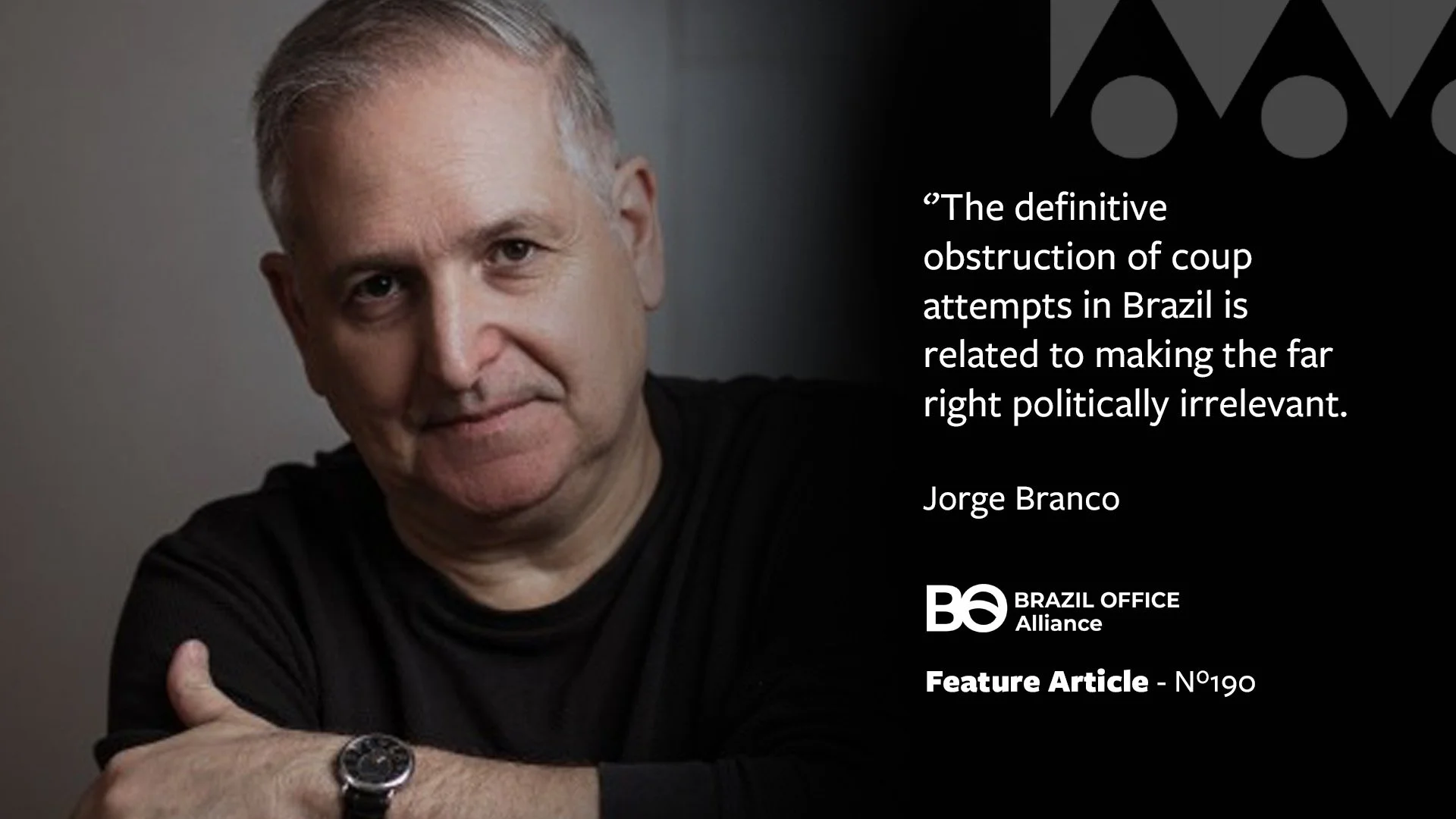
By Jorge Branco*
This article was originally published on the Brasil de Fato website on January 8th and kindly provided by the author for republication in the weekly newsletter and on the Aliança Brazil Office website.
This January 8th, amidst the context of the greatest neo-imperialist offensive against Latin America since the 1960s and 70s, should be dedicated to the dissemination of anti-authoritarian values and social justice. Despite any ideological, moral, and utopian adherence we may have to the idea of democracy, it is fundamental to recognize that it is linked to the idea of equality. Its historical existence is strongly linked to the struggle of social movements and the Left.
In the history of most Latin American and European countries, democracy is linked to objective advances in the living conditions of the working classes. Marta Arretche states that, under democratic regimes, there has been a decrease in inequality through the implementation of social policies to the poorest and to rural areas, with territorial decentralization, even though inequality remains high. Despite the prevailing premise that democracy is linked to the power of the ruling classes, which is theoretically acceptable and empirically observable, the facts demonstrate that the ruling classes and imperialism develop and consolidate their power best in authoritarian situations and dictatorships.
Above all, the coup process in Brazil, which has its symbolic synthesis on January 8, 2023, but whose beginning was with the illegitimate impeachment of Dilma Rousseff, aims to destroy democracy to allow better conditions for the super-exploitation of workers and the poorest. The coup attempt by the Brazilian far-right is, first and foremost, a reactionary effort to diminish the gains and wealth of the poorest. Only in authoritarianism would it be possible to prohibit workers from using the tools to win rights and increase the value of their labor. In democracy, this is far more difficult because workers have the capacity to resist and gain positions within the State.
The dismantling of the January 8th coup attempt, while not definitively extinguishing the authoritarian possibility in Brazil, was fundamental in preventing it at this time. It was the containment actions and, subsequently, the investigation that revealed the extent of the fascist and authoritarian plot. This culminated in Brazil’s largest judicial proceeding, which ended up criminally convicting generals, police chiefs, and a president. If Brazil is not currently experiencing an authoritarian situation and the eradication of fundamental rights, it is due to the struggle of the Brazilian people, which led to the defeat of the neo-fascist candidacy in the 2022 elections. The definitive obstruction of coup attempts in Brazil is related to making the far right politically irrelevant.
*Jorge Branco is a sociologist with a PhD in Political Science and the Director of Democracy and Fundamental Rights Project. He is also an advisor to the New Paradigms Institute and the Brazil Office Alliance.
