
The November 2026 U.S. Elections, Brazil, and Latin America
By James N. Green*
On November 4, 2026, tens of millions of U.S. citizens will go to the polls to elect the 435 members of the House of Representatives, one third of the members of the Senate, and many governors, mayors, state legislators, and local officials.
Although it is common to declare in every voting cycle that a given year’s election is the most important in recent times, this year that statement is not hyperbolic. The outcome will affect not only the United States, but also Brazil and other parts of the world.
Currently, Republicans control the House of Representatives by a difference of two seats. Their margin in the Senate relies of the loyalty of four members to vote consistently with their party. Should Democrats flock to the polls in early November as is predicted, it is likely that their party will win control of the House, and there is a small chance that they might eke out a majority in the Senate.
Historically, fewer voters turn out in mid-term election than in those for the presidency. Often the president’s party loses congressional seats, and in recent decades the party in opposition to the president has won one or both houses of Congress. Public opinion polls indicate that Trump’s overall approval rate as president has dipped to 42%, while his disapproval rate hovers around 55%. Moreover, in the scattered elections held in 2025, Democrats flipped 21% of the legislative seats held by Republicans and gained multiple seats in New Jersey, Virginia, Iowa and Mississippi. In two gubernatorial races--New Jersey and Virginia-- the Democratic candidates won by a margin of 14.4% and 15% respectively, considered landslide victories.
If Democrats gain control the House in November, they will be able to set the fiscal agenda for the final two years of the Trump presidency, as the lower chamber is responsible for initiating government spending bills. Trump circumvented that constitutional provision when he issued his tariff policies, arguing they were justified due to a national emergency. Although this is a fallacious argument, Republican House members have conceded their authority over fiscal issues to the president. With Democrats in charge, Trump and the Republicans would have to negotiate with their opponents to ensure the functioning of the government.

Democrats will also be able to hold Congressional hearings to investigate both the ways Trump and members of his Cabinet have usurped legislative power and the nature of his family’s business interests in the United States and abroad. Should Democrats also control the Senate, they will also be able to block any new appointments to the Supreme Court if there occurs a vacancy.
Trump has admitted that his fears a third impeachment process should Democrats take over the House. Although some politicians have contemplated the possibility, others argue that because Senate Democrats would not have a two-third majority to convict Trump, it makes more sense to focus on introducing and potentially passing legislation that will benefit ordinary voters. They insist that Democrats need to have clear program that addresses people’s immediate concerns about the rising cost of living and the unaffordability of housing, medical care, and basic everyday expenses.
In the 2024 presidential election, Trump’s victory was in large part due to voters’ frustration with post-Covid inflation and a perception that the economy was not benefiting ordinary citizens. Trump also insisted that the country’s most pressing problem was the fact that there were an estimated 15 million undocumented workers living in the United States that were supposedly taking U.S. citizens’ jobs and were responsible for the high crime rate.
Most economists concur that Trump’s tariff policies have resulted in a spike in consumer prices and have failed to address deindustrialization and weaknesses in the economy. Moreover, while most people favor deporting undocumented people who have been convicted of serious crimes, such as murder and rape, 50% of adults polled disapprove of Trump’s current approach to immigration, while only 39% approve. The heavy-handed measures of Immigration and Custom Enforcement (ICE) officials, including the recent killing of Renee Nicole Good in Minneapolis, Minnesota, has generated demonstrations nationwide against the Trump administration.

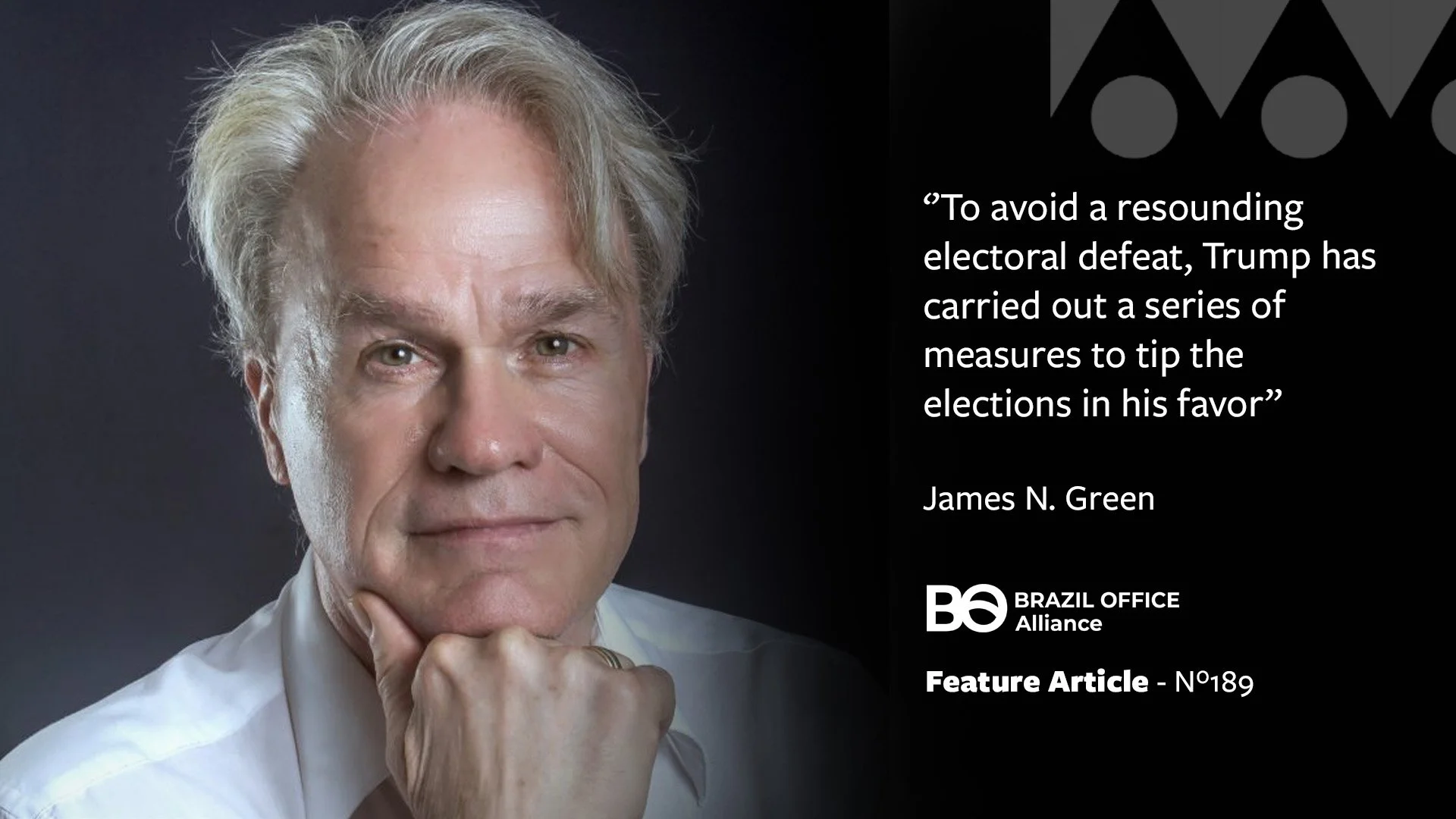
To avoid a resounding electoral defeat, Trump has carried out a series of measures to tip the elections in his favor, ranging from convincing Republican majorities in the Texan and a few other states legislatures to redraw district maps to favor their party and increase the number of seats in Congress. Although the federal government has little authority over how elections are conducted throughout the country, Trump is trying to convince states to end mail-in voting. He continues to attack voter machines in Democratic-leaning states and has staffed his administration with election skeptics and deniers. Moreover, some observers consider that Trump’s moves to deploy the National Guard to states that tend to vote Democratic is establishing a precedent that will allow him to demand their presence to seize voting machines and oversee the elections in states less likely to support Republican candidates.
Brazil and other Latin American countries should be alarmed about Trump’s recent incursions into the region. Although the U.S. president eventually backed down from his demand that the Brazilian government grant amnesty to Jair Bolsonaro and withdrew the Magnitsky sanctions against Supreme Court Justice Alexandre de Morais, there is no guarantee that he will refrain from meddling in the upcoming Brazilian presidential elections. Depending on who will be the leading candidate of the extreme right, Trump might decide to order clandestine activities to shake up the elections while publicly throwing his weight behind Lula’s chief opponent. Although this would undoubtedly stir popular nationalistic sentiment against his efforts, it could play a role in encouraging voters for the far right to go to the polls.
Trump’s interference in the recent Argentine legislative elections by offering the country $20 billion to shore up its economy as long as the electorate favored his ally President Millei, his intervention in Venezuela this month, and his pledge to reassert U.S. hegemony over Latin America are clear warning signs of Trump’s intentions to play a significant role in casting the continent in his own image.
Whether he is successful depends in part on the determination of U.S. voters to restrain Trump by giving the Democrats the control of the House if not the entire Congress this coming November.
*James N. Green is Professor Emeritus of Brazilian History and Culture at Brown University, the author or co-editor of twelve books on Brazil, and the President of the Board of Directors of the Washington Brazil Office.
