
Brazil’s Upcoming Presidential Election: Features, Prospects, and Implications
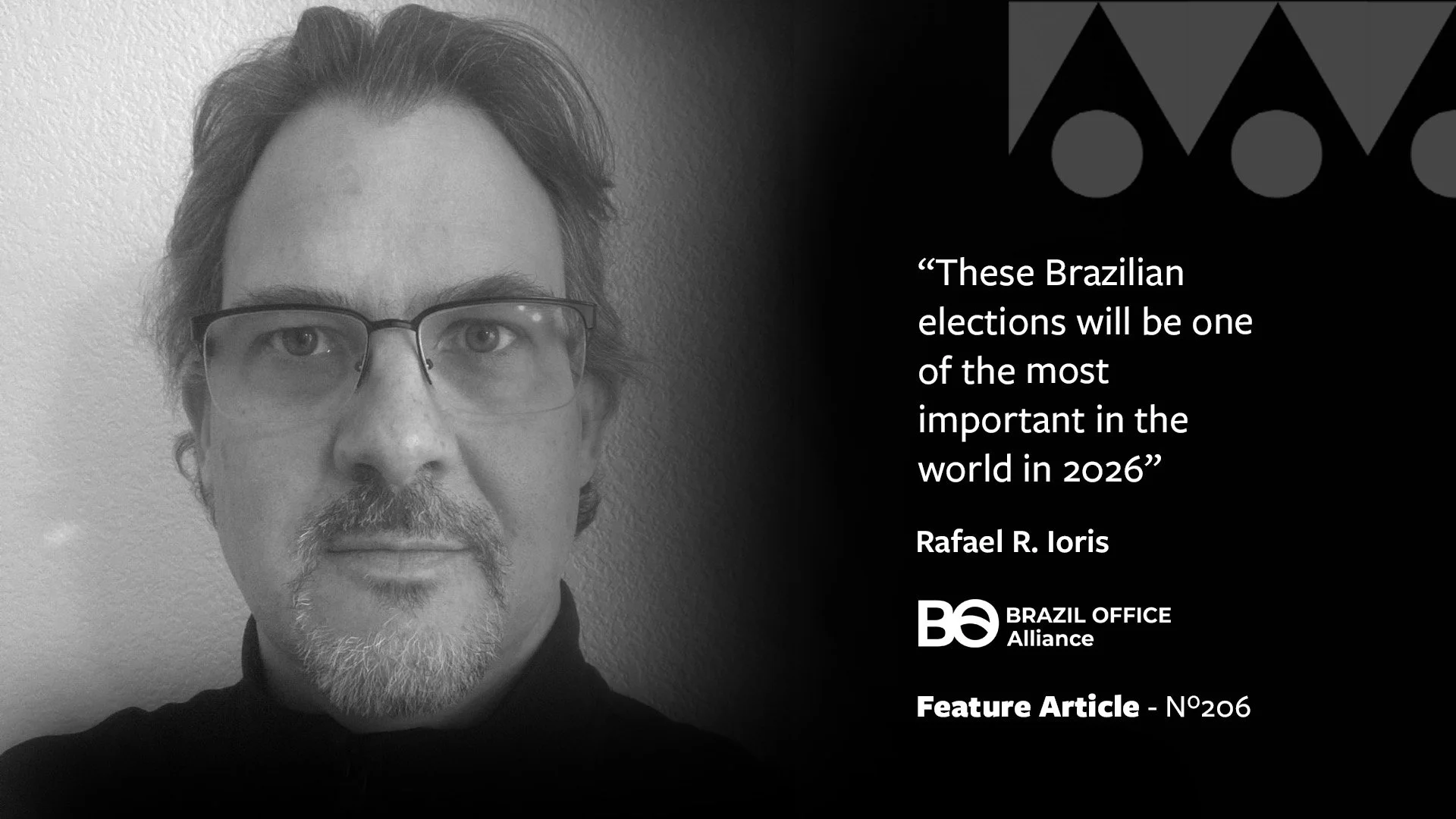
Por Rafael R. Ioris*
In a few months, Brazil will hold what could prove to be one of its most consequential elections in recent history. Until last week, polls had consistently indicated a dead heat between sitting President Luiz Inácio Lula da Silva and Flávio Bolsonaro, former President Jair Bolsonaro’s oldest son and the caretaker of the extreme-right’s positions in the country. Recent revelations indicate that Flávio has had an on-going close relations with now disgraced and recently arrested former celebrity-banker Daniel Vorcaro, the owner of Master Bank and main figure in what could prove to be one of Brazil’s biggest financial corruption scandals. This seems to have tilted the scale in favor of Lula, at least for now. But, as the turbulent winds now favoring the democratic forces currently in power in the country could eventually blow in the opposite direction, it is important to understand the elements of the structural polarization that has helped define politics in Brazil for much of the last decade.
First, one of the most remarkable features of today’s political landscape in Brazil is the persistence of the extreme right, largely under the banner of Bolsonarism, the broad, often disjoint but nonetheless effective political movement fostered and led by Jair Bolsonaro since 2016. To be sure, Bolsonarists, that is, Bolsonaro’s supporters, hold the largest number of seats in Brazil’s houses of congress with sustained influence and support across different segments of the country’s political, economic, and ideological establishments. This includes broad sectors of the federal and regional judiciaries and public ministries; state assemblies and city councils; Brazil’s most powerful media conglomerates; and a vast array of professional and business associations.
Confirming the strength of extreme-right across Brazilian society, Lula has struggled to sustain approval ratings above 50 percent, since his return to the presidency in January 2023, after a close race against Jair Bolsonaro, who likely only lost due to his consistently chaotic handling of the Covid crisis. Adding to Lula’s challenges, the Superior Electoral Court that oversees elections in Brazil is going to be led by two Supreme Court justices appointed by Bolsonaro whose voting record display a clear willingness to act in support of his political agenda. Trying to remain optimistic amidst increasingly concerning signs, Lula’s campaign believes that Flávio’s positive numbers will worsen once he becomes the main target of a campaign that will focus on bringing attention to his family’s multiple corruption cases. This seems a bit overly optimistic though, given that most of Flávio’s supporters, at least until the Master Bank revelations, have been aware of such cases but, nonetheless, prefer to have a Bolsonaro back in power than to grant Lula another presidential term.
Many Brazilians have been seeking a candidate without the last name Silva or Bolsonaro. This is particularly true among right-wing voters who would rather have someone aligned with the positions espoused by Bolsonarism but without the family’s connections with several corruption cases, such as kickbacks, ties to militia forces in the state of Rio de Janeiro, and now the newly revealed Master Bank scandal. Some favor Tarcísio de Freitas, the current governor of the powerful state of São Paulo, who has declared that he will be running for a second term for the governorship. The decision was announced after Jair Bolsonaro made clear that he preferred to try to win and then keep control of the executive branch within the Bolsonaro family. There were even speculations that Jair could support his wife Michelle, but, in the end, his misogyny, or at least parental instincts, proved to be stronger.
Other proposed names for a “third-way” candidate included Romeu Zema, the governor of the important state of Minas Gerais, and Ronaldo Caiado, a staunch right-wing landowner and former governor of the state of Goiás, the beating heart of the powerful agribusiness sector. Caiado recently announced that he is also running on a right-wing platform on the ticket of the increasingly influential centerist Social DemocratIC Party (PSD), and he is sure to support Flávio in a second round of the election, should neither Lula nor Bolsonaro reach the 50 percent vote threshold needed to prevent a runoff. Support for an alternative to Lula is also high among the parties in what is referred to as the “Big Center” (Centrão), which in fact is a group of right-wing parties and affiliated political forces. It is there that Caiado hopes to find important support, particularly among business elites, especially those associated with the ever more influential agribusiness, which is today the real engine of Brazil’s economy.
To make sense of the sustained strength of right-wing forces in Brazil, it is important to remember that the country’s political history is one defined much more by conservative leaders and positions than progressive ones. In fact, although Lula managed to be elected three times, this only happened after three failed attempts and only in very special circumstances: in 2002, when the country faced a serious economic crisis; in his 2006 reelection, when the country was conversely experiencing an economic boom; and in 2022, after the Covid crisis. What is more, it seems increasingly clear that today’s conservative socio-ideological and religious composition of the Brazilian society create an ominous scenario for Lula’s reelection bid, as well as for more progressive politics in general.
Brazil indeed has an older and more educated, but also more religious and conservative, population. It has been more attracted to the neoliberal narrative of entrepreneurialism and market-driven policies, all of which tends to favor the right wing, including its extreme version headed by the Bolsonaro clan. Moreover, the problem of violence, particularly in the country’s major cities, has historically and still today played against the Left. The anti-corruption narrative also tends to be especially problematic to the Left, even though the Bolsonaro family and their associates have been involved in many corruption scandals over the years. Thus, although the results of Brazil’s 2026 election remain uncertain, there is still a possibility that the next president of Brazil might again hold Bolsonaro as his last name. While this would represent a major redirection from what the country has been trying to achieve in terms of social inclusion and economic independence in the last three and a half years, the implications of this outcome clearly extend beyond national borders.
The international dimension of the election is in effect becoming increasingly evident not only due to its regional relevance, but also because of the potential global impact of its choices on strategic issues such as critical minerals, climate change, digital platform regulation, models of artificial intelligence development, and infrastructure for global trade. For Brazil–U.S. relations, specifically, the near-term outlook is one of great complexity and uncertainty. And depending on who is Brazil’s next president, the course of bilateral relations may indeed be very different. Some believe that having the Bolsonaro clan back in power would grease relations with the United States under Trump.
This perception is based on the close ideological ties between the Trump and Bolsonaro families. But it needs to be said that not much was achieved in terms of new partnerships and programs between the two countries during the years when Donald Trump and Jair Bolsonaro coincided as presidents of their respective countries. On the other hand, although many expected that Lula and Trump would not be able to work together, their good interaction has surprised most, and the promised tariffs against Brazilian exports to the United States have mostly not taken effect.
Concerns remain though, particularly regarding sensitive matters such as promised U.S. actions against Brazil’s independent payment platform Pix, rare earth reserves, and regulatory legislation on the big U.S. tech. What’s more, sustaining good relations with the United States in today’s turbulent domestic and international scenarios is likely to imply that Brazil assumes a lower profile on the global arena, particularly as a representative of the Global South, and, more importantly, as a key player in the BRICS+. Similarly, to appease Trump, Brazil’s strong economic ties with China would probably need to be reframed.
All in all, Brazil is likely going to have an historic election. Its outcome will help reshape the course of the country’s domestic and international policies in the upcoming years. Given the increasingly relevant role Brazil plays in the world, this promises to be one of the most consequential elections of 2026.
*Rafael R. Ioris is a professor at the University of Denver and a Research Associate at the WBO.
