
Changing the Name Doesn't Change the Problem: How Can the United States Truly Contribute to the Security of Brazil and Latin America?
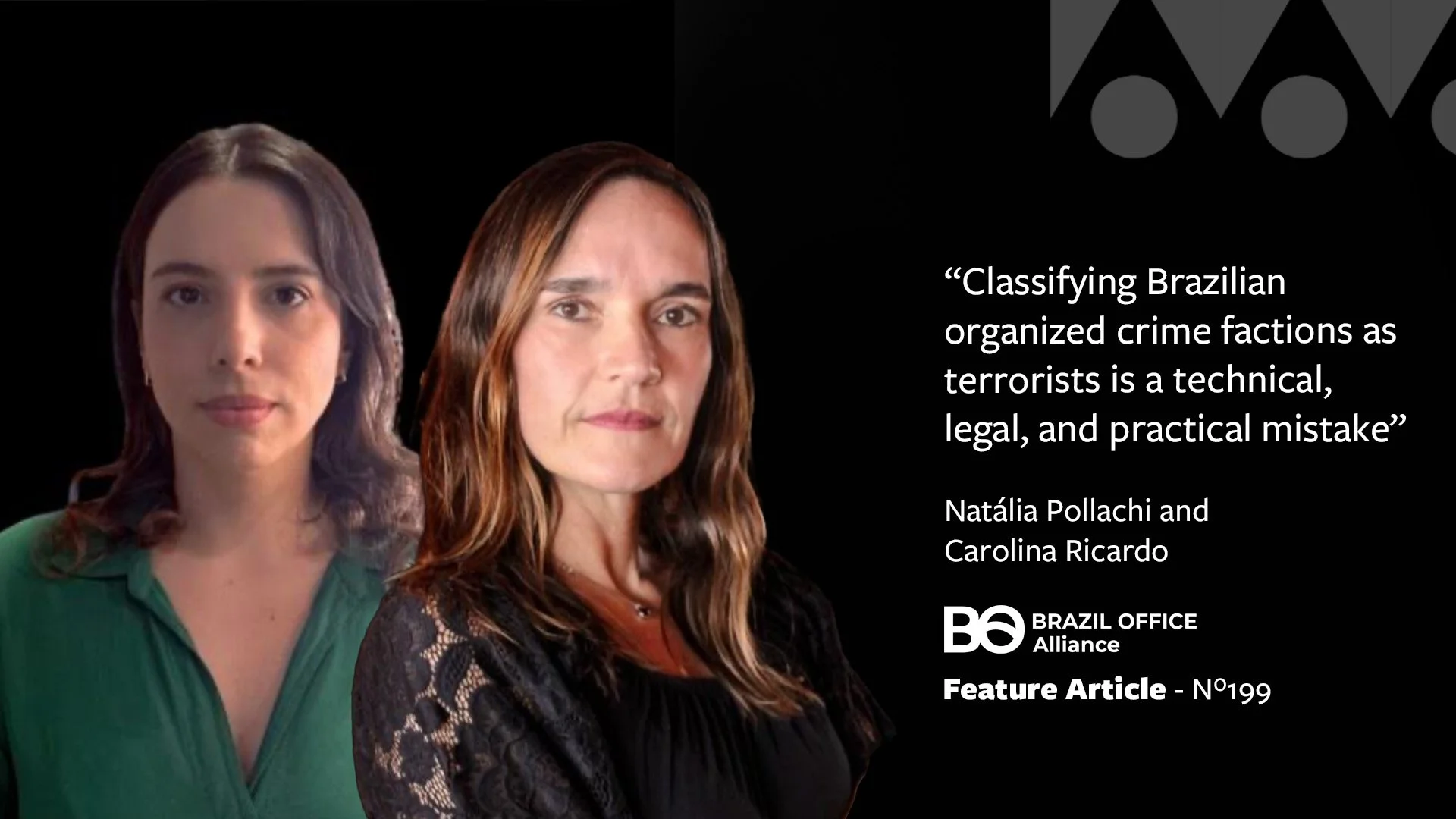
By Natália Pollachi* and Carolina Ricardo**
The United States has classified two Brazilian organized crime factions – the Primeiro Comando da Capital (PCC) and the Comando Vermelho (CV) – as threats to regional security. Furthermore, the country is flirting with the possibility of classifying them as terrorist organizations, as it recently did with drug cartels in other countries in the region. This has reignited the debate about whether organized crime in Brazil could or should be classified as terrorist. Making this classification, however, would be a mistake for several technical, legal, and practical reasons. Below, we list some of them and present an alternative for more productive cooperation in combating organized crime.
Brazilian criminal organizations do not typically use terrorist tactics, which, according to Brazilian law, are defined as those intended to generate terror or attack specific social groups. The violent actions of Brazilian organized crime, on the other hand, are limited to confrontations with state forces and disputes among themselves. In terms of motivation, there is also a difference compared to terrorist groups – Brazilian factions are motivated by economic gains and the pursuit of political or legal protection, not by an identity or ideological project. Classifying them as terrorists would open the door to a series of exceptional actions, such as increasing the already shameful rate of police lethality. At the same time, it would create justifications for foreign actions on national territory.
This does not mean that the problem of organized crime in Brazil is small or simple to solve. It only means that changing the name of the phenomenon will not help solve the problem. There are several concrete and short-term actions that the United States could take to truly help Brazil – as well as all of Latin America – to confront organized crime.
One of them is investing in combating the large flow of arms trafficking, such as rifles, submachine guns, and pistols that illegally leave the United States and supply these criminal organizations. In an analysis of the profile of all military-grade weapons seized in Brazil, published in an academic journal of the London School of Economics, we identified that the United States is the main foreign source of rifles for crime in Brazil. Analyzing emblematic cases, we see varied dynamics, including rifles whose last legal registration was due to purchases by American citizens or by importers and retailers legally operating in the United States. Years later, these same rifles are seized from Brazilian organized crime. We see shipments of complete weapons or the illegal shipment of parts and components for assembly by crime organizations here. This phenomenon affects not only Brazil, but is also widely documented in Mexico and other countries in the region.
Improving control of its own borders, ports, and airports, and holding those involved in arms trafficking accountable, is a direct responsibility of the United States government and does not imply changing any domestic regulations, only ensuring the application of existing laws. This measure would have an immediate impact on drastically reducing the availability of military-grade weapons, which is what allows organized crime groups to exert their territorial dominance, confront the police, and victimize our population. If this effective control existed, there would be a mutual benefit, as it would also impact the reduction of the supply of illegal drugs and indicators of violence that contribute to the demand for immigration to the United States.
At this moment when the Lula and Trump governments are coordinating agendas for a face-to-face meeting, it is essential that this issue be on the agenda. Of course, Brazil has much to do regarding its domestic challenges, but the same could be said of the U.S. government regarding the arms trafficking that leaks daily from its own territory. This may be a contribution with less media appeal, but it is the most effective action and directly within the country's reach.
*Natália Pollachi is project director at the Sou da Paz Institute.
**Carolina Ricardo is executive director of the Sou da Paz Institute.
