
What Does the Presence of Intersex people in the Inter-American System Reveal about the Americas?
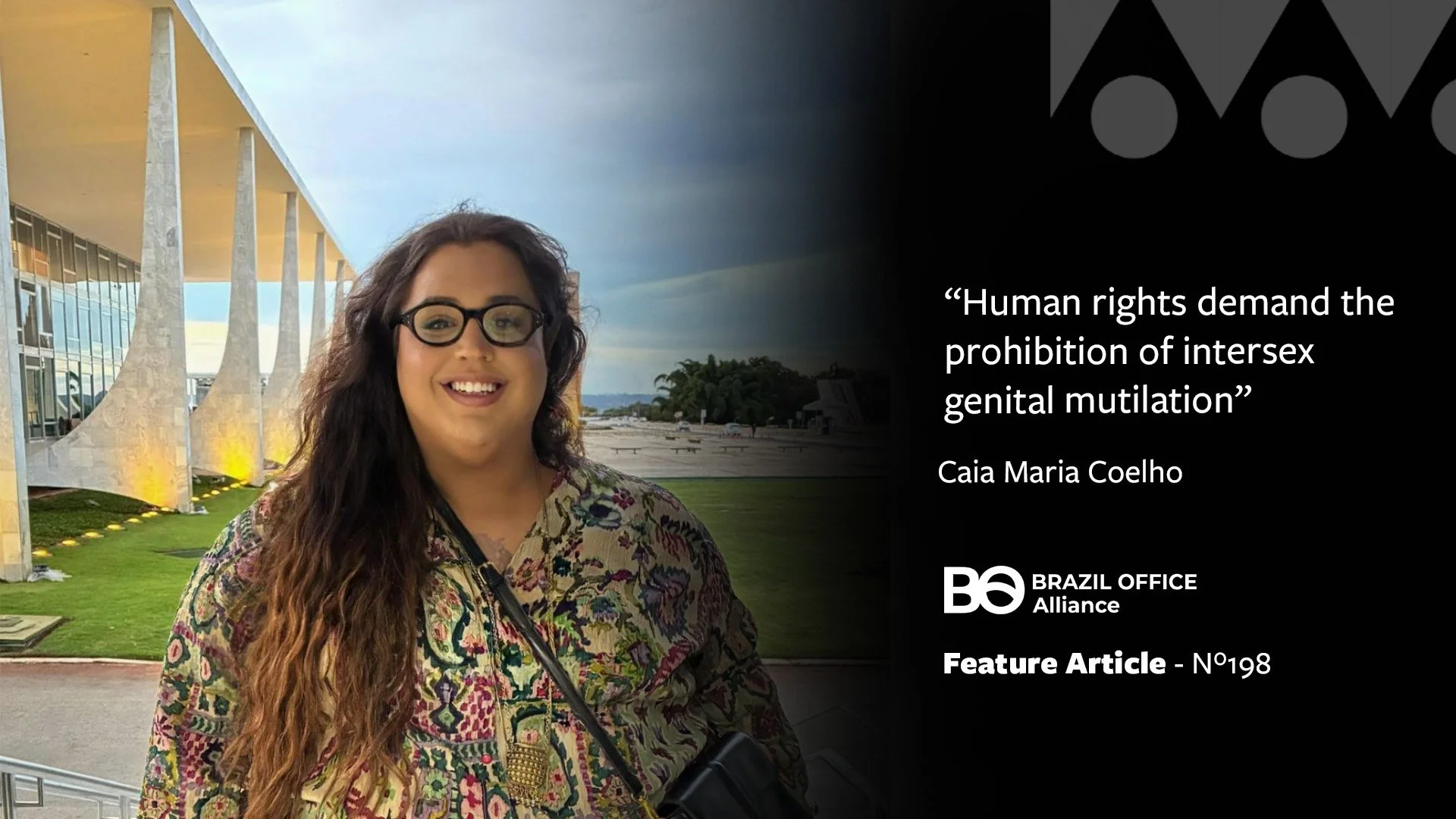
By Caia Maria Coelho*
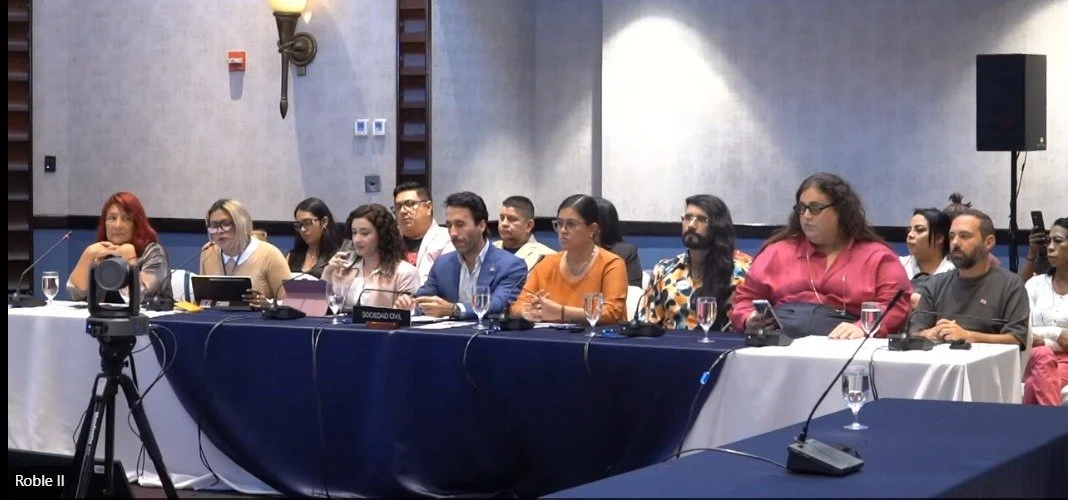
For the first time, a Brazilian intersex person, Caia Maria Coelho, co-director of Intersexo Brasil, spoke at the Inter-American Commission on Human Rights during its sessions in Guatemala. To understand the relevance of this moment, this article proposes to outline the disputes surrounding harmful practices aimed at modifying intersex bodies, as well as the institutional limitations that still structure states' responses to these violations.
Irreversible surgical and hormonal interventions continue to be performed on intersex bodies without free and informed consent, with the aim of inscribing the sexed body within the gender binary. These practices, widely documented by researchers, activists, and international organizations, have been increasingly recognized as forms of the violation of fundamental rights, including the right to bodily integrity, autonomy, high levels of health, and dignity. In more forceful terms, these are practices analogous to torture. The West has labeled “female” genital mutilation in contexts that it has often classified, without much risk of contestation, as “primitive.” However, it remains unable to confront intersex genital mutilation, often legitimized as medical care. This asymmetry reveals the persistence of a rationality that projects violence onto the other, while naturalizing that are practiced by its own institutions, selectively mobilizing human rights.
The very naming of intersexuality in a clinical context contributes to this process, insofar as highly technical language is mobilized in interactions with patients and their families, shifting the issue from the political field to the privatized domain of medical knowledge. In this framework, intersexuality ceases to be recognized as a rights issue, and instead restricts opportunities for contestation and reinforces medical authority over intersex genital mutilation.
The consolidation of medical power over intersex bodies finds a significant milestone in CFM Resolution No. 1,664/2003, instituted after the Federal Council of Medicine itself acted to overturn a recommendation from the Public Prosecutor's Office of the Federal District and Territories that sought to establish some level of external control over these practices. The resolution, in effect for 23 years, was formulated without consulting intersex people and remains anchored in pathologizing language, classifying variations as "anomalies of sex differentiation."
This is a device that neutralizes accountability mechanisms and fills the normative gap left by the public authorities. By replacing a rights-oriented guideline with one that ensures medical authority over the sexed body, the CFM consolidated a self-regulatory regime that has historically legitimized intersex genital mutilation. Currently, the processing of a new draft resolution by the Council is concerning, as the Council is advancing on anti-gender policies, signaling the risk of a resurgence of these practices without, to date, any guarantee of effective participation by intersex people themselves in the decision-making processes.
In recent years, the recognition of intersex genital mutilation has intensified within the United Nations. The approval of an unprecedented UN Human Rights Council resolution on the protection of intersex people against violence and discrimination represents a significant milestone, explicitly affirming the need for States to prohibit non-consensual medical interventions and guarantee bodily autonomy. This institutional advancement is part of a broader process of increased visibility, which has included the holding of the first event specifically dedicated to intersex issues at the UN and the growing presence of the topic in spaces such as the Commission on the Status of Women (CSW), where Intersexo Brasil was represented by co-director Vidda Guzzo.
In a global context where intersex genital mutilation has been denounced in multilateral forums, the Inter-American human rights system, in particular, appears as a strategic space for political visibility in the face of the persistent administrative and legislative lack of protection for intersex people in Brazil. Despite some progress on gender and sexuality agendas, the Brazilian state still lacks normative frameworks that fully recognize and protect the rights of intersex people. The absence of adequate regulation, coupled with the persistence of pathologizing medical protocols, produces a scenario of extreme institutionalized vulnerability.
In the Americas, institutional responses to intersex demands are often marked by normative instability. In the Chilean case, after an initial guideline recommending the suspension of unnecessary interventions on intersex children, including prohibiting irreversible surgeries that could be postponed until consent was obtained, there was a setback that reintroduced pathologizing language and reopened space for non-consensual interventions.
Years later, new initiatives reaffirmed principles such as bodily autonomy and the prohibition of procedures motivated by social or aesthetic expectations, highlighting a still deeply contested field.
In Colombia, since the late 1990s, the Constitutional Court has affirmed that medical recommendations and parental consent are not sufficient to authorize irreversible interventions on intersex children, recognizing the principle of progressive capacity and the need to consider the consent of the person themselves. Over the years, it has also established criteria for qualifying and reiterating consent, recommended the involvement of interdisciplinary teams, and, in conflict situations, indicated postponing interventions until the person could decide. Even so, in the absence of more robust national guidelines, hospitals began to define their own protocols, often without supervision.
In Brazil, Federal Deputy Duda Salabert filed the Bill for the Statute of Intersex Persons, developed in dialogue with civil society organizations and experts from various fields. Other proposals have also been presented over the years, addressing issues such as the criminalization of intersexphobia, the prohibition of cosmetic surgery on intersex children, the training of health professionals, protection against violence, and civil registration. Despite the thematic diversity and relevance of these proposals, none of them have been effectively voted on, highlighting the political obstacles that hinder the intersex agenda in the country. This scenario of slowness is a sign of the closure of deliberative channels, showing that restrictions on rights compromise the participation of intersex people in democratic life.
In this context of vulnerability, activating the Inter-American system is indispensable. In the Brazilian case, the intersex presence in the IACHR was, initially, made possible through the work of Professor Paula Sandrine Machado, who, thirteen years ago, made a significant intervention by bringing to the Commission a critical analysis of the situation of intersex people in the Americas, articulating academic research and political commitment. The recent intervention of a Brazilian intersex person in this space therefore inaugurates the historical moment in which, for the first time, an intersex person from the region speaks before the Inter-American Commission on Human Rights.
Human rights demand the prohibition of intersex genital mutilation, the guarantee of bodily autonomy, and the development of public policies that respect diversity. They also demand that intersex people and their allies be heard, recognizing them as subjects of knowledge. The intersex presence in the Inter-American system marks the transition from invisibility to enunciation and reaffirms, clearly, that democracy is incompatible with intersex genital mutilation.
*Caia Maria Coelho is the director of programs and advocacy at the Intersex Network Brazil, a technical-scientific advisor to the Brazilian Association of Trans-Homoculture (ABETH) and the Transfeminist Research Center.
