
IMF Report Shows Brazil Has Reached a New Level
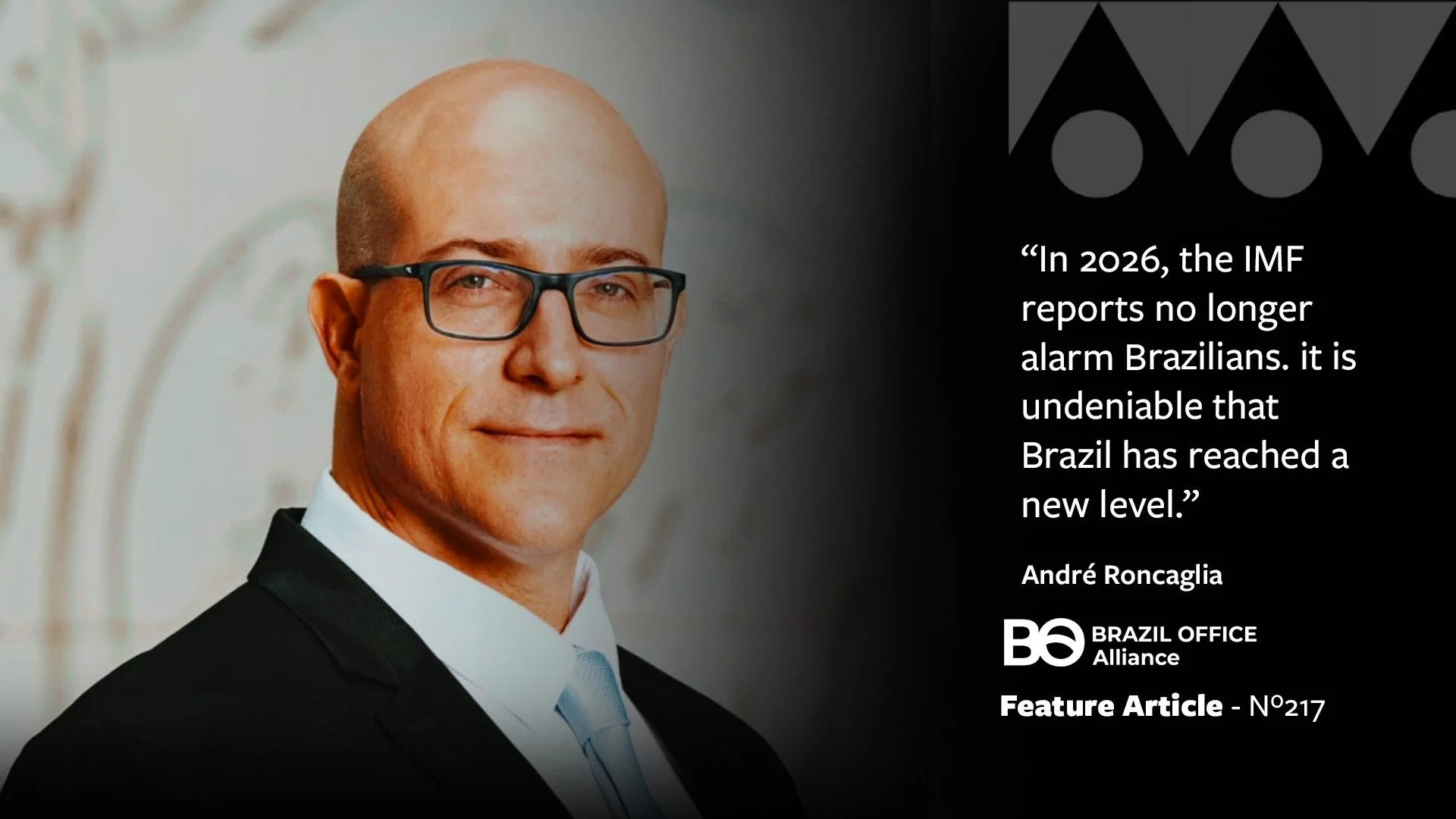
By André Roncaglia*
This article was originally published in the July 23, 2026, edition of the newspaper Folha de S.Paulo and was kindly provided by the author for reproduction in the Brazil Office Alliance newsletter.
Not so long ago, the release of International Monetary Fund (IMF) reports used to trigger considerable anxiety in Brazilian public discourse. Markets would react, and specialized media outlets would scrutinize every detail. Fears about the potential impact of IMF-imposed conditions in loan programs would mobilize social movements.
Fortunately, in 2005 Brazil turned a new page in its relationship with the IMF. That year, we paid off our debt early and became creditors to the Fund. Today, rather than imposing conditions that must be met, the IMF’s annual report offers a high-level external assessment of the Brazilian economy—one with which we are entirely free to agree or disagree.
The 2026 annual report has just been released. First, it confirms the "remarkable resilience of the Brazilian economy." The IMF projects growth of 2.4% in 2026, despite a challenging external environment. More importantly, medium-term potential growth is estimated at 2.5%, a figure substantially higher than market estimates. The report highlights the social achievements of recent years—such as the decline in unemployment, poverty, and inequality, as well as Brazil’s exit from the Hunger Map.
On the fiscal front, the report acknowledges the consolidation measures already underway—outlined in the Budgetary Guidelines Bill (PLDO) in April—and estimates that the debt trajectory should stabilize in the medium term. Even so, true to its fiscally conservative tradition, the IMF recommends that Brazil aim for a larger primary surplus and a slightly faster fiscal adjustment. While the ideal pace of fiscal consolidation may be a subject of debate, the IMF suggests measures strongly aligned with those Brazil is already taking: increasing tax progressivity, strengthening the transparency of parliamentary amendments, and eliminating regressive and inefficient tax expenditures. The Fund also highlights Brazil's budgetary rigidity, an issue that will have to be addressed sooner or later.
Recent success in controlling inflation—prior to the outbreak of the war in the Middle East—reinforces the recommendation that the Central Bank maintain its current monetary policy stance. This year, the IMF is releasing a separate assessment providing a detailed overview of the Brazilian financial system.
Despite significant progress since the last assessment in 2018, the Fund recommends allocating additional resources to the Central Bank to enable it to fulfill its functions in an increasingly complex monetary environment fraught with risks to stability. It also acknowledges that Pix has become a key catalyst for social inclusion. Nevertheless, the level of household indebtedness is a cause for concern and requires containment measures.
A significant contribution of the report to public policy debates in Brazil lies in its assessment of structural policies. This is an area where Brazil shines. According to the study, recent reforms have boosted the country's growth potential—notably the consumption tax reform, which was even recommended to Javier Milei’s Argentina in the IMF's most recent report on that country. Furthermore, Brazil has diversified its trading partners, increasing its integration with the rest of the world. The Ecological Transformation Plan and the Nova Indústria Brasil (New Industry Brazil) initiative are viewed positively. If combined with other reforms, these programs could help drive the necessary increase in our productivity.
In an international comparison, Brazil comes out looking good. As a member of the IMF Executive Board, I have the opportunity to closely follow discussions on similar reports for countries around the world. This privileged perspective gives me the conviction that Brazil is moving in the right direction. Despite historical and sociological specificities—manifested in an especially high cost of capital and a significant social debt owed to the poorest segments of society—in the current landscape, we share many macroeconomic challenges with economies of similar size, such as France, the United Kingdom, and Italy. As in other countries, the COVID-19 pandemic increased debt as a share of GDP (Gross Domestic Product) while productivity gains have remained low. Unlike other countries, however, we are managing to address these challenges within a context of sustained growth and social inclusion.
In 2026, the IMF reports no longer alarm Brazilians. We stand shoulder to shoulder with the Fund's major creditors. Whether one agrees or disagrees with the IMF's assessment, it is undeniable that Brazil has reached a new level. For those who persist in seeing the glass as half-empty, the only option left is to content themselves with being more pessimistic than the IMF.
*André Roncaglia is a professor at the University of Brasília and Brazil’s Executive Director at the IMF (International Monetary Fund).
