
Tariffs and Voting Machines: The New Phase of U.S. Pressure on Brazil
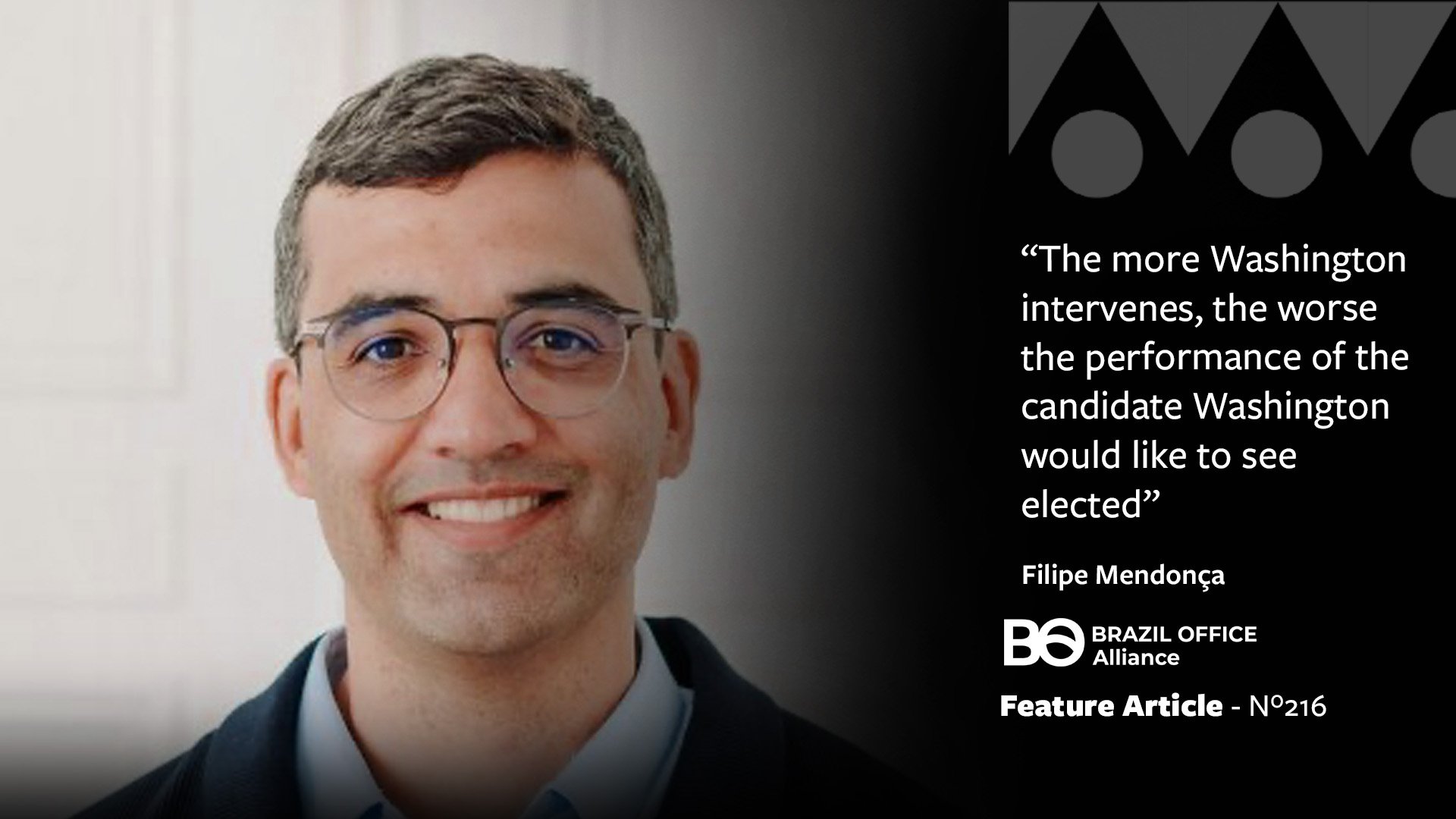
By Filipe Mendonça*
On Tuesday, August 4, the Trump administration revoked the visa of Maria Luiza Viotti, Brazil’s ambassador to Washington. Two weeks earlier, U.S. tariffs totaling 37.5% had gone into effect on a portion of Brazilian exports. That same week, Brazil denied visas to two U.S. State Department officials who were planning to visit the country to question the integrity of its electronic voting machines. All signs point to the bilateral relationship entering an unprecedented phase, in which Washington is intervening directly and simultaneously in both Brazilian trade and elections.
The tariffs
Regarding trade, a brief context is in order. In April 2025, the so-called "Liberation Day" cemented the aggressive unilateralism of "Trumpism 2.0," utilizing the International Emergency Economic Powers Act (IEEPA) as the primary vehicle. Brazil was among the prime targets, facing tariff rates well above the global average. This strategy worked until it faced legal challenges. On February 20, the U.S. Supreme Court ruled that using emergency powers to impose discretionary tariffs was illegal. Consequently, the administration shifted to relying on mechanisms with explicit Congressional authorization, such as Section 122 (temporary tariffs of up to 15% to address balance-of-payments imbalances), Section 232 (national security), and Section 301 (unfair trade practices).
Unlike the IEEPA, these mechanisms enjoy much stronger legal protection because they stem from express legislative delegation rather than discretionary emergency powers. However, greater protection does not equal immunity. On August 3, 25 U.S. states—almost all governed by Democrats—filed a lawsuit in the Court of International Trade challenging the 10% and 12.5% tariff round applied to 60 trading partners, arguing that combating forced labor had become a "pretext" for an illegal tariff scheme. A judicial reversal of the tariffs against Brazil remains unlikely, but the lawsuit confirms that the domestic political cost of the strategy is rising.
Brazil is one of the most emblematic cases of this reconfiguration. The Section 301 investigation launched in July 2025 was political rather than commercial from the outset. The final determination set a 25% tariff, which has been in effect since July 22. Two days later, a second tariff of 12.5% took effect—the result of the forced-labor investigation covering 60 economies. For most of the affected products, the two levies are cumulative. In practice, Brazilian products now fall into five categories: exempt, or taxed at 12.5%, 25%, 37.5%, or—for steel and aluminum—50% under Section 232.
Section 301 has always served as a channel for turning U.S. business grievances into unilateral pressure, as Brazil learned during disputes over the computer industry (1985), pharmaceutical patents (1987), and the digital services tax (2021). This time, the roles were reversed. U.S. lobbies acted as a moderating force, securing exemptions covering approximately 44% of Brazilian exports, including pig iron, coffee, oil, and iron ore. Spared were precisely those products the U.S. economy cannot do without, fueling its own inflation.
The impact is already measurable. The American Chamber of Commerce in Brazil (Amcham Brazil) estimated that sales affected by the 25% tariff amounted to US$ 11 billion. In comparison, those impacted by the second round totaled US$ 12.5 billion—with 85% of the latter subject to both levies. Since the initial massive tariff hike in August 2025, Brazil has lost approximately US$ 5 billion in exports to the United States. Yet, despite this contraction, Brazil’s trade surplus reached US$ 50.8 billion between January and July—a 9.4% increase over 2025—indicating that the market diversification initiated last year is cushioning the blow.
The Polls
Section 301 has become a domestic factor in the Brazilian election. During public hearings in July, Flávio Bolsonaro abandoned the tone of his original letter—which had merely suggested suspending the levies—to call for an end to the tariff hikes and even to champion the Pix payment system. Days later, Secretary of State Marco Rubio blamed Lula for the outcome, stating that the president had "put his ego ahead" of the country's interests. Lula retorted by suggesting that Rubio form a committee to support Flávio Bolsonaro’s campaign.
Washington’s gamble, however, is producing the opposite effect. Social media analyses indicate direct U.S. influence on the race, largely to Flávio’s detriment. Trump appears in 40% of mentions of the pre-candidate, who has seen a 2.3-percentage-point drop in positive mentions. A July poll by Quaest found that 51% of voters agree with Lula’s version of events—that Flávio had requested the tariff hikes. None of this decides the election, but the pattern is clear: the more Trump intervenes, the worse it goes for the candidate presenting himself as his ally.
The second front is more serious. On July 21, Flávio met with diplomats from about 40 countries and repeated accusations his father had made against the electronic voting machines—claims that had already been debunked by the Superior Electoral Court (TSE). That same week, the Washington Post revealed that the U.S. State Department planned to send two officials to Brazil to question the integrity of the electoral system. The Brazilian government denied the visas. The revocation of Ambassador Viotti’s visa days later was interpreted at the Planalto as a politically motivated response. It is worth recalling that in March, at CPAC, Flávio had framed the Brazilian election as an existential battle for the American Right, with Brazil’s critical minerals—especially rare earths—as the prize.
The result is a self-fulfilling prophecy. The more Washington intervenes—whether through tariffs or by sowing doubts about the voting machines—the worse the performance of the candidate Washington would like to see elected. And the worse Flávio performs, the greater the incentive to challenge the process's legitimacy in advance, laying the groundwork for a narrative of fraud to be deployed the day after a defeat. It is the January 8th playbook rewritten with an American accent.
What Brazil can (and cannot) do.
Brazil’s response thus far repeats, with updates, the playbook that worked in 2025. Domestically, Provisional Measure 1379 allocated R$ 18.5 billion in subsidized credit to the third round of the “Brasil Soberano” (Sovereign Brazil) Plan, covering working capital, investment, product adaptation, and—crucially—the exploration of new markets. On the multilateral front, Brazil formally requested consultations at the WTO regarding the two tariffs. With the Appellate Body paralyzed, the move is seen as symbolic. Yet, it serves a dual purpose: staking out a legal position and building a case for illegality that can be leveraged in other forums.
Notably, Brazil did not invoke the economic reciprocity law. Prudence is not weakness in this instance. The very sectors affected asked the government not to retaliate, arguing that tariff reciprocity would only remove Brazil from the negotiating table. Recent experience shows that retaliation does not sway Trump. In this framework, the law fulfills its role precisely by remaining unused; its value lies in the bargaining credibility it lends to diplomacy.
The most promising avenue for autonomy lies in diversification. Since 2025, Brazilian companies have learned to seek out new markets, and this year’s record surplus demonstrates that the lesson has been internalized. Diversification can leave a positive legacy for Brazil, provided it is pursued broadly to avoid creating new dependencies—by incorporating the Mercosur-European Union agreement, pursuing feasible regional integration, and requiring technological reciprocity from any partner, including China.
Tariffs and the ballot box will remain intertwined until October, with fresh rounds of pressure accompanying every move by Brasília that signals misalignment. For Brazil’s democratic camp, the lesson is threefold: it is necessary to negotiate without harboring illusions about the political nature of the pressure, to sustain the diversification that is already cushioning the trade blow, and to shield the October election from the self-fulfilling prophecy of fraud allegations. Brazil has survived Section 301 actions three times before. The difference now is that the target is not merely a specific economic sector; it is the country’s standing in the international order and the integrity of its democracy.
*Filipe Mendonça is a professor at the Federal University of Uberlândia (IERI/UFU), a Fellow Researcher at the Academy of International Affairs NRW (Bonn), and an Honorary Research Fellow at City St George's, University of London. He is also an associate researcher at INCT-INEU.
