
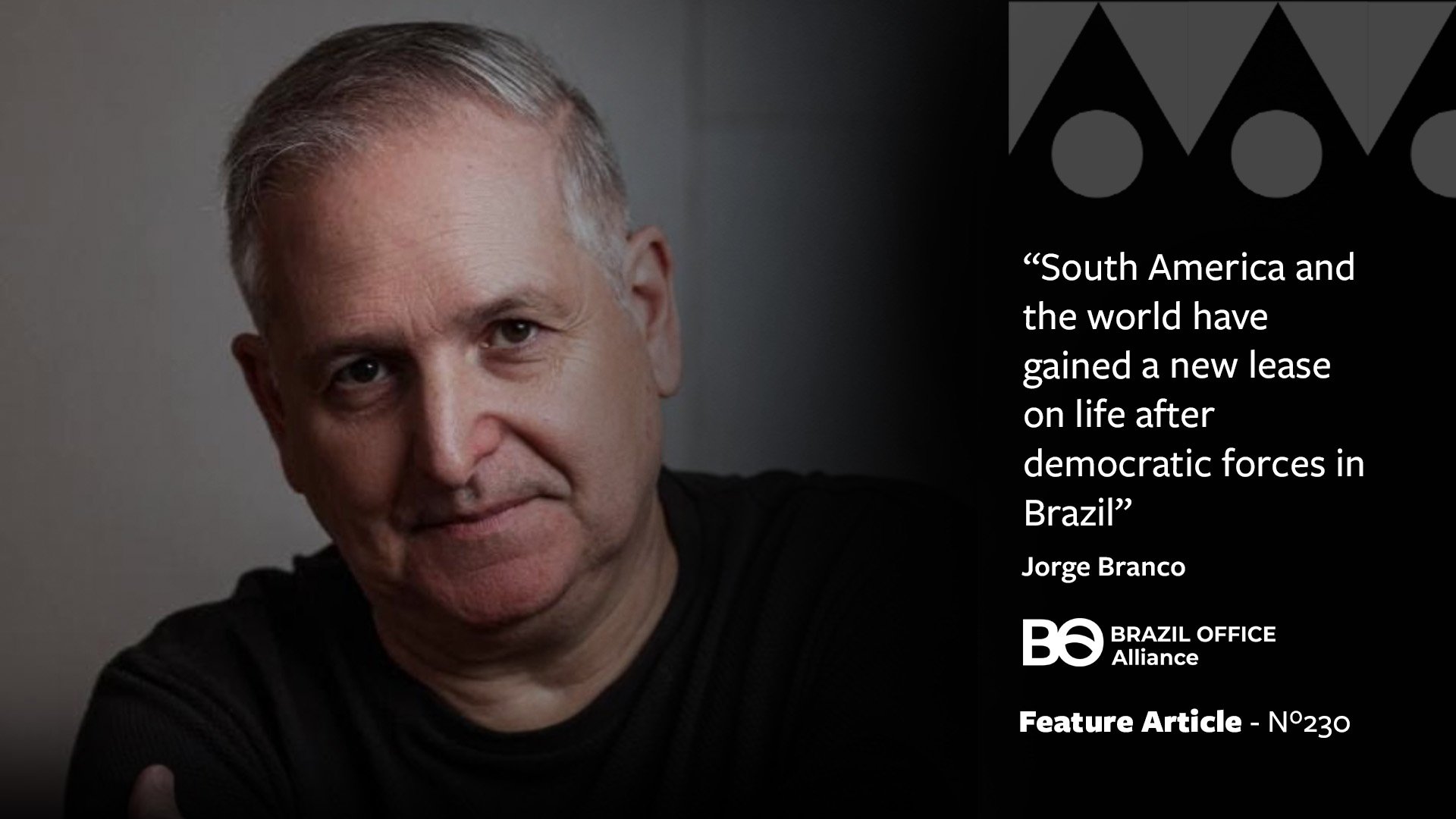
By Jorge Branco*
In geopolitics, South America and the world have gained a new lease on life after democratic forces in Brazil—marked by President Lula da Silva's reelection—defeated reactionary forces aligned with the Trump administration in the U.S. midterm elections.
This dual outcome interrupts a string of victories for the far-right and the conservative right, both on the continent and globally. It opens up positive prospects for state sovereignty and offers the potential to reverse a landscape of severe political instability. The advance of U.S. interventionism—fueled by the rise of reactionary platforms and financial elites—has imposed harsh consequences on the development of most countries in the Global South. Historically, this interference has taken the form of support for stifling economic embargoes, endorsement of institutional ruptures against sovereign governments, and the imposition of International Monetary Fund (IMF) austerity programs that prioritize repaying external debt at the expense of essential public investment.
This traditional model, rooted in the erosion of national autonomy and the consolidation of a deindustrialized, primary-commodity-exporting economy, deepens direct dependence on Washington's directives and amplifies the influence of highly globalized, rentier-oriented sectors. The alliance between reactionism and neoliberalism is anchored by the systematic dismantling of social rights—stripping away labor protections, social security, housing, healthcare, and education. This is compounded by a process of "de-democratization" and the rise of authoritarianism, which erodes institutions from within by mobilizing discontented segments of the population through well-funded logistical infrastructure and ideological control over digital networks. The democratic camp in Brazil overcame acute adversities to secure this new direction, contending with direct interference from "Trumpist" groups, the influence of major technology and traditional media companies, and the clearly biased stance of the President of the Superior Electoral Court. Brazil's outcome shows the world that there are alternatives—and real possibilities—for confronting and defeating the reactionary wave.
Meanwhile, in the United States, the advances made by progressive and even socialist factions at the ballot box have been significant, bolstered by leaders focused on expanding social rights and establishing a robust institutional check on Washington’s extremist agenda. The rise of the Democratic Party—and, within it, its left-leaning currents—during the U.S. midterm elections suggests an international landscape in which "Trumpism" is losing momentum, a shift likely to obstruct or even halt many of its interventions. Issues such as multilateralism and cooperation are poised to regain prominence on the global agenda, creating more favorable conditions for consolidating Latin American sovereignty.
This trend of resistance resonates globally through the leadership of diverse coalitions—spanning the left, the center, and liberal democrats—as evidenced by popular, youth-led mobilizations in Portugal and France, as well as the electoral gains made by the democratic camp in Spain and Bulgaria against right-wing extremism.
In this renewed context, strategic issues such as regional integration, economic cooperation, and the restoration of rights—all vital to the Global South—must become a constant and proactive agenda. The regulatory and economic challenges to securing a path toward growth, reindustrialization, and technological innovation—while ensuring environmental sustainability—will be immense. The primary adversaries in this endeavor are U.S. neo-imperialism and the high-interest-rate monetary policies driven by rentier interests. Consequently, building a broad social and political bloc rooted in the defense of democracy becomes central.
*Jorge Branco is a sociologist and professor, and holds a PhD in Political Science from the Federal University of Rio Grande do Sul (UFRGS). He is a postdoctoral researcher at UFRGS and with the WVS-Brazil/CNPq project. His research focuses on democracy, political culture, hegemony, the far right, and political behavior. He is the author of “When the Right Changed: The Emergence of Reactionism in Brazil” (“Quando a direita mudou: a emergência do reacionarismo no Brasil”).
