
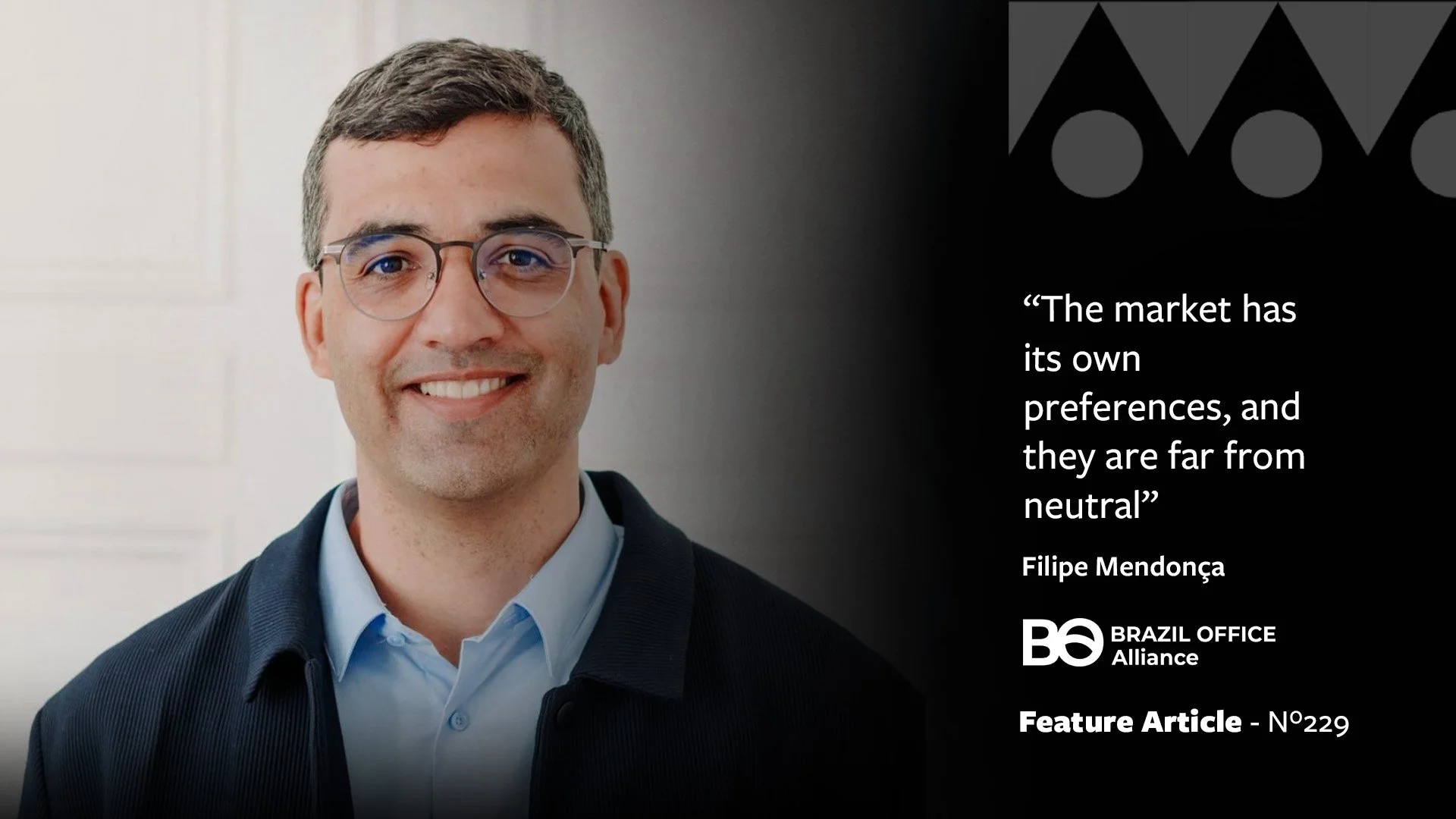
By Filipe Mendonça*
On Monday, October 26, in the first trading session after Lula’s reelection, the Ibovespa index fell 13.88%, and the B3 exchange triggered its "circuit breaker" mechanism for the first time since the onset of the pandemic. The U.S. dollar saw its largest daily gain since 1999, and futures interest rates climbed by more than two percentage points. On Wednesday, November 4, the Monetary Policy Committee (Copom) halted its cycle of interest rate cuts, keeping the Selic rate at 13.75% and citing a deterioration in inflation expectations following the election.
This was the most negative market reaction to a presidential election in 24 years—worse even than the reaction seen in 2002. And 2002, in fact, serves as the best starting point for understanding what is at stake during Lula’s fourth term.
In June 2002, with the country’s risk premium soaring and the Brazilian real in freefall, the then-candidate released his “Letter to the Brazilian People.” He pledged to honor contracts, control inflation, and maintain a primary budget surplus "for as long as necessary." After his election, he appointed an orthodox economic team. He increased the primary surplus to 4.3% of GDP in 2003 and 4.6% in 2004—levels higher than the 3.9% recorded in the final year of the Fernando Henrique administration. Confidence returned, the commodities boom did the rest, and in 2008, Brazil achieved investment-grade status when Standard & Poor’s (S&P) upgraded the country’s sovereign rating from BB+ to BBB- (the first tier considered safe for investment).
Dilma Rousseff’s case showed the other side of the coin. Between 2011 and 2012, the Central Bank brought the Selic (benchmark interest rate) down to 7.25%, while the government pressured banks to reduce their spreads. André Singer described this move as “poking jaguars with short sticks”, a developmentalist experiment that challenged rentier interests without having an organized social base to sustain it. Following the 2014 reelection, the appointment of Joaquim Levy and the recessionary adjustment of 2015 were attempts to regain lost confidence, but they ended up destroying the government’s own base of support. The stage was then set for the 2016 impeachment.
Both episodes taught the same lesson, albeit through opposite paths. In vastly different international contexts, the concessions made in 2003 averted a crisis; those made in 2015, arriving too late, failed to prevent a collapse.
None of this is unique to Brazil. One of the best analyses of this problem in the Latin American context comes from Daniela Campello. In The Politics of Market Discipline in Latin America (2015), she shows that market discipline on elected governments is conditional. It intensifies when a country relies on foreign capital and international liquidity is scarce, but loosens during periods of prosperity. During such phases, left-wing candidates often engage in what the literature calls a "policy switch"—promising redistribution during their campaigns, only to govern according to orthodox economic principles once in power. Dilma Rousseff’s second term serves as the most paradigmatic case.
Layna Mosley has shown that investors monitor only a few indicators in wealthy nations, compared to a wide array of metrics in emerging economies. This reality severely narrows policy choices in the periphery. Wolfgang Streeck has generalized this argument, describing a “market people”—the creditors—who compete with the “state people”—the citizens—for control over government leadership. Despite differences among these schools of thought, the literature converges on one point: financial markets constrain democratic choice, and Brazil is a clear example. The question remains whether this constraint reflects economic fundamentals or a political preference.
The Disconnect
The 2026 election offers the most direct test of this uncertainty, revealing a disconnect between the discourse on fundamentals and actual market behavior. In the trading session following the first round—in which Flávio Bolsonaro finished in the lead—the Ibovespa index rose 7.7%, hitting an all-time high. Yet, the platform that excited investors was far from a model of fiscal consistency. According to Nexo, it combined R$900 billion in infrastructure investments over four years (with no identified funding source), unspecified tax cuts, a revised tax reform, and a new, vaguely defined fiscal rule. The government presented an adjustment plan, involving R$ 200 to 250 billion, in closed-door meetings with the market rather than to the electorate.
In an interview with Valor, economist Eduardo Giannetti described the expectations held by the financial sector (often referred to as "Faria Lima") as a "functional lie." This pattern is not new. In 2018, selecting Paulo Guedes as a guarantor was enough for the market to treat Jair Bolsonaro’s authoritarian threats as a secondary risk. While the literature extensively documents the scrutiny left-wing candidates face, it is less definitive about why right-wing candidates with inconsistent fiscal platforms are rewarded. If the market’s assessment were based solely on debt sustainability, the reaction should be symmetrical—but it is not.
There is also a new factor. In 2002, the panic stemmed primarily from abroad. Today, Brazil holds reserves of approximately US$ 360 billion. Even so, the post-election reaction was the most intense in the series. The center of gravity has shifted from foreign capital to domestic financial capital, which, in 2026, acted openly as a political player during the campaign.
Lara Resende and the limits of the debate
The reaction to an article by André Lara Resende, one of the architects of the Plano Real, serves as a reliable gauge of how narrow the space for discussing alternatives has become. Published in September, the text argues that Brazil’s fiscal problem lies in interest rates, not in primary spending. The proposal includes bringing the Selic (the benchmark interest rate) down to 7.5% within twelve months and establishing a council to define fiscal and monetary targets jointly.
The mere news of a potential meeting with Lula was enough to rattle the market. Deputy Finance Minister Dario Durigan denied that the subject was on the president’s agenda. Gleisi Hoffmann, by contrast, described the article as essential in countering a "terrorist offensive" regarding fiscal policy. Monica de Bolle, of the Peterson Institute, aptly summarized the situation by noting that both the financial sector (Faria Lima) and the government are offering selective interpretations of the text.
One may disagree with Lara Resende, and there are valid reasons to do so, but that is not the point. The fact that the mere possibility of discussing such a proposal shifts market prices demonstrates that the boundaries of what can be debated in Brazilian economic policy are closely policed, and not by the electorate.
The Game Lula Knows
The ballot box called for boldness. In the second round, Lula turned around an election that had seemed lost, securing over 64 million votes, largely by transforming a proposed austerity plan (associated with Flávio) into a campaign weapon. The plan had included decoupling pensions and the BPC (a social assistance benefit) from the minimum wage. For this reason, the president is resisting any fiscal adjustment that might be perceived as a "betrayal of the electorate," and he has made it clear to his team that he will not touch the minimum wage.
However, the equation is not simple. Gross public debt stands at 82.9% of GDP, inflation remains above the target, and Lula will appoint six directors to the Central Bank by the end of 2027—all under the wary gaze of those who had just bet against him. No one understands this political chessboard better than he does. Lula played this game back in 2002, watched Dilma lose it in 2015, and knows that the choice of a finance minister, the scale of any fiscal adjustment, and the sequence of policy measures will all be interpreted as significant signals.
For the democratic camp, there is a twofold lesson. The market has its own preferences, and they are far from neutral. Treating asset prices as a purely technical verdict is to grant creditors a vote the ballot box never gave them. Yet this power exists, and it exacts a high price from those who choose to ignore it. The challenge for "Lula 4" is not to choose between the electorate and the market. Rather, it is to contest the very definition of "fiscal responsibility," ensuring that the will expressed by voters in October is not, once again, rewritten in the boardrooms of Faria Lima.
*Filipe Mendonça is a professor at the Federal University of Uberlândia (IERI/UFU), a Fellow Researcher at the Academy of International Affairs NRW (Bonn), and an Honorary Research Fellow at City St George's, University of London. He is also an associate researcher at INCT-INEU.
