
Mercosur and the European Union: Society, Trade, and Democracy
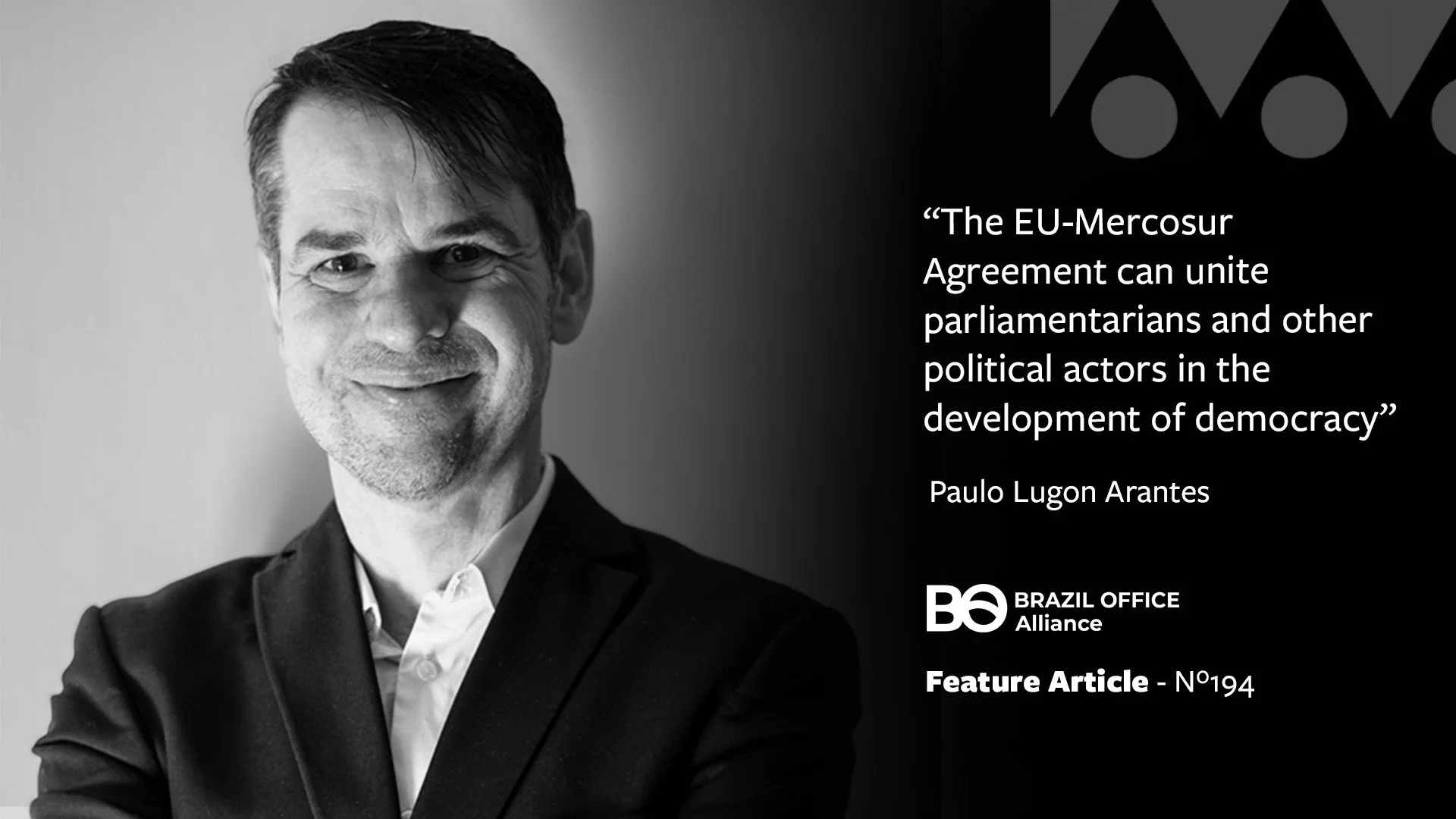
By Paulo Lugon Arantes*
The societies of two socioeconomic blocs, the European Union and Mercosur, are in the ratification phase of the world's largest agreement. The problem is that few people know that it is not just an agreement for the progressive reduction of taxes by up to 91%, as reported in the media. The Agreement is comprehensive, made up of three pillars: political dialogue, trade, and sustainable development.
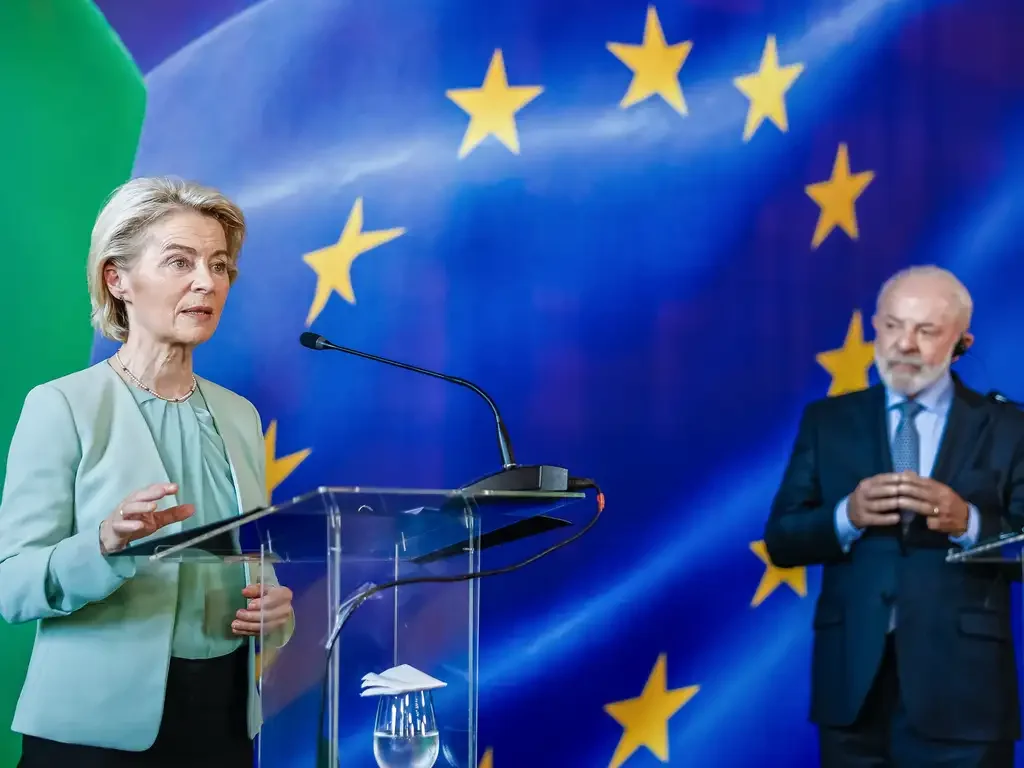
The trade pillar obviously had a more intricate negotiation, while the other two – political dialogue and sustainable development – had already been discussed since 1995, starting with the Framework Agreement signed in Madrid. Regarding trade, the members of the European Union ended up relinquishing their national sovereignty in favor of the European Commission, which assumed the responsibility of negotiating matters related to this sector. It was this detachment of the commercial part of the agreement that ended up attracting most of the press's interest and, consequently, newspaper headlines. The pursuit of fairer trade – at least in theory – accelerated the signing of the Agreement, which was negotiated with alternating low and high pressure over two decades. In 2021, President Luiz Inácio Lula da Silva stated, during a visit to Brussels, that he was interested in concluding this agreement. Ultimately, environmental, political, and technical obstacles cooled this discussion for years until Trump's tariff hikes and the American president's notorious disdain for multilateralism finally catalyzed the progress towards the adoption of the document.
Considering this is primarily an agreement between two societies, including trade, some reflections are in order:
Both blocs have two renowned regional human rights systems, where all countries within the blocs have submitted to the jurisdiction of their respective courts. On the European side, membership in the trade bloc is conditional upon ratification of the European Convention on Human Rights with automatic jurisdiction of its Court, which stimulated the transition of several European countries to democracy from the 1980s onwards.
On the Mercosur side, the Inter-American Court has ruled on landmark cases such as Vladimir Herzog v. Brazil and Gelman v. Uruguay, producing a significant body of jurisprudence in matters of transitional justice. But we, in Mercosur and Europe, still have a long way to go to maintain the democratic achievements gained with great effort.
The expansion of the European far right, breaking through “cordon sanitaire” (protective barriers) in parliaments across the continent, resonates with homologous movements in Mercosur, some even with coup-mongering tendencies. It teaches us, Europeans and South Americans, that democracy is a daily construction of fundamental freedoms.
The EU-Mercosur Agreement plays a fundamental role in uniting parliamentarians and other political actors in the development of substantive, diverse and participatory democracy. Let the São Paulo Pride Parade protest against the ban on its Budapest counterpart!
The Agreement itself does not contain harsh human rights clauses; it only mentions sanctions in case of non-compliance with the ILO's Fundamental Conventions and international environmental treaties. The sustainable development pillar, the subject of a specific dispute settlement mechanism, does not foresee similar sanctions. Therefore, the Agreement will depend on ancillary sanction mechanisms.
In this sense, it is regrettable that, on both sides, environmental governance has been significantly weakened. Working against the restructuring of the Ministry of the Environment and the National Indian Foundation (FUNAI), the Brazilian Congress has carried out an unprecedented dismantling of environmental protections since the country's redemocratization. In Argentina, the attack on the "Ley de Glaciares" (Glacier Law) is also worrying. In the North Atlantic, the European Deforestation Regulation (EUDR) and the Enterprise Directive (CS3D), which apply subsidiarily to the Agreement, have also suffered significant setbacks since 2023, leaving trade without strict environmental control.
The fairness of trade also depends on the added value of each side. Not without reason, Mercosur agribusiness, one of the big winners of the Agreement, has been criticized by Indigenous, quilombola (Afro-Brazilian), peasant, and traditional community leaders for exchanging commodities for high value-added products, perpetuating a colonial exchange relationship. Considering that over 70% of all real food comes from local farmers in both blocs, Mercosur soybeans largely become a component of ultra-processed foods for European tables, causing deforestation on one side and illness on the other. The end of the voluntary soybean moratorium in the Amazon and the advance of monoculture in the Cerrado further increase the pressure on these biomes. Obsolete pesticide formulas, banned in the EU, whose patents gain an economic lifeline through export, sicken and kill the population of the southern hemisphere, leading to UN condemnation in the Portillo Cáceres v. Paraguay case.
Beyond business as usual, the Agreement can and should play a fundamental and invigorating role in relations between the two societies, including, obviously, trade. A reciprocal flow, not only of capital, but also of people, ideas, and solidarity, is a promise to be fulfilled, giving value to the exports of each bloc. May commodities not be exported with indigenous blood on them, and may xenophobia cease to plague the South American diaspora community in Europe. Finally, may there be genuine dialogue between female parliamentarians from both blocs, valuing democracy, which has become an increasingly rare commodity in global trade.
*Paulo Lugon Arantes is a lawyer, an expert in international human rights protection, and coordinator of the Europe Brazil Office (EBO). He holds a bachelor's degree in legal sciences from the Federal University of Espírito Santo, UFES (1999); an LL.M. in International and European Human Rights Protection from Utrecht University (2003); and a doctorate focusing on racial discrimination from Katholieke Universiteit Leuven (2019). He is currently a professor, consultant, and expert witness with extensive work in the UN human rights protection system.
