
The Implications of the Lula-Trump Meeting on Brazilian Domestic Politics in an Election Year
By Guilherme Casarões*
Amid the presidential race and in the wake of bitter defeats in his relationship with Congress, President Lula da Silva set aside a few days in his agenda as president and pre-candidate for re-election to meet with Donald Trump in Washington on Thursday, May 7th.
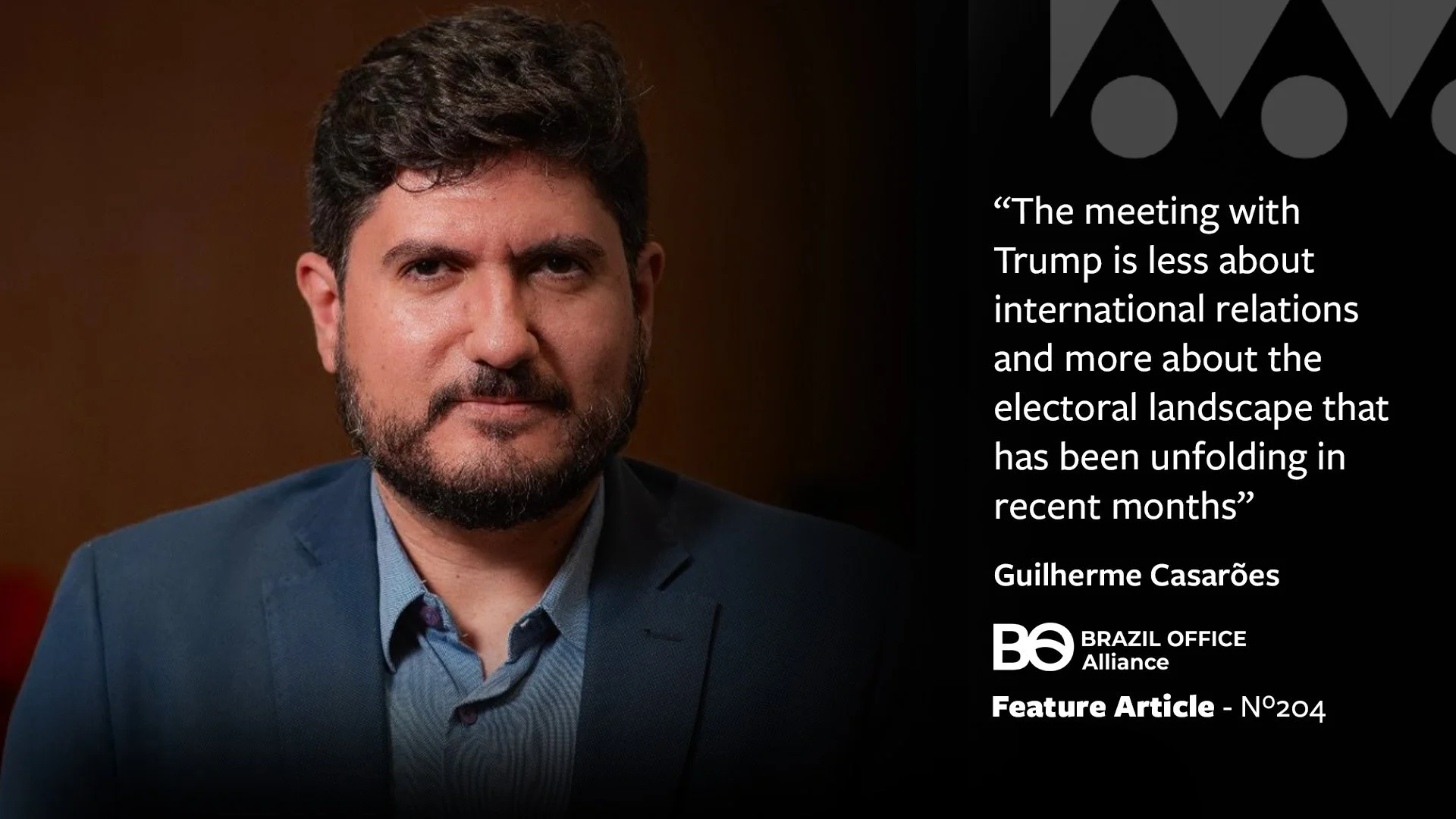
Unlike the numerous international trips Lula has undertaken throughout his term, the meeting with Trump is less about international relations and more about the electoral landscape that has been unfolding in recent months.
At first glance, this is unusual. For decades, a maxim has dominated the analysis of Brazilian elections: foreign policy doesn't win votes. In fact, geopolitical or commercial agendas rarely excite the broader electorate. However, something began to change in the 2018 elections, when Jair Bolsonaro, presenting himself as anti-PT (Workers' Party) and anti-establishment, began to mobilize foreign references as campaign slogans.
"If the PT wins, Brazil will become Venezuela" was a powerful idea, albeit fallacious, that sought to associate the Brazilian left with Venezuelan authoritarianism, which at that time was already responsible for a humanitarian, economic, and political crisis on the other side of the border.
Bolsonarism didn't stop there. He promised Evangelical and Jewish voters the transfer of the Brazilian embassy in Israel to Jerusalem. More than that, the movement built its identity on an existential association with the President of the United States, Donald Trump, then in his first term.
Pretending to be the "Trump of the tropics," Bolsonaro promised a radical political shift if elected. And if he didn't achieve it in his four years in office, it wasn't for lack of effort, but due to a mix of widespread incompetence and social and institutional resistance.
Eight years later, history repeats itself. Jair Bolsonaro is ineligible and imprisoned, but his eldest son, Flávio, is in full campaign mode around the world. In just a few months, he visited El Salvador, Israel, Bahrain, France, and went to the United States at least three times – obvious destinations for someone openly seeking to consolidate a broad transnational far-right alliance.
During one of his trips to the United States, the senator participated in the traditional Conservative Political Action Conference (CPAC), one of the main events linked to the Trumpist movement. On that occasion, he promised, if elected, to replicate his father's government, both in its conservative agendas and in its submission to U.S. interests.
The motto of Flávio's pre-campaign is very simple: only a Bolsonaro can cooperate with Donald Trump's White House, and only cooperation with the United States can generate prosperity for Brazil in the long term.
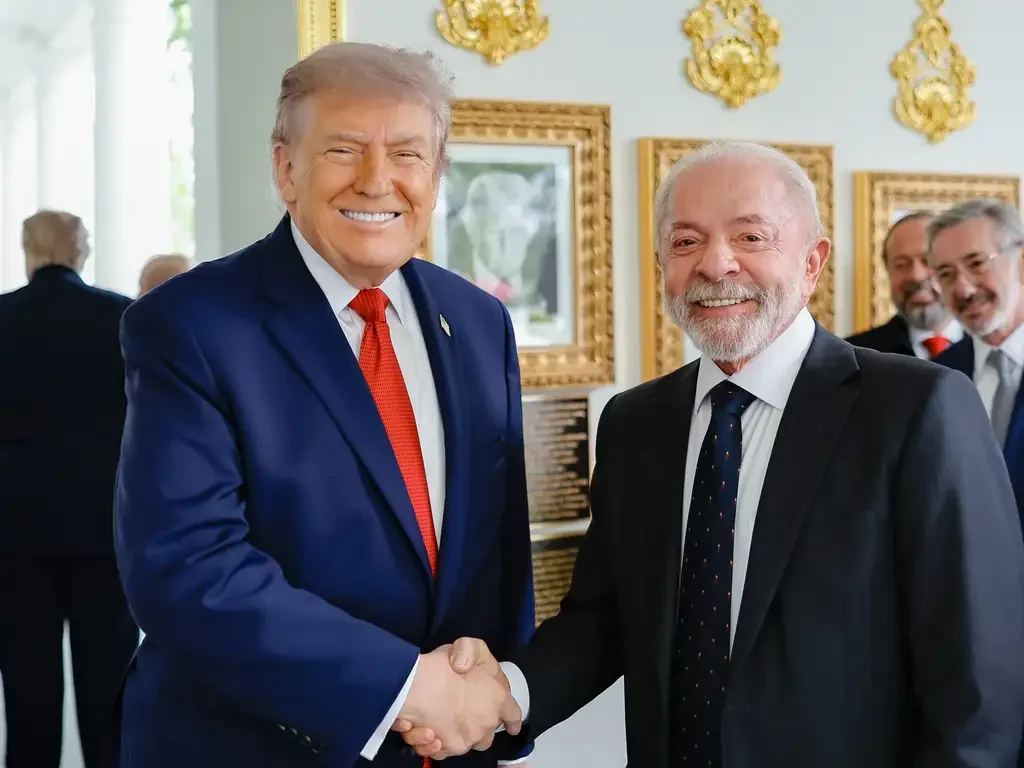
Lula's trip to Washington would put this narrative to the test. On the one hand, there was a declared “chemistry” between Trump and the Workers' Party leader since their meeting at the United Nations last September. On the other hand, bilateral tensions were far from being entirely overcome: even after the United States backed down on tariffs and sanctions against Brazilian officials, disagreements remain regarding trade, financial, and security issues.
By meeting with Trump for three hours behind closed doors, Lula dismantled the Bolsonaro narrative – at least for now. The absence of the press, at the request of the Brazilian delegation, allowed the conversation to be conducted without the risks of public embarrassment or misleading signals.
The result, reported by Trump in a social media post and discussed at length by Lula and his ministers in a subsequent press conference, was positive. Brazil and the United States did not reach any concrete agreement, but signaled a mutual desire for more cooperation and for addressing disputes through diplomatic channels.
Lula's foreign policy had already proven its resilience throughout last year in the context of numerous attacks from the White House against the Brazilian economy and democracy. It also reveals that the current Brazilian government is capable of fostering a constructive relationship with the Trump administration.
It also became evident that Lula's pragmatic and universalist global strategy does not prevent Brazil from maintaining simultaneous partnerships with the United States, China, the BRICS, and the European Union.
But the most important result concerns the electoral scenario, which today shows a virtual tie between Lula and his main rival. Besides neutralizing the narrative of Bolsonaro's foreign policy, the meeting in Washington touches on central domestic issues for the presidential race.
By reaffirming the importance of bilateral trade and rejecting tariffs, Lula and his team sent signals to relevant sectors of agribusiness and the business community that depend on the US market.
By encouraging bilateral cooperation in the fight against organized crime, the Brazilian government demonstrates that it is in tune with the public security agenda, treated by voters as an absolute priority and frequently portrayed by Bolsonaro's supporters as if it were an issue exclusive to the right.
By proposing the opening of the Brazilian market to more American investments, including in the field of critical minerals, Lula demonstrates that it is possible to cooperate on strategic issues without relinquishing sovereignty.
Although a meeting of this nature is unlikely to be enough to change the course of the October elections, Lula has taken an important step. In a political context where domestic and foreign policy are intertwined, this demonstration of diplomatic pragmatism goes hand in hand with the government's ability to handle difficult domestic agendas.
To the centrist voter, who will still have a few months to evaluate the presidential candidates, the message is clear: defending sovereignty pays off and is more efficient, from any perspective, than vows of ideological submission to foreign interests.
*Guilherme Casarões is an Associate Professor of Brazilian Studies at Florida International University. He is Coordinator of the Observatory of the Far Right (OED) and a WBO fellow.
