
Water Resources and Social Justice: The Challenge of Quilombola Communities
By Samara Santos*
Quilombos emerged in the mid-sixteenth century as a form of resistance by enslaved Africans seeking freedom from colonial oppression. Throughout their historical trajectory, these communities consolidated ways of life based on a collective relationship with the land, the preservation of traditional knowledge, and the sustainable use of natural resources – essential elements for their social, economic, and cultural reproduction.
Currently, several quilombola communities face threats stemming from the uncontrolled expansion of monocultures onto their territories, a process that has had significant impacts on their forms of organization and permanence in historically occupied spaces. This scenario is associated with the capitalist economic model, oriented towards the intensive exploitation of natural resources without due consideration of environmental, social, and cultural costs, favoring the prioritization of economic interests to the detriment of the protection of traditional territories. As a consequence, the activities that guarantee the livelihood of the communities and their traditional way of life have been compromised, contributing to the occurrence of environmental racism and subjecting these populations to conditions of greater socioeconomic and environmental vulnerability and, in some cases, to rural exodus.
In this context, access to water, one of their main bases for survival, is threatened. This resource is essential for human consumption, food production, economic activities, cultural practices, and the maintenance of collective health.
The increasing pressure on the Cerrado's water resources highlights the vulnerability of quilombola communities, whose subsistence depends directly on the availability of water. In this sense, Althoff, Rodrigues, and Silva (2021), when analyzing 4,531 river basins of the biome (drainage areas and river stretches coded according to the Otto Pfafstetter method), identified an unequal spatial distribution of water availability, with higher rates in the western and southern portions and lower rates in the eastern and northern regions. The authors also observed greater pressure on water resources in the months of September and October, with the latter showing the highest occurrence of high risk (28.2%), while the average risk levels were 2.4 in September and 2.3 in October. Furthermore, they observed significant differences in hydrological dynamics between regions of the biome, with higher levels of infiltration, soil moisture, and runoff in the west and southwest. These results highlight the hydrological heterogeneity of the Cerrado and indicate greater vulnerability to water scarcity in certain areas. In this context, quilombola communities, whose social and economic reproduction depends directly on water availability for consumption, agricultural production, and food security, are particularly exposed to the impacts of these changes, which may deepen historical inequalities in access to natural resources.
There is also research by Jorge, Ferreira, and Filho (2024), which analyzed 27 rural quilombola communities in Goiás and the Kalunga territory, totaling 371,010.25 hectares, using data from 1985 to 2020 from MapBiomas integrated with information on soils, slope, and fire scars.
The results show that these communities maintain a predominance of native vegetation over time: in 1985, 86.38% of the area was covered by native vegetation (320,487.96 ha), and in 2020 this percentage was still 81.65% (302,928.29 ha). During the same period, 19 communities remained predominantly covered by native vegetation, while only two were more affected by the advance of agriculture, and seven began to show greater pasture cover.
The study also points out that a large part of these areas is located on soils and slopes poorly suited to mechanized agriculture, which helps reduce the pressure for intensive land conversion and favors the conservation of the Cerrado.
Furthermore, the highest occurrence of fire was recorded in 2014, with 36,350.19 ha burned (9.45% of the total area), followed by 2010, with 31,516.11 ha (8.19%), while 2009 presented the lowest occurrence, with 1,917.45 ha burned.
These data reinforce the idea that quilombola lands act as a conservation space because they combines traditional land use, less intensive production, and maintenance of native vegetation cover, which contributes to the protection of biodiversity, soil, and water resources. Traditional knowledge is important because it guides practices adapted to local conditions, respects the environmental limits of the land, and favors less degrading forms of occupation. In the case of this study, this contribution appears indirectly, through the permanence of extensive native cover and the low conversion of land to more intensive uses.
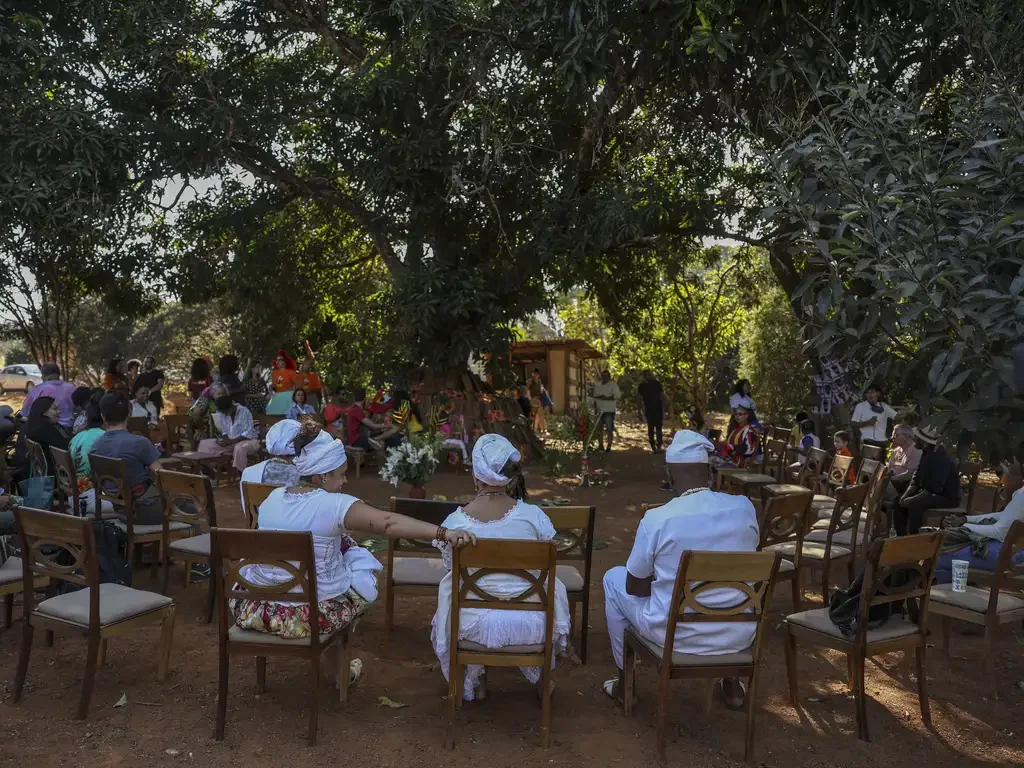
The research conducted by Moreira and Heller (2025) in the quilombola community of Croatá, located in the municipality of Januária, Minas Gerais, concretely demonstrates the difficulties faced by quilombola communities in accessing water and basic sanitation. The study found that the community does not have an official water supply network, depending mainly on rainwater harvesting and, during periods of drought, on water supply by Civil Defense tanker trucks. Furthermore, there is no monitoring of the quality of water consumed by the population.
Regarding sanitation, among the 32 residences analyzed, only 3 had adequate sanitary infrastructure, while the others had incomplete or precarious facilities. The results demonstrate that, given the insufficiency of public actions, the residents themselves need to develop strategies to meet their basic needs for water supply and sanitation, although several demands remain unresolved. This scenario highlights a persistent condition of socio-environmental vulnerability and reveals how the precariousness of essential services affects historically marginalized populations more intensely, configuring an expression of environmental racism through the unequal distribution of infrastructure and access to water resources (Moreira; Heller, 2025).
Given this scenario, it becomes fundamental to expand public funding, international cooperation, and accountability of global commodity chains focused on the conservation of the Cerrado, especially in actions to protect water resources, regularize traditional territories, strengthen public policies, and promote adequate infrastructure for quilombola communities.
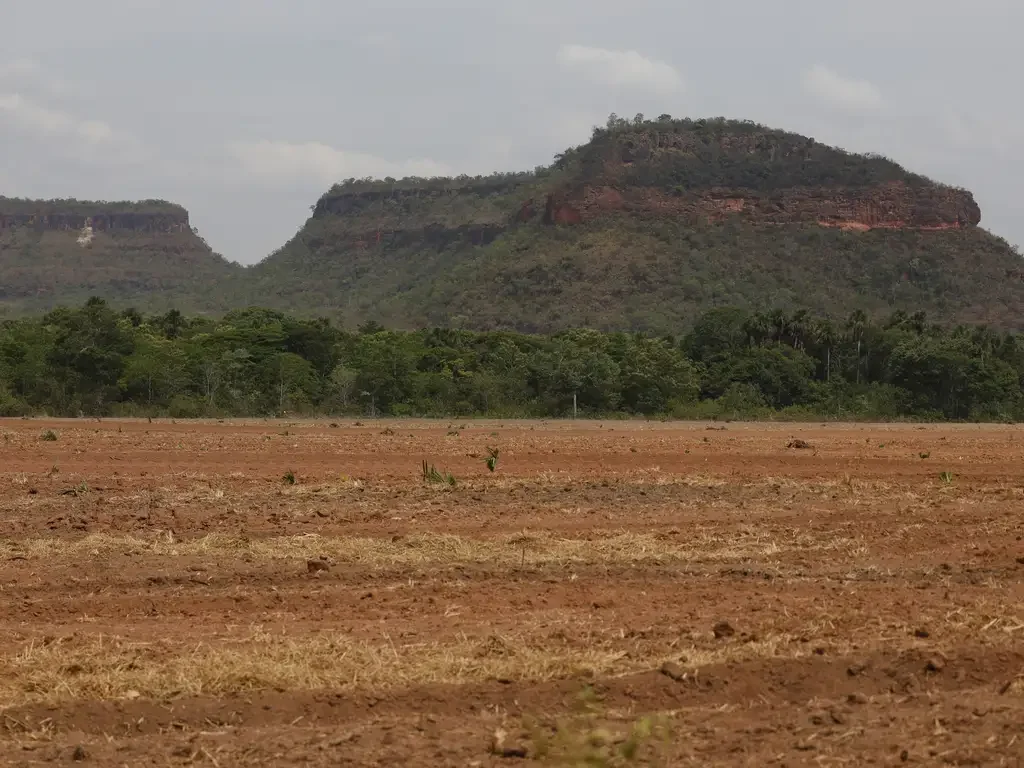
International participation in this process is necessary because a large part of the agricultural production associated with pressure on the biome, such as soy, beef, and other commodities, is destined for the foreign market. This means that the economic benefits of exploiting the Cerrado's natural resources are shared globally, while the environmental and social impacts remain concentrated in local communities. Therefore, importing countries, multinational companies, and international organizations also have a responsibility to promote more sustainable production chains and to finance conservation and climate adaptation initiatives.
In this context, quilombola communities play a strategic role in the preservation of the biome, since their lands maintain high levels of native vegetation and their traditional knowledge favors management practices compatible with the conservation of biodiversity, soils, and water resources. Thus, investing in the protection of these territories represents not only a measure of social justice but also an essential strategy to contain the advance of deforestation and guarantee the conservation of one of the most important biomes for the water, climate, and environmental security of Brazil and the world.
*Samara Santos de Oliveira is part of the Rio Paranaíba community in Minas Gerais, and of the Rede Retalho network.
