
In meetings with United Nations and European Union representatives, and through engagement with the U.S. Congress, Cerrado leaders are bringing territorial rights violations to the international agenda and discussing mechanisms to protect the rights of Traditional Peoples and Communities.
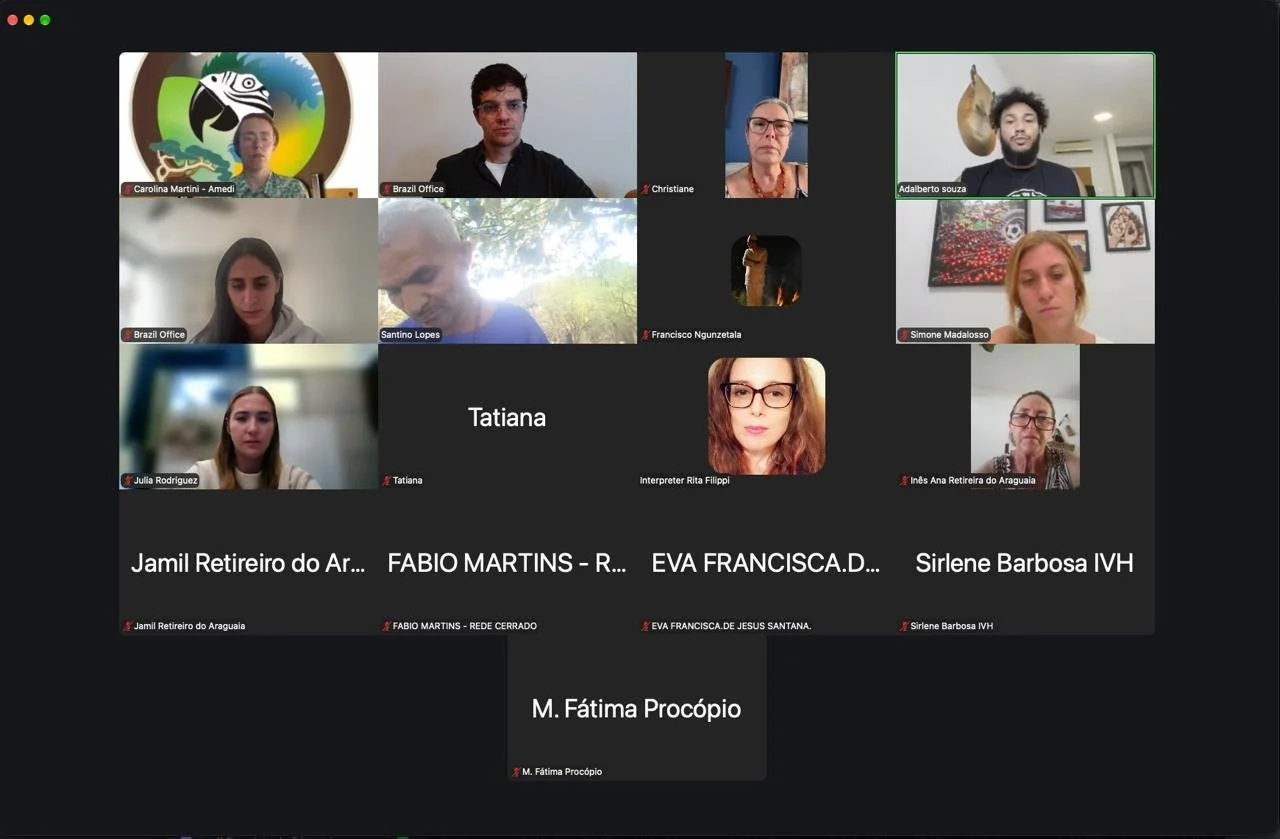
Brazil, October 8, 2026 — Leaders of Traditional Peoples and Communities (PCTs), including communities of African-rooted traditions, and representatives of the Working Group (WG) of the Cerrado Internationalization Project expanded their international engagement in September through dialogues with the UN Special Rapporteur on the Right to Development, representatives of the European Union, and interlocutors in the United States Congress.
“We are losing access to lands that our families have used for generations. Deforestation and declining water levels in the Araguaia threaten our traditional ways of living and producing. We preserve the Cerrado, but we need our rights to be recognized and respected,” said Jamil Tavares de Sales, a leader of the Retireiros do Araguaia in Mato Grosso, during the meeting with the UN Special Rapporteur.
These engagements are part of a collective strategy that combines leadership training in International Human Rights Law with international advocacy, seeking to bring the demands of Indigenous Peoples and Traditional Communities into debates on development, climate, trade, and the responsibilities of States and businesses.
Essential to South America’s water security and biodiversity, the Cerrado faces mounting pressure from deforestation, mining, agribusiness, and large-scale development projects. Testimonies gathered by the Working Group point to land tenure insecurity, water degradation, violence against community leaders, and the lack of consultation with affected communities.
“The Cerrado is our source of water, food, livelihoods, and life. The advance of deforestation and monoculture plantations threatens our veredas and our communities. We need to protect this territory now so that future generations can preserve their ways of life,” said Santino Lopes de Araújo, representative of the Central Association of Veredeiros (ACEVER).
From Territorial Complaints to International Action
On September 8, representatives of the Working Group met with UN Special Rapporteur on the Right to Development Surya Deva and a member of his team. The dialogue included reports of territorial rights violations and concerns about development models that disregard the rights of affected populations.
The Special Rapporteur’s team advised the Working Group to submit a formal communication to the UN Special Procedures, including the possibility of coordinated action across mandates and raising questions with States and companies, based on documented allegations of human rights violations.
During a separate meeting with European Union representatives in September, the Working Group raised concerns about the limitations of the EU Regulation on Deforestation-Free Products (EUDR), whose definition of “forest” excludes significant portions of Cerrado ecosystems. The organizations advocated for traceability mechanisms that include information on human rights violations, land conflicts, and traditional territories that still lack formal legal recognition.
Engagement with the office of U.S. Representative Sydney Kamlager-Dove is part of a broader strategy to engage with the United States Congress on protecting environmental defenders, addressing territorial conflicts, and ensuring accountability across supply chains.
Community Rights at the Center of the Debate
For the Working Group, protecting the Cerrado means guaranteeing the territorial, cultural, economic, and environmental rights of the peoples who have historically conserved it. This includes access to land and water; free, prior, and informed consultation and consent, in accordance with applicable standards; protection for community leaders and human rights defenders; and recognition of traditional ways of life.
The international agenda is part of the Cerrado Internationalization and Defense Project, which brings together community leaders, technical teams, and civil society organizations, with support from AMEDI and the Vladimir Herzog Institute (IVH).
The challenge now is to translate greater international visibility into concrete monitoring and protection mechanisms that bring community demands into the policies and decisions affecting their territories.
