
COP of Truths: If Belém Didn't solve Issues, It Set an Agenda
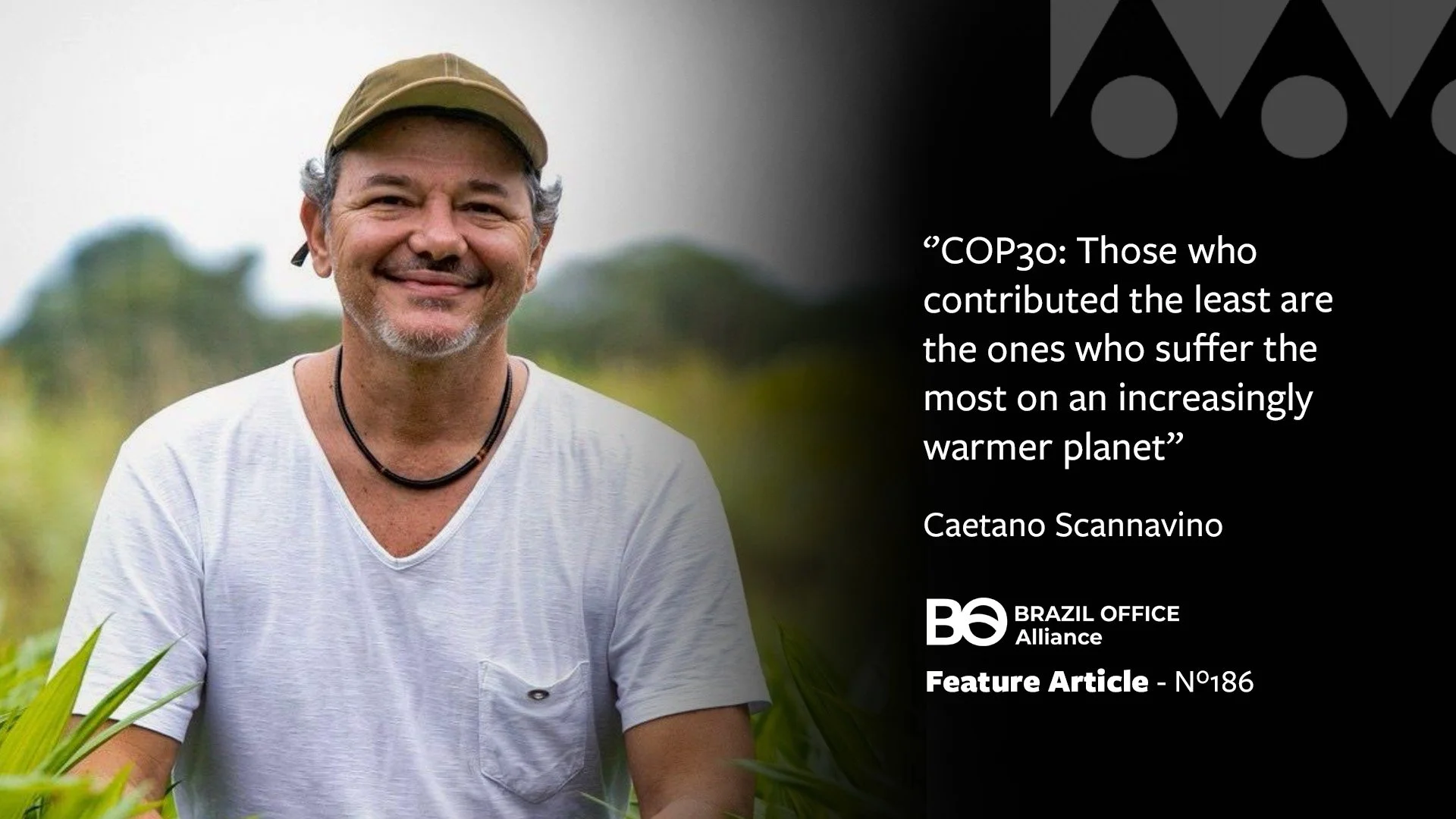
By Caetano Scannavino*
This article was kindly provided by the author for publication on the Aliança Brazil Office website on December 8, 2025, after having been originally published on the Papo de Responsa blog of the Folha de São Paulo newspaper on December 3. Click here to access the original publication.
Truths be told. We already knew, but Belém further exposed the disregard for its own future of the most powerful nations, which call themselves the leaders of humanity.
From the permanent members of the UN Security Council, at COP30 we saw a weakened Europe, a Russia at war, and the absence of the now climate change denying United States, the planet's biggest polluter along with China, which showed little willingness to make progress.
If there is any consensus among them, it is the need for more funds for weapons. Moreover, military spending in 2024 reached US$2.7 trillion, more than double the amount sought (US$1.3 trillion per year) to support the poorest nations in addressing climate change.
Given the difficult situation, expectations for ambitious agreements at COP30 were always low. By that metric, Belém even managed to deliver some results. If we needed to rush, at least we moved forward, in the areas of just transition, attention to the most impacted populations, global adaptation goals, forests, financing, new NDCs, "less bad," but insufficient, as usual.
Everything still needs improvement, and some already have deadlines and agendas for continuation. This has been the case with the last COPs, in the mold of those meetings, namely, to schedule new meetings.
The Conferences of the Parties, by themselves, have not been sufficient to address the magnitude of the planetary climate challenge. Yes, it's better to have COPs than not, but other mechanisms, other instances, and political movements beyond the annual diplomatic cycles are necessary for more effective global governance.
Climate should be a priority agenda item in neighborhood meetings as well as in G20s, OPECs, or World Forums. For this, social mobilization is crucial.
That's where Belém showed what it's made of, demonstrating the strength of a COP of civil society, from the Amazon, from the Global South. That's the glass that is half full.
It was the COP that had [Chief] Raoni and [shaman] Davi Kopenawa together speaking about the falling sky, with the biggest march of all, carimbós at the Açaí Fair, and lots of sound equipment. Belém was a host city that radiates culture, a receptive people, a vibe of human warmth necessary to bring the real (and unequal) world into the negotiations, something lacking in recent editions.
Baku, Dubai, and Sharm El Sheikh were three COP conferences held in countries with restrictions on social participation. There was a pent-up clamor for mobilizations of civil society from Brazil and the world, something that the streets of Belém, more than anyone else, know the path to.
Of the thirty conferences held up to that point, this one had the greatest participation of Indigenous and traditional peoples, the legitimate Amazonian hosts who were demanding more space in the decision-making process. We had important movements such as the COP of the Baixadas and the People's Summit, with more than 30,000 people gathered in parallel concerts at the Federal University of Pará.
From headdresses to the porongaço (a traditional Amazonian dance), from boat parades to a record-breaking march with more than 70,000 people, society, without pens in hand (nor credentials), pressured those who have them to emerge from their lethargy, for well-being, for the ancestral future, for ways of life different from the one that is leading us to the end.
It was from the Global South, from the mobilization of organizations and social movements, that real agendas emerged, where climate is not just about carbon. It is also about social justice, rights, reparations for Afro-descendants, and recognition of the demands of Indigenous and traditional peoples as part of the solution. Without social issues, there is no environmental impact.
Those who contributed the least are the ones who suffer the most on an increasingly warmer planet. Pure truth.
As much as the roadmaps for ending deforestation and the burning of fossil fuels, these are the real paths forward. After all, there have been 30 COPs without any agreed plan or timetable for the gradual elimination of oil, gas, and coal, which represent more than 70% of the emissions that are leading us to climate collapse.
Forests and biomes are the best, cheapest, and safest remedy, because without them, the planet loses its own climate regulation system.
As scientist Antonio Nobre rightly points out, "It's not enough to just stop drinking if you don't treat cirrhosis. Even if we zero out emissions, the climate emergency would persist without large-scale ecological restoration." If the roadmaps didn't make it into the final document, it will be a shame, especially since it was from Belém that these almost impossible agendas, sponsored by powerful lobbies, challenged diplomatic passivity, boosting a political movement of a size that's here to stay.
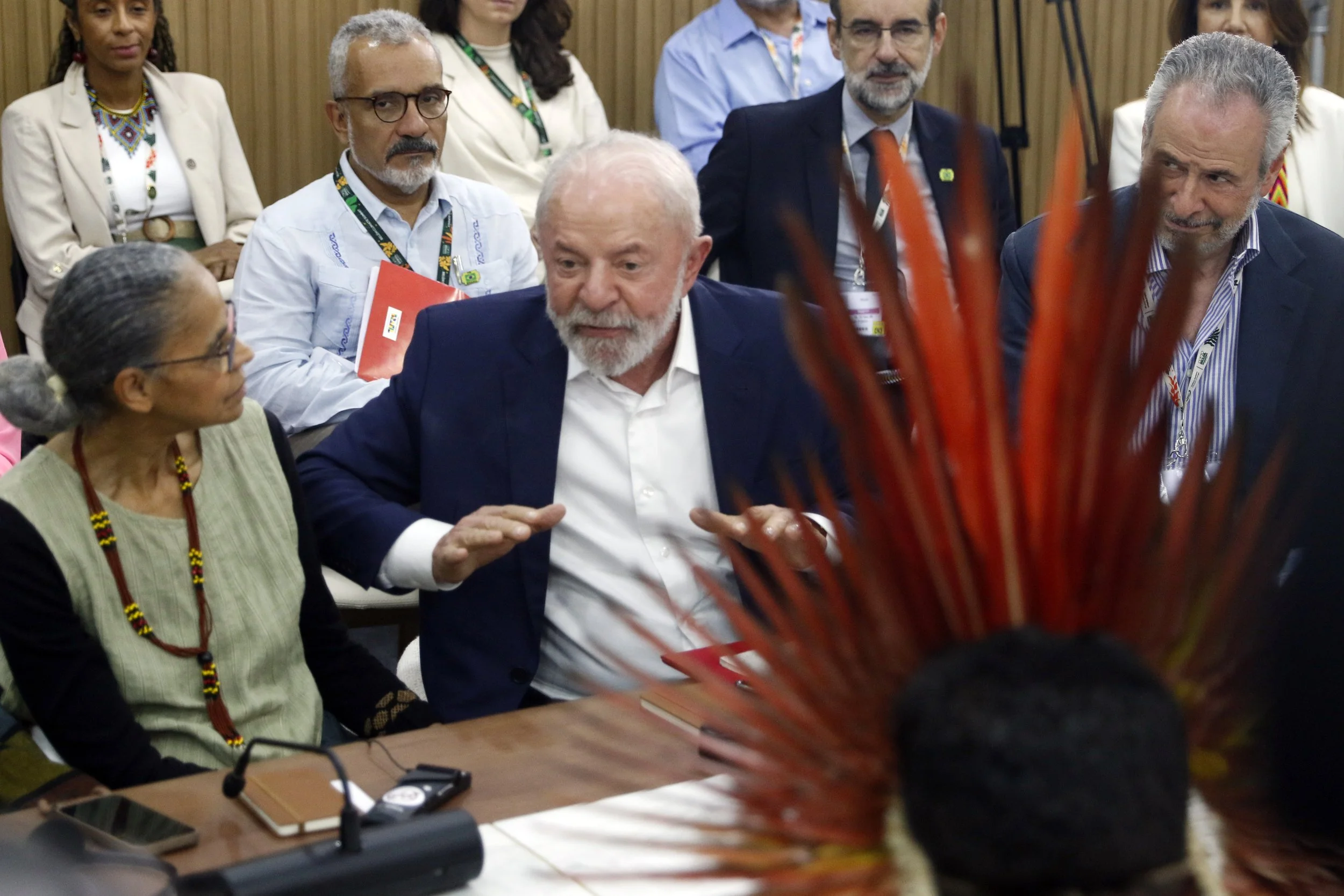
Credit also goes to President Lula, supported by Minister Marina, who put the issues on the table after listening to science and the movements. With society at the high standard set in Belém, that was all that was needed to gain traction.
Unprecedentedly in COPs, what began with one country ended with more than 80 countries positioning themselves for the end of fossil fuels, under the watchful eyes of oil lobbyists increasingly present in the Blue Zone.
Keeping the roadmap agenda alive has become a commitment of the Brazilian presidency throughout 2026. The movement will continue beyond the COPs, such as Colombia's call for a World Conference on the subject.
If those who know how to seize the moment don't wait for things to happen, it's up to us to keep inviting ourselves. Belém didn't resolve crucial questions, but it has set an agenda. #OccupyBogotá!
*Caetano Scannavino is the Coordinator of the NGO Projeto Saúde & Alegria and a member of the Folha Network of Socio-environmental Entrepreneurs.
