
True Fair Taxation Requires a Counterpart from the Economic Elite, which is White and Male
By Viviana Santiago*
In 2025, Brazil witnessed debates about fair taxation, which included income tax reform and the approval by the Chamber of Deputies and the Senate of a Bill (PL 1.087/2025) that in order to reduce inequalities in the country exempted citizens earning up to R$ 5,000 (approximately US$1,000) from paying personal income tax (IRPF). Furthermore, this same bill reduced income tax for those earning up to R$ 7,000 per month. Finally, as a compensatory measure for the tax waiver, a minimum tax rate of up to 10% was adopted, benefiting approximately 141,000 Brazilians (0.13% of the population), a percentage corresponding to those Brazilians with incomes above R$ 50,000 per month. The estimated impact of implementing these measures gives clues to the extent of the system's inequality, since this minimum taxation could alleviate the income of another 10 million people.
Bill 1,087 corrects a historical distortion that causes the tax burden to remain on the base and middle of the Brazilian economic and social pyramid, while the super-rich accumulate wealth. Beyond fiscal relief, the measure is a milestone in the fight for a fairer tax system and a concrete step towards promoting social justice and strengthening democracy because it increases the disposable income of the poorest families – mostly headed by Black women – and stimulates the economy, acting both in combating inequality and in building a fairer and more inclusive economic model.
However, this victory is insufficient. True fair taxation requires progress on the other side of the equation as well. The maintenance of centuries-old privileges, such as the tax exemption for profits and dividends, demonstrates that the counterpart of the predominantly white and male economic elite has not yet been addressed.
In Brazil, profits and dividends are not taxed, which differs from most countries. Within the Organization for Economic Co-operation and Development (OECD), 24 of the 38 members have increased the maximum tax rate levied on distributed profits and dividends in the last two decades, according to researcher Sérgio Gobetti of the Institute for Applied Economic Research (IPEA). Of the few countries that, like Brazil, exempted dividends, only Estonia and Latvia maintain this practice. According to Gobetti, approximately 160,000 people (0.1% of the country) receive 47% of the nearly R$1 trillion in profits and dividends distributed in 2023.
It is also crucial to remember the exclusion of large rural producers from the minimum taxation, which perpetuates a model of privilege and causes serious socio-environmental impacts. Thus, the approval of Bill 1,087 does not replace the urgent need for a structural and anti-racist reform, which includes the taxation of large fortunes, as already foreseen in the Constitution, and the inclusion of racial markers in income tax returns to support truly reparative public policies.
In the document "The Root of Inequality is at the Top – The Distributive Impacts of Class, Race, and Gender in the New Income Tax Reform," published in November 2025, Oxfam Brazil reflects, from a feminist and anti-racist perspective, on the implementation of Bill 1,087. It makes the following recommendations for deeper advances in fair taxation: implementation of progressive income taxation through the expansion of tax brackets and updating of personal income tax rates to make it truly progressive; periodic assessments of income tax considering gender and race; and the inclusion of a field for racial self-declaration in the annual tax return to strengthen the quality of data production. It also includes the revocation of the income tax exemption on profit and dividend distribution, ending the asymmetry in treatment between capital income and wage income; the regulation of the application of taxes on large fortunes (according to article 153, VII of the Constitution); and the review and updating of the tax benefit policy for a more equitable distribution of tax burdens, with the implementation of a transparency system for tax benefits granted, similar to the "Transparency Portal" of the federal government.
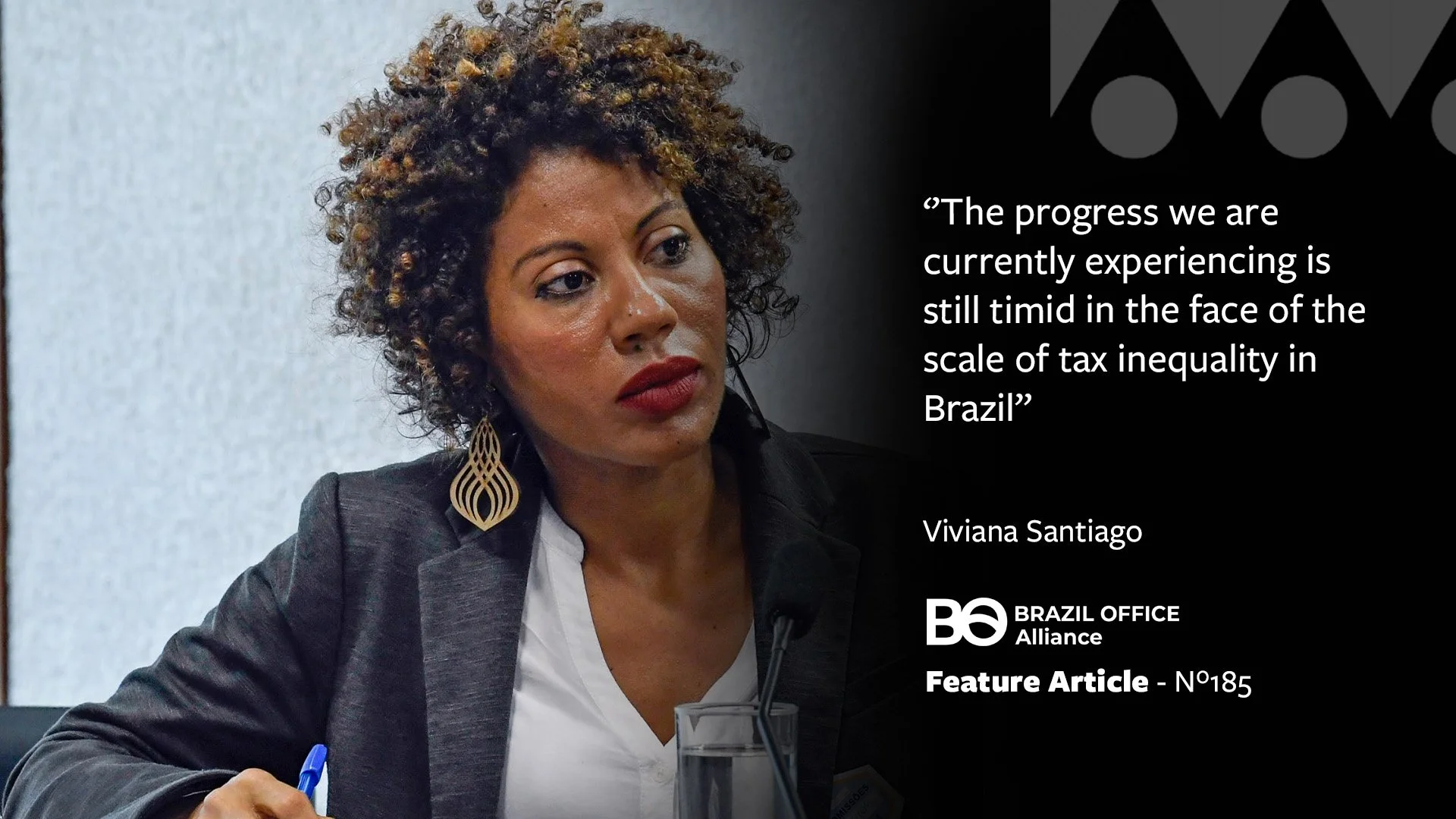
The progress we are currently experiencing is still timid in the face of the scale of tax inequality in Brazil, which requires attentive and qualified participation from society to ensure that proposals do not succumb to the economic and corporate interests that perpetuate historical privileges. For deeper changes, it is essential that organizations and social movements continue to mobilize and fight so that Congress makes further progress in this area and ensures that the system stops penalizing those who need it most.
*Viviana Santiago is the executive director of Oxfam Brazil
