
The Historical Significance of Bolsonaro's Conviction
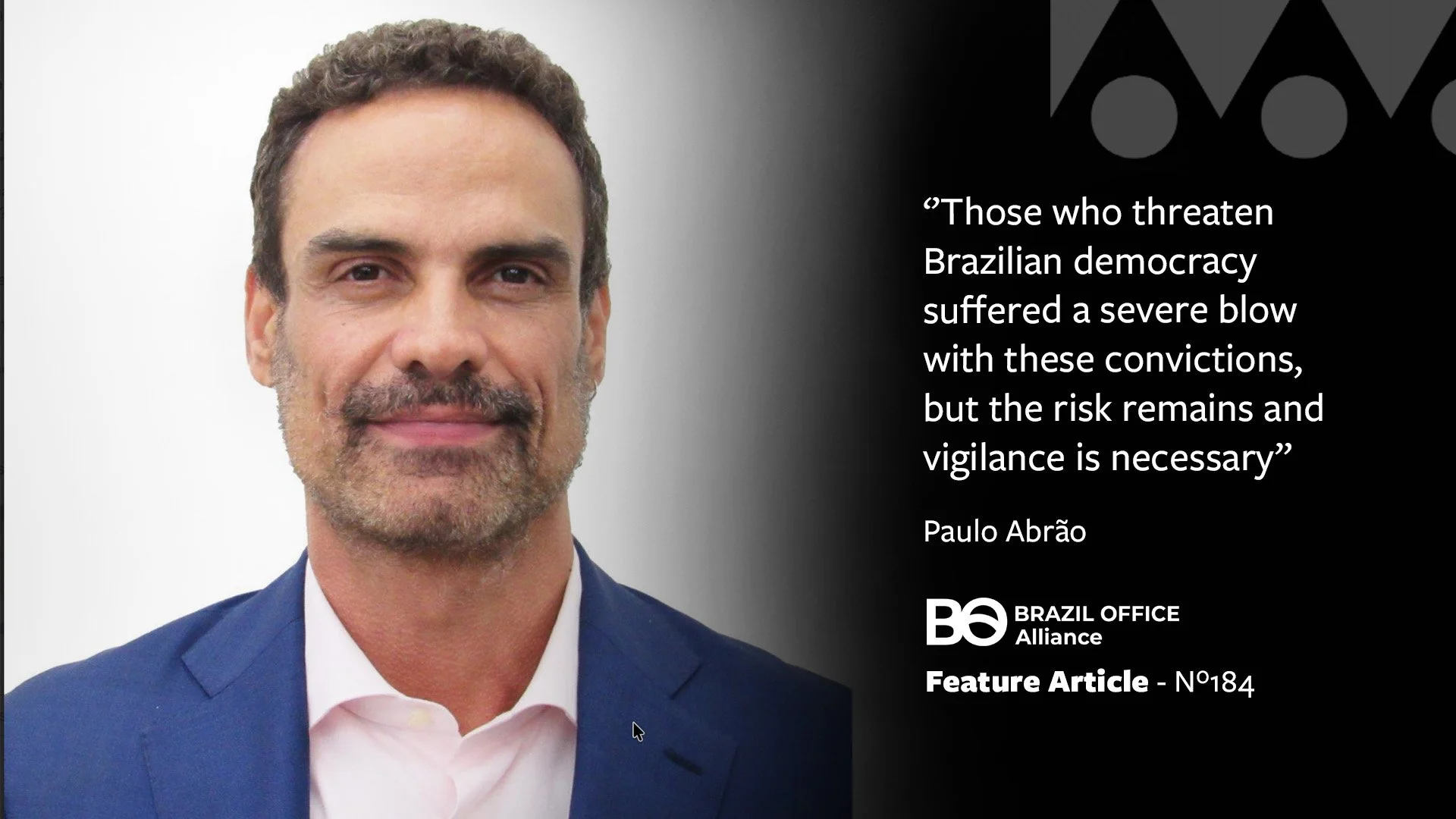
By Paulo Abrão*
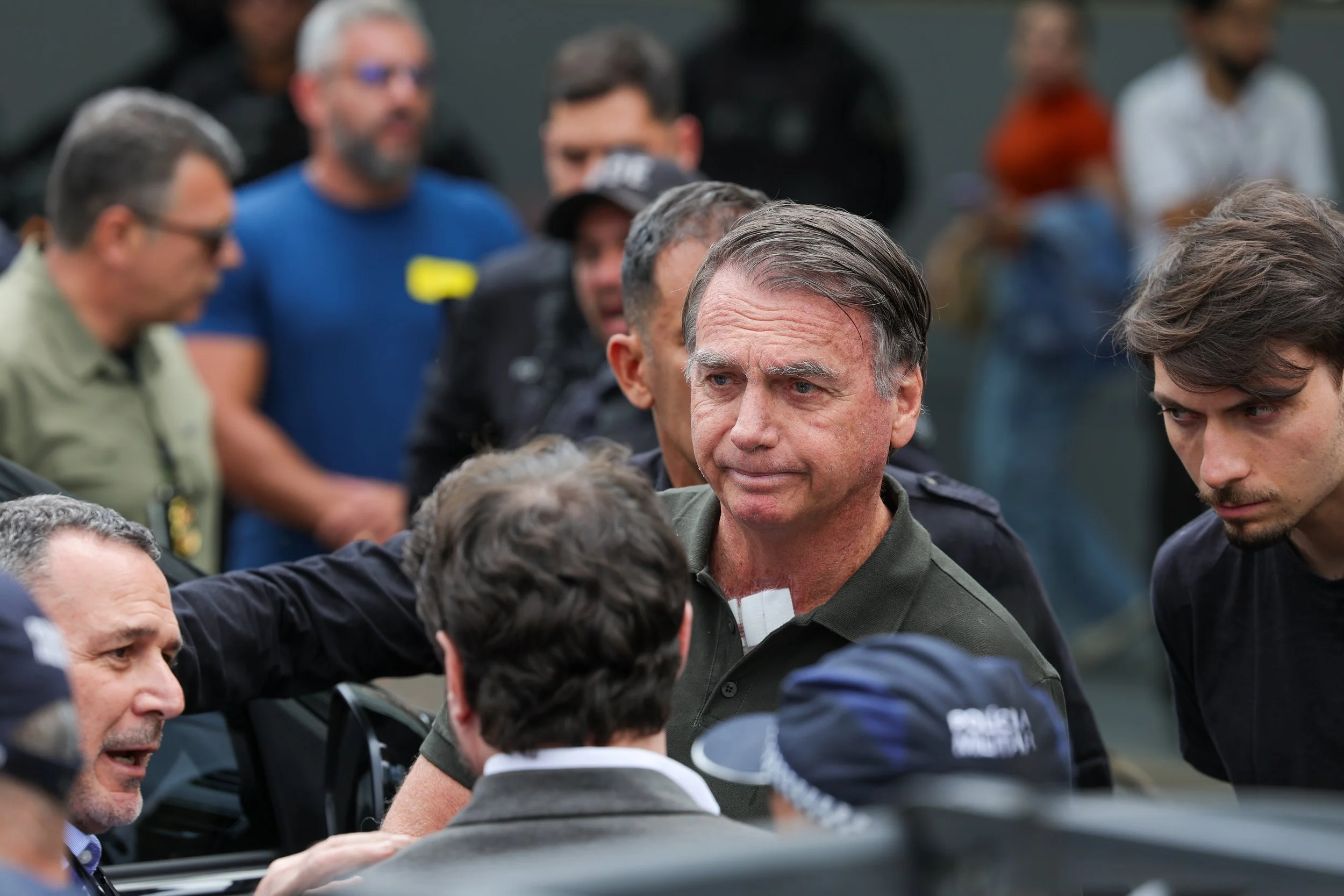
On November 25th, the Brazilian Supreme Federal Court delivered a definitive sentence against former President Jair Bolsonaro, sentencing him to 27 years and 3 months in prison. He was found guilty of participating in the failed coup attempt that sought to prevent the current president, Luiz Inácio Lula da Silva, from winning the 2022 elections, taking office, and serving his legitimate third term. In addition to Bolsonaro, former ministers from his cabinet and high-ranking military commanders involved in the same coup plot were also convicted in the same trial.
The conviction took into account a strategy that included the unfounded challenge to the electronic voting machines used in Brazilian elections and the entire electoral system; the plotting of a plan to assassinate authorities; and the invasion and destruction of the Praça dos Três Poderes (Three Powers Square), where the headquarters of the executive, legislative, and judicial branches are located in Brasília. Furthermore, other elements, such as the use of Brazilian Intelligence Agency (ABIN) to monitor political opponents and the creation of a Federal Police task force to hinder voters' access to the polls in strongholds in the Northeast where Lula had significant support, composed the scenario with which Bolsonaro and his supporters intended to stage the coup.
When the sentence was finally handed down, the former president was already in pre-trial detention, decreed due to flight risk and other violations of measures dictated by the courts during legal proceedings. He was initially kept under house arrest in Brasília. Then, he was transferred to the Federal Police headquarters, also in the capital, after confessing to using a welding machine to try to break his electronic ankle monitor. Due to his vulnerable health condition, resulting from a knife attack suffered during the 2018 election campaign, Bolsonaro will have unimpeded and permanent access to his personal physicians and will not be sent to a regular prison unit – unlike Lula, who was also held in a Federal Police unit in Brasília. The military commanders involved in the coup plot will serve their sentences in military barracks.
These individual punishments were imposed by the courts at the end of a legal process that complied with all required legal formalities and respected all judicial guarantees. These convictions are important, first, because they held each of those involved accountable individually. But the significance of these sentences goes far beyond mere individual accountability. The convictions place Brazilian democracy on a new higher, stronger, and more stable position compared to a past marked until now by the absolute impunity of those involved in the 1964 coup d'état and the 21 years of military dictatorship that prevailed in Brazil until 1985. In this sense, the imprisonment of Bolsonaro and his accomplices in the coup plot is a turning point.
The long road that led to these sentences was marked by difficult tests for Brazilian institutions. First, because the protagonists of the coup plot themselves had, and still have, the support of a significant portion of Brazilian society. A Datafolha poll from April showed that 42% of the population believed that Bolsonaro should not be imprisoned. And, in August, another poll, from the same institute, showed that 33% of voters would vote for Bolsonaro despite everything, although this last question in the poll has no meaningful effect, given that the former president is ineligible to run for office. What these numbers demonstrate is how far Brazil still is from solidifying democratic values in a society that has lived with impunity for so many years. In this sense, the arrest of Bolsonaro and the entire coup-plotting core has an educational character, which may change the perception of that segment of Brazilians who still insist on equivocating about democratic values.
However, while this internal pressure from the far right created difficulties throughout the process with unfounded accusations that the judiciary was overstepping its bounds and carrying out a politically directed persecution, it was in the international arena that Brazil faced one of its toughest tests from the moment the U.S. government began to act in an openly hostile manner to intimidate the judges in the case. Provoked by lobbying from federal congressman Eduardo Bolsonaro, one of the former president's sons, and other far-right activists living in the United States and are fugitives from justice, the Trump administration applied the Magnitsky Act against a Supreme Court minister and resorted to heavy tariffs on Brazilian products, in an attempt to free the coup plotters from prison.
The pressure was ineffective. Thanks to the competence of the Brazilian diplomatic service and the personal skill of President Lula, Brazil managed to reverse a large part of these measures and cool down U.S. hostility. Business leaders also exerted pressure. Furthermore, organized civil society made its voice heard through a delegation organized by the WBO, which traveled to Washington and New York in September and October to present details of the ongoing process and dynamics in Brazil.
Those who threaten Brazilian democracy suffered a severe blow with these convictions, but the risk remains and vigilance is necessary, as new political leaders from the far right are already organizing around an amnesty proposal with which they intend to replicate the impunity that has marked Brazil's recent history. In addition, next year's presidential election is likely to mobilize not only national conservative extremism, but also powerful international forces interested in destabilizing Brazil and turning Brazil into a laboratory for those working to undermine democracy from within in various parts of the world.
*Paulo Abrão holds a doctorate in law, is a former National Secretary of Justice (2011-14), former Executive Secretary of the Inter-American Commission on Human Rights (2016-20), and Executive Director of the WBO (Washington Brazil Office).
