
Setbacks in Environmental Legislation: The Paradox of the Brazilian Case
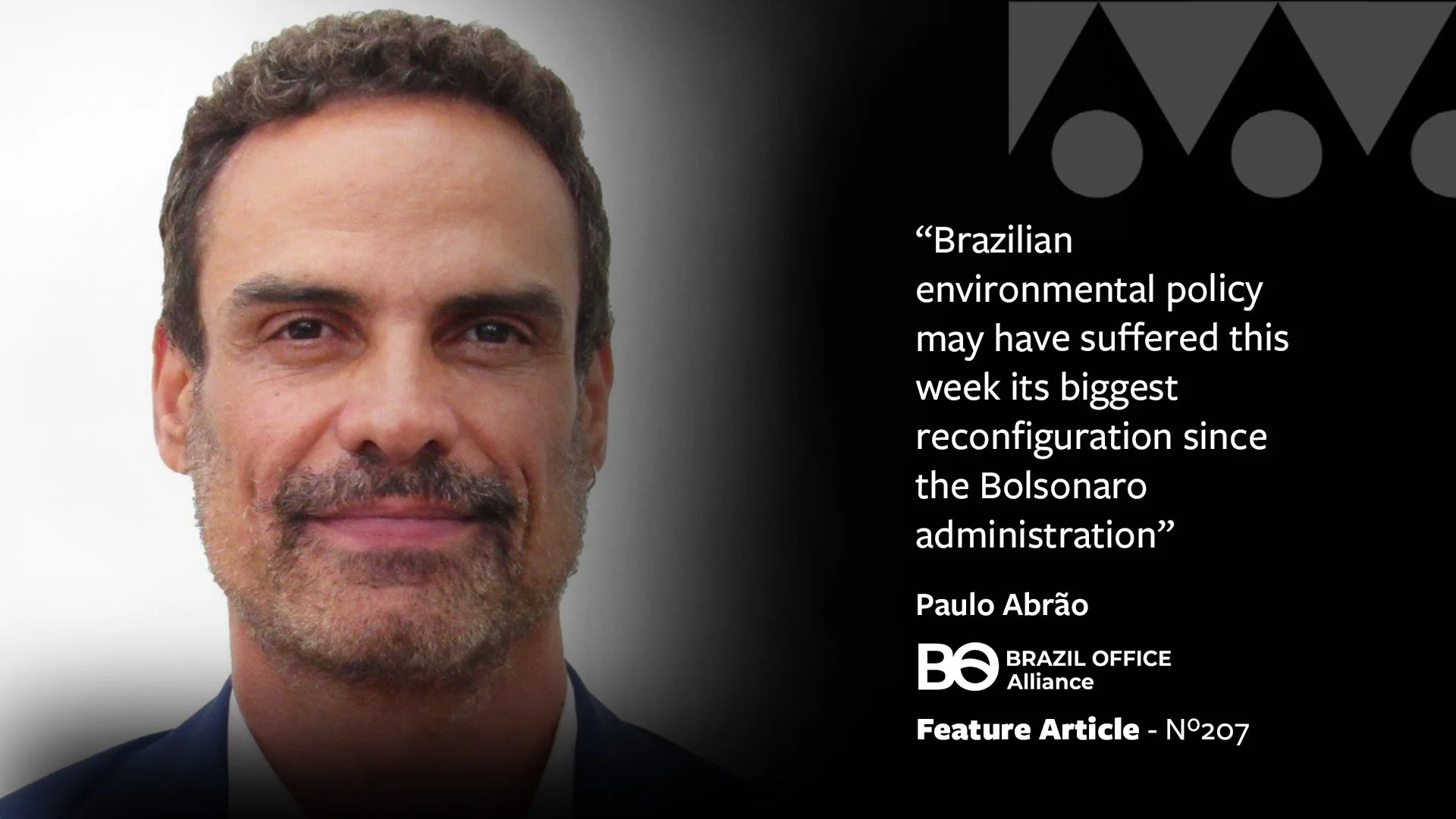
By Paulo Abrão*
The coordinated offensive by the rural caucus in Brazil's National Congress this week perhaps represents one of the most significant institutional reconfigurations of Brazilian environmental policy since the Bolsonaro government. Under the guise of "modernization," "legal certainty," and "debureaucratization," a set of projects approved or accelerated by the Chamber of Deputies, the lower chamber of Congress, profoundly alters environmental oversight mechanisms, expands the political power of agribusiness over state regulatory structures, and reduces instruments for protecting strategic biomes.
This is not merely a sectoral dispute over licensing or agricultural production. What is underway is a broader dispute over who controls the instruments of the Brazilian state responsible for regulating land use, natural resources, export chains, and international climate commitments.
Among the most controversial projects is the proposal that limits so-called "remote embargoes," making it more difficult for environmental agencies to use satellite imagery to block illegally deforested areas. In practice, the measure weakens one of the main instruments responsible for the recent reduction in deforestation in the Amazon. Another bill significantly expands the influence of the Ministry of Agriculture over technical environmental decisions related to species of economic interest, altering the historical balance between production, environmental protection, and sanitary regulation. Simultaneously, it advances a relaxation of the protection of native vegetation in biomes such as the Cerrado, Caatinga, Pantanal, and Pampa, regions increasingly pressured by the expansion of agriculture.
The political symbolism of the movement is significant. The so-called "Agribusiness Week" in Parliament became a public demonstration of strength by the rural coalition at a time when the Lula government is facing increasing difficulties in maintaining a stable majority in the legislature. More than just isolated defeats for the Lula da Silva government, the episode reveals a process of power fragmentation in the Brazilian political system, in which organized sectors of Congress are increasingly acting as autonomous formulators of structural state agendas.
The reaction of the Ministry of the Environment was unusually intense. Government officials have classified the measures as an “unimaginable setback” and warned of long-term institutional impacts on Brazilian environmental governance. Civil society organizations and experts have once again begun using the expression “passar o boiado,” which literally means “letting the herd pass through,” a Brazilian phrase that means ushering in legally and environmentally questionable projects of benefit to business interests. Its use is a direct reference to the phrase made famous during the Bolsonaro administration, symbolizing the strategy of rapidly relaxing environmental regulations during periods of low public attention. At the same time, the debate is taking place while the country's political and media spotlight remains focused on the mega-corruption scandal involving Banco Master, reducing public attention to far-reaching structural changes.
But perhaps one of the most important elements of this legislative setback lies outside Brazil. The changes are occurring precisely at the moment when the country announces the lowest rate of deforestation in the Amazon in the last ten years, thanks to the recovery of its environmental enforcement capacity, and when the climate agenda is becoming a central variable in global economic geopolitics. The European Union, investment funds, international trade chains, and multilateral mechanisms are moving towards demanding increasingly rigorous environmental traceability of agricultural commodities. New European anti-deforestation legislation, for example, could impose concrete barriers on products associated with environmental destruction. All this occurs precisely in the context of the entry into force of the trade agreement between Mercosur and the European Union. At the same time, the recently approved UN resolution on state responsibility for climate change increases international pressure for legal and political accountability mechanisms related to compliance with environmental commitments.
The Brazilian paradox then becomes even more evident. While the country seeks to project an image of climate leadership internationally, especially after COP30, decisive sectors of the political system are working internally to reduce the regulatory capacities of the environmental state itself.
The issue is likely to occupy an increasingly central position in the 2026 elections. Not only because of its inherent environmental relevance, but because it has become a point of convergence between disputes over economic models, the role of the state, international insertion, and the strategic place that Brazil intends to occupy in the ongoing reorganization of the global order.
*Paulo Abrão is the Executive Director of the WBO (Washington Brazil Office). He was the National Secretary of Justice of Brazil. He also served as Executive Secretary of the Inter-American Commission on Human Rights of the Organization of American States and as Director of the Mercosur Institute of Human Rights. He was a visiting researcher at the Watson Institute for International and Public Affairs at Brown University.
