
The Iran War and Diplomacy as Bullying
By Michel Gherman* and Ligia Bahia**
Last week, the Association of Professors of the Federal University of Rio de Janeiro organized a conference on the Praia Vermelha Campus with Minister Celso Amorim, the experienced diplomat and special advisor to the presidency of the republic. We begin this short article commenting on this conference less for its content than for the symbolic dimension it represents.
The invitation to the minister was made in the last months of 2025; at the time, we did not know what the central theme of the event would be. We thought about discussing Venezuela, even before the kidnapping and imprisonment of President Maduro, or the genocide in Gaza, months after the signing of the fragile ceasefire between Israel and Hamas with the creation of the so-called Peace Council conceived by Trump. We also imagined being able to talk about the endless war in Europe between Ukraine and Russia.
What we couldn't have imagined when we planned the event for the end of 2025 was that in March 2026 we would be witnessing a regional war, the invasion of Iran, and the realization that we could be facing a major global conflict.
It's true that we didn't imagine it would come to this, but looking back, not considering this development was a mistake. The conditions for the degeneration of international relations were there; the signs were clear. We were the ones who stubbornly refused to see them.
The precarious international situation, the recent invasion of Iran, and the deterioration of the international environment ended up drawing a large audience to the Golden Hall at the University Palace of UFRJ.
Worried and tense, students and professors were anxious to hear Amorim's perspectives on the new conflict that was just beginning.
The experienced diplomat seemed aware of the gravity of the moment and decided to begin the lecture with two statements that we would like to give due relevance to in this short article: “The war with Iran will not be a walk in the park,” and there is a tragic unprecedented fact that foreign powers have executed the leader of an invaded country so early in the conflict.
Regarding Amorim's first statement, there seems to be little doubt about its veracity.
The violence of the Israeli and United States' bombings of Iran has had harsh and painful responses for the invaders. Furthermore, the Iranian government has invested in the territorial and economic expansion of the conflict, which creates the possibilities for a regional war and creates the potential for a war of even greater proportions.
In territorial terms, the Ayatollah regime has carried out bombings of Israel but has also launched bombs on U.S. bases in Gulf countries.
This strategic decision is explosive. It could effectively shift the axis of the conflict to other regions, requiring other world powers to become involved in the war.
In economic terms, the outlook also seems very serious. Between threats and actions, Iran has pointed to the concrete possibility of closing the Strait of Hormuz, which would lead to the collapse of about 20% of world oil trade and produce a new oil crisis, resulting in an international inflationary calamity.
In this context, Celso Amorim is indeed right; the war with Iran, initiated with the bombings by Israel and the United States, is unlikely to be a walk in the park, especially in the absence of a viable strategic plan that could point to its end.
Trump and Netanyahu speak of overthrowing the regime and eliminating Iranian strategic weapons, but they do not indicate the conditions for achieving these objectives.
Regarding the unprecedented nature of the assassination of the leader of an invaded country in the first days of the conflict, we also agree with Amorim.
This had never happened before; it shows the defeat of diplomacy and politics and points to an investment in an era where barbarity and violence will be a constitutive part of international relations.
An imperialism of obscene characteristics, the death of the Iran’s supreme leader comes as an expression of a logic of horror. Ayatollah Khamenei was assassinated at the beginning of the war in the hope that the country would surrender. When that surrender didn't take place, the United States and Israel continued to execute leaders other Iranian leaders.
However, behind this extreme decision lies a longer process.
The assassination of Ayatollah Khamenei and the ruling elite of Iran is a stage, perhaps the most explicit, in the new phase of this nefarious imperialism inaugurated by Donald Trump.
Today it is difficult, since, as Celso Amorim stated in his lecture, time has accelerated unprecedentedly. But it is important to remember that less than a week before the start of the bombings, negotiations were taking place in the Gulf and Europe. Representatives of Iran and the United States were supposedly striving to reach an agreement that would avoid war. Channels linked to the Omani government, in fact, were optimistic about the talks.
However, the bombs began to fall on Tehran while the talks were still underway.
Here, then, we have a kind of diplomatic bullying.
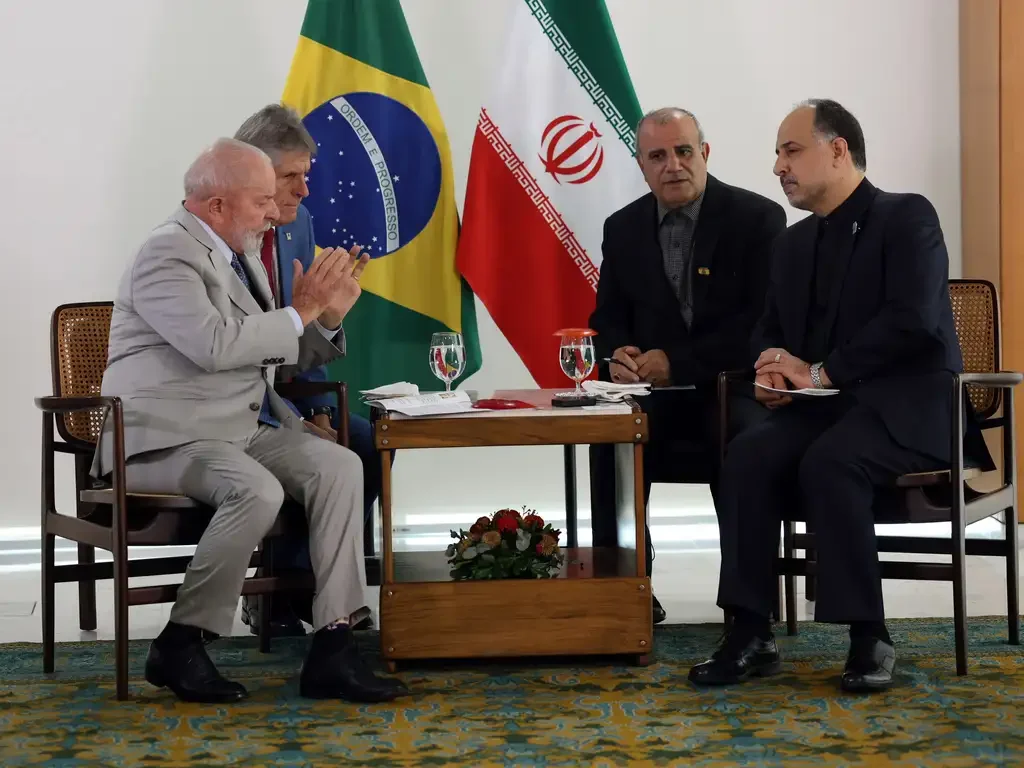
While government representatives try to reach an agreement, war breaks out. This effectively produces a complete breakdown of trust in negotiated solutions. War thus imposes itself as a solution. Diplomacy seems like child's play, a bad joke.
This will very likely lead to an arms race and investment in unconventional weapons among middle powers as well.
The Trump administration has been trying in every way to weaken multilateral structures of international decision-making. In the case of the bombing during the talks, we have an attempt to create a phase characterized by the closure of the world system as a platform and the bullying of diplomacy.
The international far right produces the perception that diplomacy is for the weak. War is not for losers, to use Donald Trump's words.
But it is important to note that the assassination of Khamenei, the bombing of Iran, and the disregard for the talks are, so to speak, the final turn of the screw. Before that, Donald Trump and his administration had already shown the strategies of this new phase of "bullying diplomacy."
I am referring here to two cases, firstly the genocide in Gaza and secondly the kidnapping and imprisonment of Nicolas Maduro in Venezuela. These processes begin with the "desensitization" of U.S. citizens to the suffering of their adversaries and with the discrediting and delegitimization of their leaders.
Regarding Gaza, speeches about the expulsion of Palestinians and the construction of resorts showed Trump's discursive direction. From this perspective, the inhabitants of that region either don't exist or exist but cannot voice their opinions.
What prevails is a discourse of security and force. Without dialogue with international bodies or even the American Congress, the US deepens its imperialist practices. Hunger as a weapon of war, permission to bomb the civilian population, and finally, permission to destroy an entire territory in response to the massacre of October 7th.
Total victory, without politics or diplomacy. Only weapons and destruction.
However, one should not imagine that this is restricted to the Middle East. What occurred in Venezuela has the same characteristics. Discrediting of local leaders, contempt for international structures, and violence against local leaders. Maduro is kidnapped and convicted of alleged crimes, being imprisoned in a jail in the United States.
Once again, bullying as a policy of intervention, diplomacy is ignored, and invasion and violence are used as a way to impose the interests of US imperialism.
It is in this context that the invasion of Iran seems to be yet another turn of a screw that disregards any kind of international law or rules.
It would be an understatement to say that the war is illegal. It is an act of international delinquency. It is taking place without internal or external consultation, without objectives or a defined program, as if the bombs spoke for themselves. While the assassination of the leader at the beginning of the conflict is unprecedented, it can be said that there are characteristics there that are built upon in the last US interventions, whether in Gaza or Venezuela.
The next domino to fall seems to be Cuba. Power cuts and famine there also seem to be weapons of war and intervention. But there is more than that; Iran, Venezuela, and Gaza point to a new phase of US imperialism. From now on, there are no safe countries. The justification for intervention is self-sufficient. There is no longer a need for national or international consultation.
Bullying imperialism is the new method in the Trump era. As could not be otherwise, here too the US president is betting on obsenities. Without more elaborate justifications or a veneer of legality, the invasion is explained by the leader's absolute will.
*Michel Gherman is a professor of Sociology and coordinator of the Interdisciplinary Center for Jewish Studies at the Federal University of Rio de Janeiro.
**Lígia Bahia is a professor at the Institute of Collective Health Studies and president of the Faculty Association of the Federal University of Rio de Janeiro.
