
Who Will Win the First Round of the Brazilian Election?
With two days left until the first round, the most important question is simple: who is in the best position heading into this Sunday's vote—which could even decide the election?
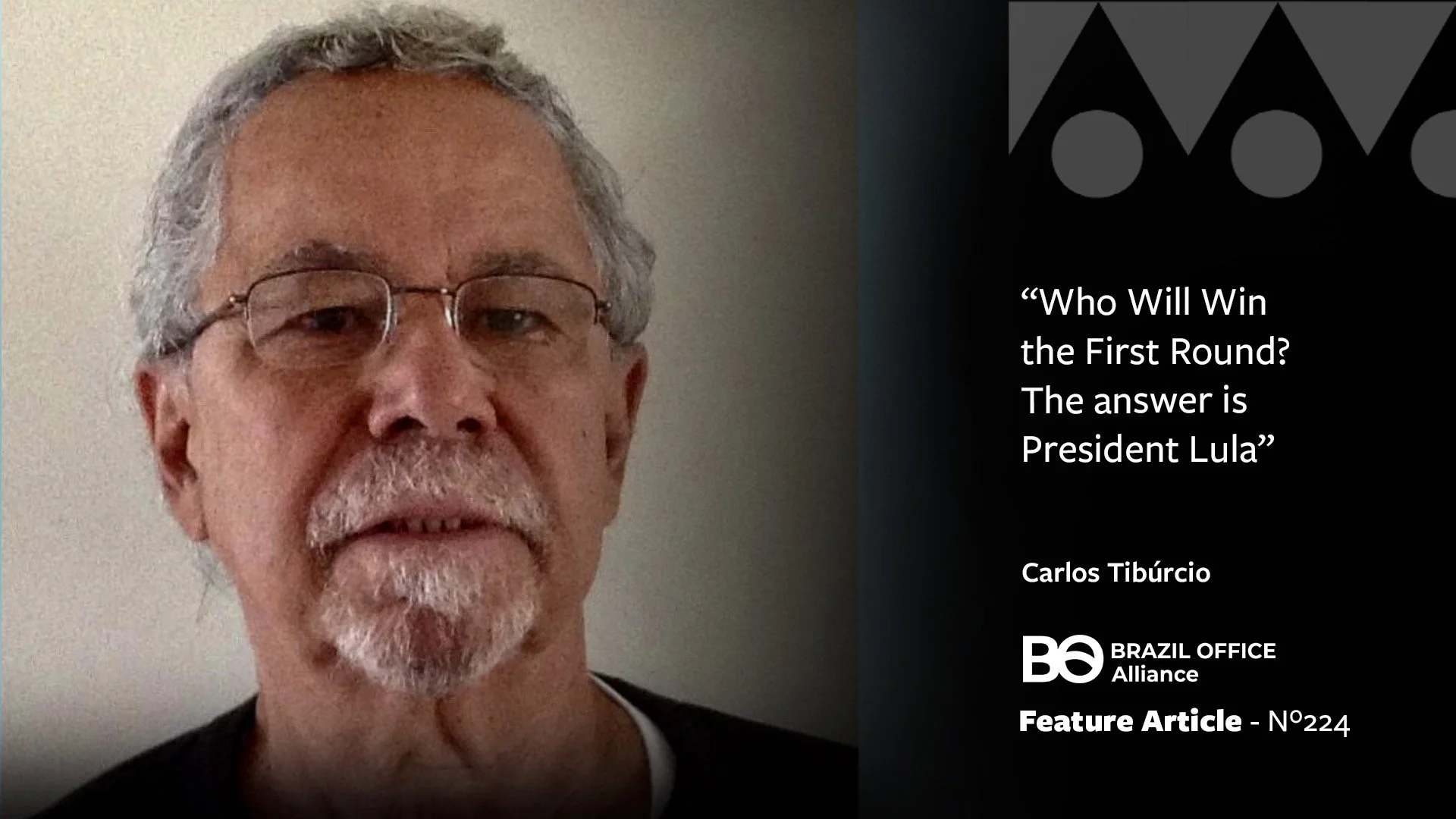
by Carlos Tibúrcio*
The answer is President Luiz Inácio Lula da Silva.
But that doesn't mean the election is already decided or that Flávio Bolsonaro has stopped posing a real threat.
Lula enters the final stretch in a stronger position because he leads in most polls, has regained the initiative, and has made gains among strategic voter segments. Flávio is under pressure but retains a significant base and remains technically tied with Lula in a potential runoff.
This week’s Quaest poll showed Lula at 39% and Flávio at 34%. Atlas/Bloomberg recorded 45.3% to 42.2%. Palver found both at 44%. Despite methodological differences, Lula is more likely to finish ahead and has increased his chances of winning on Sunday. Yet, the race remains wide open.
For much of the campaign, both candidates were locked in a stalemate driven by mutual rejection. Lula faces anti-PT sentiment and unresolved issues. Flávio carries the baggage of the rejection of Bolsonarism, the memory of the pandemic, confrontations with institutions, and suspicions over a funding request to Daniel Vorcaro for the film about Jair Bolsonaro.
For months, both candidates mobilized more fear of their opponent than hope in their own projects. In recent weeks, Lula has begun to shift this dynamic. The government raised Bolsa Família (family stipend) payments by 15%, initiated the process of including anti-obesity medications—specifically weight-loss pens—in the public health system (SUS), and banned online betting sites (Bets). These measures are distinct, but they convey the same message: protection for families. Lula has once again focused heavily on income, food security, healthcare, debt, and economic stability. Quaest polling recorded his gains among women, Catholics, Evangelicals, Bolsa Família beneficiaries, and low-income voters.
It is impossible to determine exactly how much each measure contributed to voting intentions. However, the dynamic has shifted: while Flávio was largely reacting, Lula has returned to driving the narrative and setting new agendas.
The controversy surrounding Our Lady of Aparecida reinforced this momentum. It stemmed from false information claiming Flávio intended to strip the saint of her title as Brazil’s patroness. The candidate never made such a statement, but he exacerbated the crisis by accusing members of the CNBB (National Conference of Bishops of Brazil) of colluding with his opponents. He later attempted to mend fences with the Catholic Church.
It is within this context that signs of a potential "Lula wave" are strengthening. This hypothesis—raised before his growth became clear—was based on a shrinking pool of undecided voters, the election narrowing to a key contest, government initiatives, and the mobilization of the campaign's grassroots base.
Evidence of this is now appearing in the polls. However, the "wave" has not yet been fully confirmed. Lula needs to grow further, win over voters from other candidates, and translate enthusiasm into actual votes.
Flávio remains competitive. He leads among Evangelicals, in the South, and in parts of the Southeast. In a potential runoff, he could win most conservative votes. There is a distinction between entering the first round with momentum and being best positioned to win the election overall.
Lula is the favorite to lead the first round. He could come close to victory this Sunday, but he does not yet have enough votes to guarantee it. If a runoff occurs, it will effectively be a new election, contested on different terms.
The election has also transcended Brazil's borders. U.S. Democratic Senators Jeanne Shaheen, Tim Kaine, and Peter Welch sent a letter to Marco Rubio warning the Trump administration against interference and calling for recognition of the certified election results.
This warning does not come out of a vacuum. Trump hosted Flávio Bolsonaro at the White House and implemented economic measures against Brazil. Brazilian sovereignty will also be tested on Sunday.
With two days left until the election, the outlook is as follows: Lula is expected to lead after the first round. An outright victory has become a political possibility, though not yet a proven probability. The potential "Lula wave" has until Sunday to demonstrate whether it has moved beyond his core supporters and reached a broader segment of the Brazilian electorate.
*Carlos Tibúrcio is a journalist, editor of Fórum 21, director of Fatoflix, and a member of the Barão de Itararé coordinating committee; he served as speechwriting coordinator for President Lula and President Dilma from 2003 to 2016.
